Translated from German. We write our content in German.Show original
Planning a Namibia road trip: The ultimate guide for your perfect desert adventure

By Laura & Tobi ·
Plan your road trip perfectly with insider tips on routes, duration and unforgettable experiences. Are you in?
Do you also dream of majestic desert elephants, endless dune landscapes and starry nights in the African wilderness? With us you can plan your Namibia road trip so you don’t miss a single highlight. We share our years of experience and show you how to prepare your personal adventure in the best possible way – from the ideal travel duration and the best routes to valuable insider tips.
Planning a Namibia road trip: The optimal travel duration
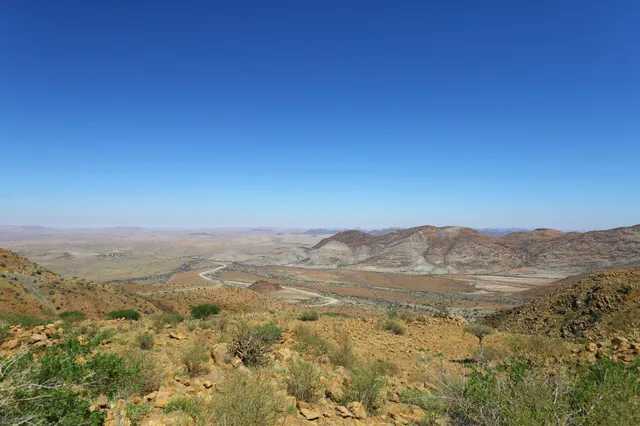
Namibia is a land of contrasts and endless expanses that is best explored on a well-planned road trip. From the red dunes of the Namib Desert to the wild animals in Etosha National Park – we show you the perfect routes for your Namibia adventure.
The classic 14-day route through Namibia
The most popular route for first-time visitors takes you to the absolute highlights of the country in two weeks:
- Day 1-2: Start in Windhoek – acclimatisation and dinner at Joe's Beerhouse
- Day 3-5: Etosha National Park – wildlife watching at the waterholes
- Day 6-8: Swakopmund – coastal town with colonial atmosphere and desert adventures
- Day 9-11: Sossusvlei – climb the Big Daddy dune and visit Deadvlei
- Day 12-14: Return drive to Windhoek via the Naukluft Mountains
Extended route options if you have more time
With three or four weeks you can also explore these exciting regions:
- Fish River Canyon – the second largest canyon in the world in the south
- Kaokoveld – untamed Namibia with desert lions and Himba villages
- Caprivi Strip – water-rich region with lush vegetation
Namibia’s natural highlights
You shouldn’t miss these unique nature experiences:
- Namib Desert: the oldest desert in the world with its characteristic red dunes
- Kalahari: vast grasslands and golden dunes
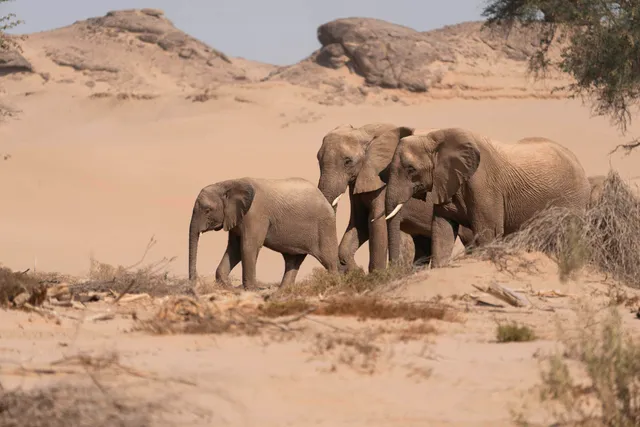
- Damaraland: desert elephants and ancient rock engravings
- Starry sky: perfect conditions for stargazing
Tip: Plan your route with the app, which shows you all the important spots offline too and helps you avoid missing any highlights.
Best time to travel to Namibia: When is it at its most beautiful?
The best time to travel for your Namibia road trip depends on your personal goals. Whether you’re looking for the best conditions for wildlife watching or you’d rather experience the country’s greener side – we show you when it’s best to travel. As Namibia travellers we especially recommend the months from May to October for the perfect balance of pleasant temperatures and optimal conditions for wildlife experiences.
Dry season (May to October) – the main season
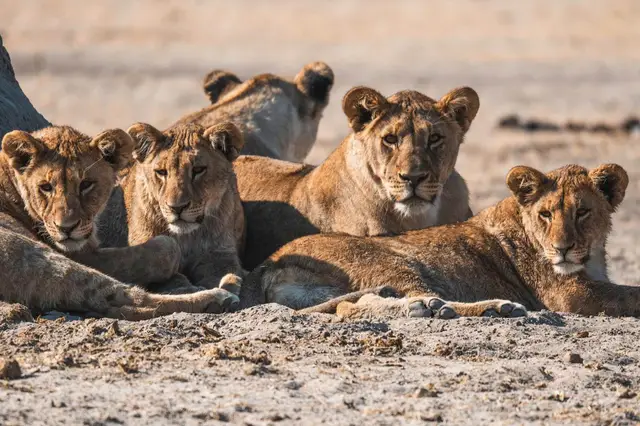
The dry season offers you ideal conditions for a safari in the national parks. Especially in Etosha National Park the animals concentrate at the few waterholes during this time, giving you the best chances of unforgettable wildlife sightings. The advantages of this time of year:
- Pleasant temperatures between 20-30°C during the day
- Hardly any rain and mostly cloudless skies
- Best visibility thanks to sparse vegetation
- Optimal safari conditions as animals gather at waterholes
Plan your activities with our app so you don’t miss the best times for wildlife sightings!
Rainy season (November to April) – the green season
The rainy season transforms Namibia into a green paradise. Although temperatures are higher, you experience the country at its most lush. Perfect for anyone who:
- Prefers fewer tourists and lower prices
- Wants to photograph spectacular thunderstorm skies
- Wants to watch birds (best time for birdwatching)
- Wants to experience the green transformation of the desert landscape
Transition season (April/May and September/October) – the golden middle way
These months offer you a perfect compromise: the landscape is still green, the temperatures are pleasant and wildlife sightings are already improving (April/May). This time is especially ideal for camping enthusiasts, as the nights are no longer as cold as in winter but also not as humid as in summer (April/May and September/October).
Our tip: Plan your travel time around your main priorities. Do you mainly want to watch animals? Then choose the late dry season (August-October). Are you more interested in landscapes and photography? Then the early rainy season (November-December) could be perfect for you.
Remember: you can travel to Namibia at any time of year – it all comes down to how you prepare. With the right packing list and good planning your trip is guaranteed to be unforgettable!
Costs and budget planning for a Namibia road trip
A Namibia road trip is a unique adventure – but what does the dream of endless horizons and wild animals really cost? We’ve put together the most important cost factors for you and reveal how to plan cleverly and save money at the same time. As a rule of thumb you should reckon with at least 140€ per person per day – depending on your travel style and season it can, however, be significantly more.
An overview of the basic costs
The total cost of a 16-day Namibia road trip is made up of various components. Your choice of accommodation and the time of year you travel are particularly crucial. As a self-driver with a mix of camping and mid-range hotels you should calculate the following daily costs per person:
- Accommodation: 40-120€ (camping from 15€, lodge from 80€)
- Hire car including insurance: 120-250€
- Food: 25-40€
- Activities and entrance fees: 20-50€
- Fuel: 20-30€
Bear seasonal price differences in mind
Do you really want to save smartly? Then plan your trip outside the peak season. Prices for accommodation and hire cars can be up to 50% higher in the main season than in the low season. It’s especially expensive:
- July to November (peak season)
- December to January (Christmas holidays)
- Around Easter
Money-saving tips for your road trip
With these tips you can save real money on your Namibia road trip:
- Book early: hire cars and popular lodges in particular are often fully booked months in advance
- Combine camping and lodges: roof tent camping not only saves money but also offers unique experiences
- Cook for yourself: eating out in restaurants is relatively expensive in Namibia
- Plan activities smartly: not every guided tour is necessary – you can explore many things on your own
Don’t forget additional costs
In addition to your daily expenses there are other costs you should factor into your planning:
- Entrance fees for national parks (for example Sossusvlei: approx. 10€ per person)
- Permits for wildlife reserves
- Travel insurance
- Vaccinations and malaria prophylaxis
Important tips for trip preparation
A road trip through Namibia needs to be well planned. The vast distances, special road conditions and limited accommodation options require thorough preparation. We show you what really matters when planning so that your adventure in Namibia’s wilderness is a complete success.
Define your goals clearly
Before you dive into the details of your Namibia road trip, you should be clear about your personal highlights. Do you mainly want to watch wildlife? Then Etosha National Park definitely needs to be on your route. Or are you drawn to the endless expanses of the Namib Desert? In that case it’s best to plan several days for the area around Sossusvlei.
Allow realistic driving times
A common mistake when planning a Namibia trip is underestimating driving times. Unlike in Europe you can’t simply assume an average speed of 80 km/h here. Especially on gravel roads you have to calculate with significantly longer driving times. It’s better to plan generously and enjoy relaxed stops at special viewpoints.
Our rule of thumb for driving times:
- Tarmac roads: 80–100 km/h
- Good gravel roads: 60–70 km/h
- Rough tracks: 40–50 km/h
Use professional information sources
For detailed route planning we recommend these reliable sources:
- Auswärtiges Amt for travel and safety information
- Our app with activities and insider tips (usable offline)
Prepare your navigation
Out in Namibia’s wide-open spaces, reliable navigation is worth its weight in gold. Download these tried-and-tested apps in advance:
- Google Maps: Free and usable offline (download maps before your trip)
- maps.me: Free and usable offline
- Tracks4Africa: Fee-based and usable offline
Start planning in good time
Popular accommodation in the high season (July to November) is often fully booked months in advance. Start making your bookings at least 6 months before your trip. This is especially important for popular lodges such as Sossus Dune Lodge or camps in Etosha National Park.
Transport and getting around in Namibia
Choosing the right means of transport is the key to your ultimate Namibia adventure. This land of endless horizons is best explored with your own vehicle, giving you the freedom to visit remote places and make spontaneous stops for unforgettable wildlife sightings. We show you what to look out for when choosing your vehicle.
Choosing the right vehicle for your adventure
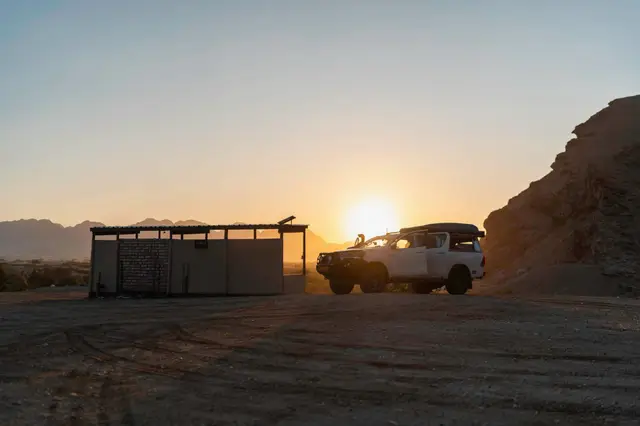
In Namibia a robust vehicle is not just a comfort but an absolute necessity. Our experience with the Toyota Hilux has shown:
- At least an SUV or 4x4: the unpaved roads and rough terrain conditions require a vehicle with high ground clearance and four-wheel drive
- Roof tent option: a fantastic way to enjoy authentic camping experiences under the African night sky
Important tips for driving
Driving on the left in Namibia takes a bit of getting used to at first. Especially on longer routes you should plan regular breaks – the fascinating landscape invites you to linger anyway. Use our app for activities even in remote areas where there is no mobile network.
Pro tip: for longer routes book an additional driver. This not only increases safety but also makes for more relaxed travel and spontaneous photo stops for wildlife photography.
Public transport
Public transport is hardly an option for travellers in Namibia. The network is sparse, services are infrequent and many of the most beautiful places are not accessible. A hire car gives you the flexibility you need to discover Namibia’s top highlights – from hidden waterholes in Etosha National Park to remote campsites in the desert.
Conclusion: your adventure in Namibia is waiting
You’re now perfectly equipped to plan your Namibia road trip! We recommend allowing at least 14 days so you can explore fascinating highlights such as Etosha National Park or the Namib Desert at a relaxed pace. With a robust hire car, the right time to travel and a well-thought-out budget, nothing stands in the way of your adventure. Do you still have questions or your own experiences of Namibia? Feel free to share them in the comments!
Plan your trip in the app.
Save activities and places to stay, put your route together and take everything with you offline.