Translated from German. We write our content in German.Show original
Desert lions in Namibia: On safari in the realm of the mysterious big cats

By Laura & Tobi ·
In the north-west of Namibia lives a lion population that has successfully adapted to life in the desert.
On our trip to Namibia this year we had an experience that far exceeded our expectations. We were incredibly lucky to see desert lions in Namibia. This encounter was anything but predictable, as the lions are rare and their presence in this harsh environment is remarkable.
In this article we want to take you along on our journey into the world of the desert lions in Namibia and share our unforgettable encounters with these majestic predators. You will also find out
- about the challenges these animals face,
- measures that have been taken to protect the lions and
- how you can experience the beauty of the Damaraland for yourself and discover its wildlife.
Join us in a world where nature is still wild and untouched and let yourself be inspired by the desert lions and their struggle for survival in one of the driest and most hostile regions on earth.
The fascination of the desert lions
When we think of lions, the picture that often appears before our inner eye is of predators moving through the vast African savannas, surrounded by large herds of animals. Places such as the endless plains of the Serengeti or Etosha National Park in the north of Namibia are famous for breathtaking lion sightings. But did you know that in the north-west of Namibia there is a very special kind of lion – the desert lion?
The desert lions of Namibia belong to the same species as their relatives in the savannas, namely Panthera leo. However, their habitat is very different from that of other lions.
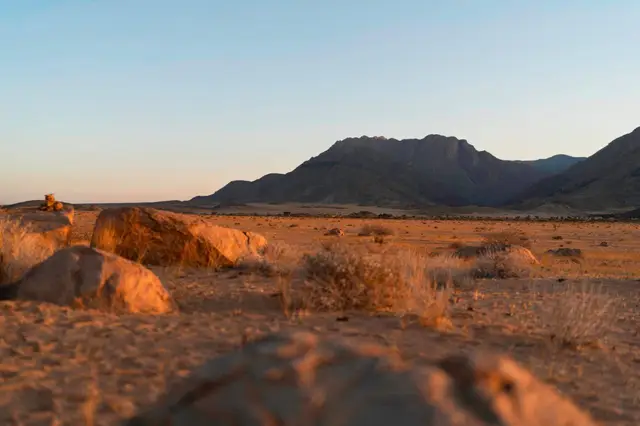
Here, in the north-west of Damaraland and the Kaokoveld, these lions inhabit semi-desert and desert landscapes. Their habitat stretches across sand dunes, rugged mountains, scree fields, dry riverbeds, the rough Atlantic coast and hidden green oases between the dunes. To survive in this inhospitable environment, the desert lions have become astonishing survival artists.
The territories of these lions are huge, and for good reason. In this barren environment finding enough food is a major challenge. To survive, the desert lions roam vast areas in search of prey, which, alongside antelopes and giraffes, also includes seals. Hunting Cape fur seals on the coast is unique in the world – nowhere else do lions hunt seals and nowhere else do lions walk along the sandy beach.
Encountering a desert lion in this stark landscape is an unforgettable experience that instils a deep respect for the adaptability of these animals. But what makes these encounters even more fascinating is the fact that these lions live outside national parks. Where else in the world does that happen?
In the following sections we will take you into the world of the desert lions in Namibia. You will find out where you might have the best chance of seeing the lions for yourself and we will share our own experiences of meeting these impressive lions.
Our travel experience
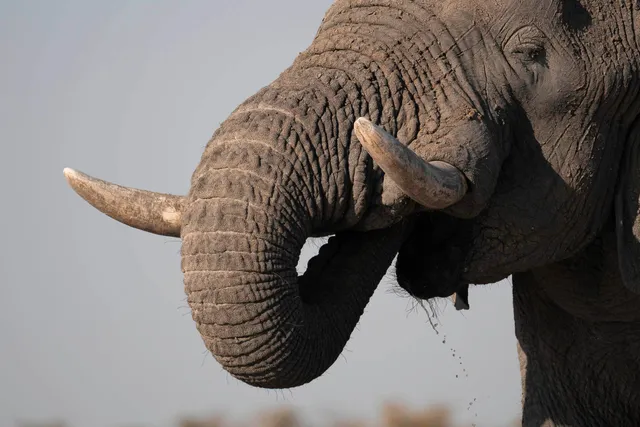
Our trip to Namibia this year took us to the Damaraland, where we wanted to explore the Hoanib. Our aim was to go in search of the legendary desert elephants there and to research a few things for the new edition of our Namibia travel guide.
We did know that in theory we might also encounter desert lions there, but since these animals are so incredibly rare, we really had no hopes at all. But, as so often in life, things turn out differently from what you expect. What follows is a short travel report about a special day in one of Namibia’s best-known dry rivers, the Hoanib.
The drive to Elephant Song Campsite
In Sesfontein, a small place in the northern Damaraland, we make a short stop to buy a few groceries. Apart from a few tins, rice and pasta the little shop does not have much to offer, so we head to the liquor store a few metres further on. We buy a few cans of cold beer and continue our journey into the Hoanib.
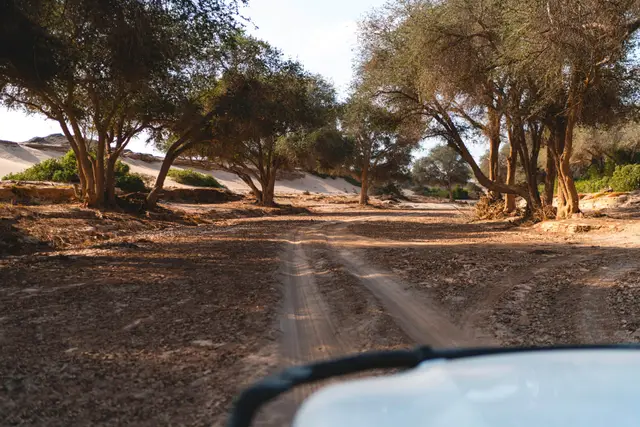
Shortly after Sesfontein we leave the road and take the access track down to the Hoanib. We pass numerous mopane bushes and deep ruts in the ground, which must have been left behind by the last rainy season.
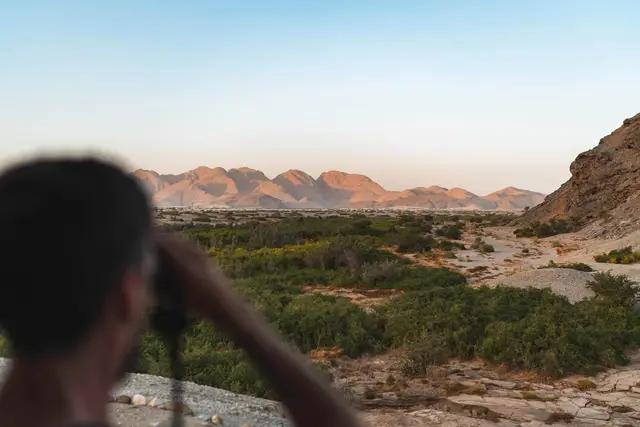
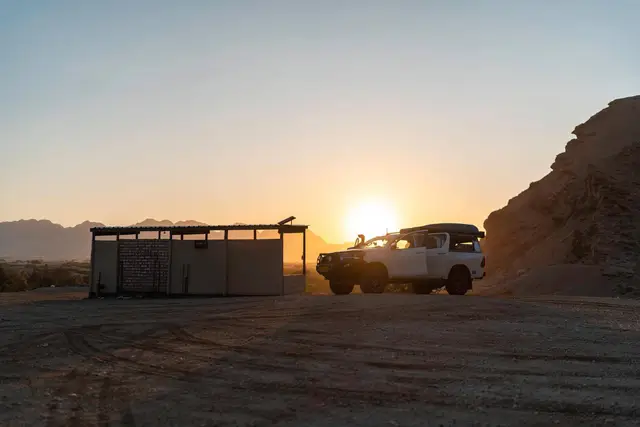
Our destination is the Elephant Song Campsite, which is located right in the middle of the Hoanib. Even the drive there is very exciting. To reach the campsite we have to cross the riverbed from one side to the other. We go up a small rise and through reeds. The campsite is slightly elevated, so we can enjoy a fantastic view of the green riverbed.
An unexpected encounter with desert lions
The next day we drive down into the Hoanib early in the morning. We are full of excitement about what awaits us and really hope to see the desert elephants of the Hoanib. We are also very curious to see how demanding the driving in the riverbed will be.
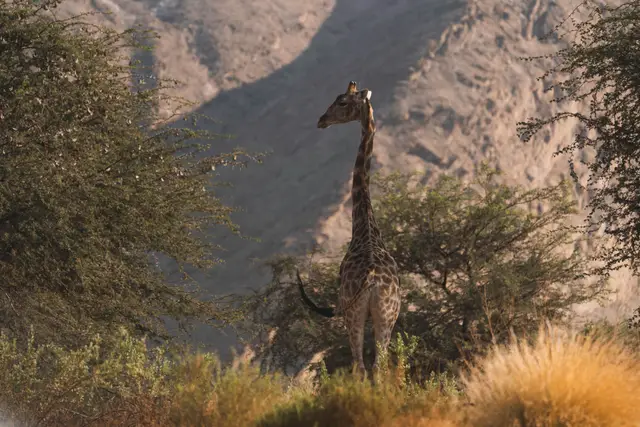
From the very first second the landscape of the Hoanib casts its spell on us. Reeds and mountains flank the track through the easily drivable sand. A giraffe runs through the riverbed in front of us and we spot various birds in the branches. There is a hoopoe and a swallow-tailed bee-eater flies through the air, returning again and again to the same branch.
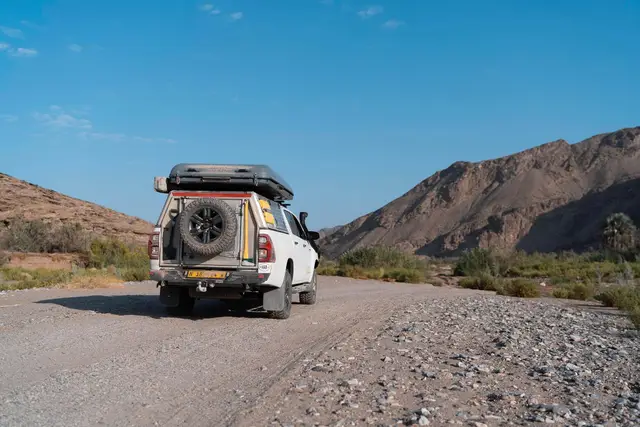
At a waterhole we want to leave the riverbed via a sandy slope at the side. Our 4x4 makes its way up without any problems. On our first trip to Africa we would definitely not have dared to do that. A few trips later, it is incredibly good fun.
We are parked a little out of sight at the waterhole, which is surrounded by many bushes, and we watch numerous birds. With the engine off we listen to the birds chirping and it feels as if we have landed in the middle of an oasis.
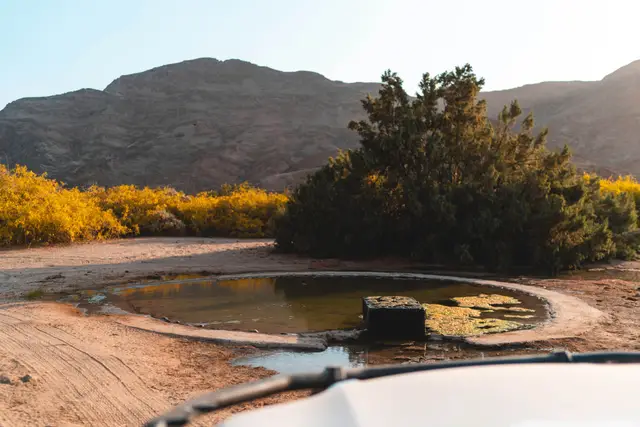
As there is no one around for miles, Tobi gets out to quickly relieve himself behind the vehicle. When you’ve got to go, you’ve got to go. Shortly afterwards, other tourists appear as if from nowhere and ask whether we have seen the lions. At first we thought they were just joking because they might have seen us get out of the car. But it is true. Just a few bushes away a pride of lions is lying well camouflaged in the thicket.
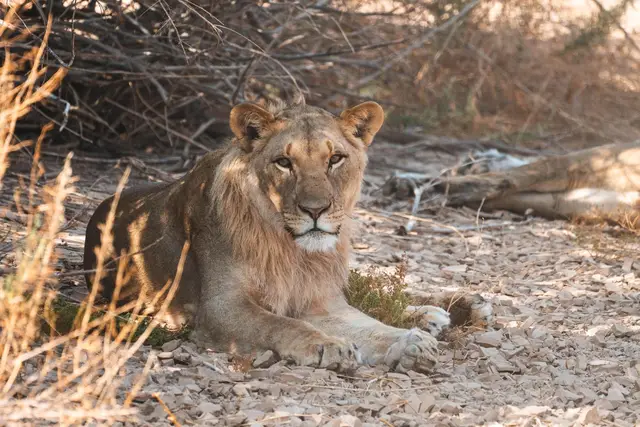
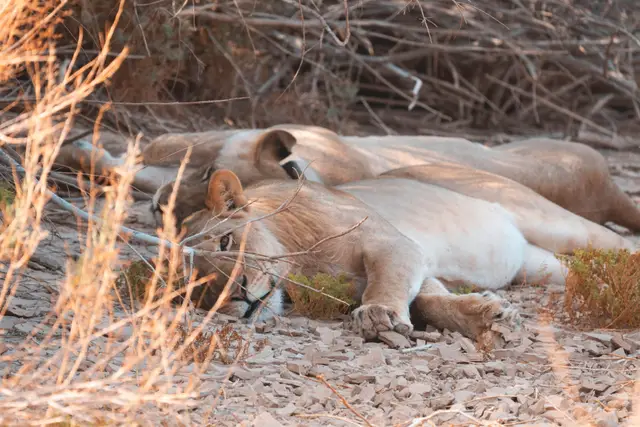
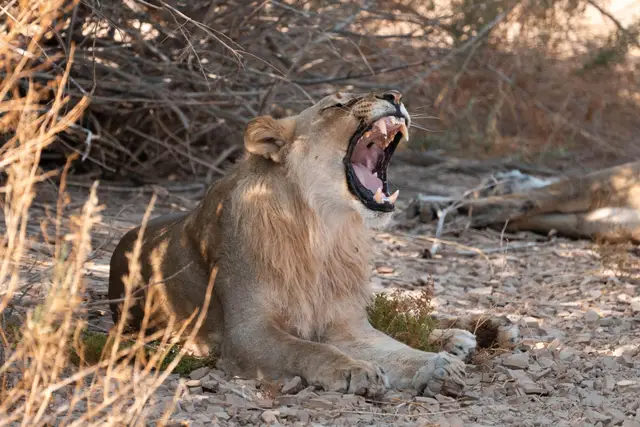
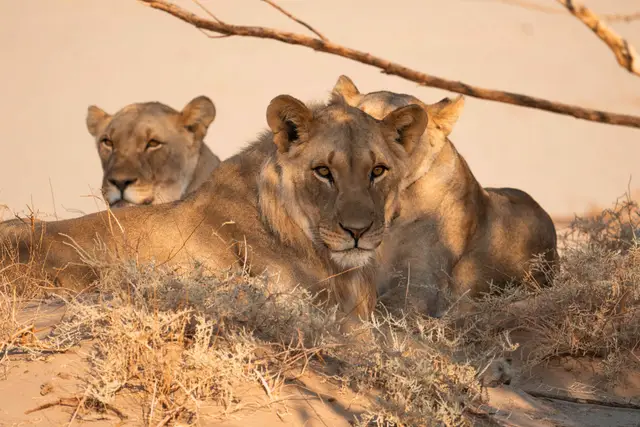
There are three lions: two females and one male. We can hardly believe our luck. These mighty animals look so peaceful in the shade of the bushes. They doze and yawn and after a while we decide to leave them in peace again and continue our drive through the Hoanib.
Another encounter with the great predators
Over the course of the day we have many more wildlife encounters (yay, the elephants are among them too) and our excitement grows by the minute. In the afternoon we start heading back to the campsite. The sun is already low and we decide to drive past the spot once more where we saw the desert lions. We are a little worried that we might not make it back to camp in daylight. But we can’t resist and make for the waterhole we visited in the morning.
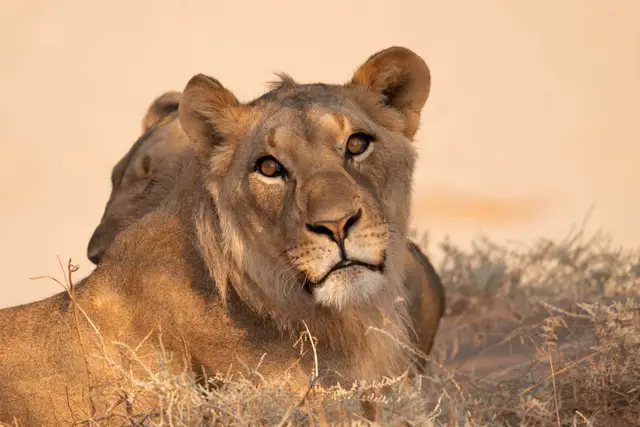
When we reach the bushes, we can no longer find the lions. We drive around searching for them. Just as we are about to give up, we see the pride lying well camouflaged in the dunes. The females are lying in the sand with their legs stretched out. The male is lying there with his head held up in the soft light of the setting sun and yawning. He has only a very small mane and the moment is simply beautiful.
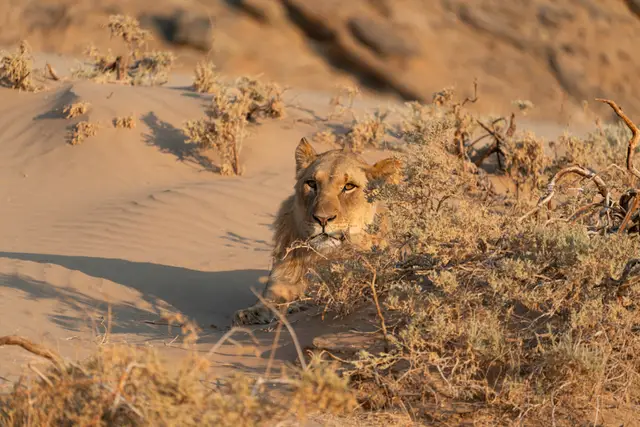
We take photos and enjoy having the animals all to ourselves. At some point a safari vehicle from an exclusive lodge in the Hoanib arrives. The safari guests look just as thrilled as we do. We quietly wave goodbye to the lions and the other tourists and make our way back.
It gets darker with every minute and we reach our camp with the last light. We sit around the campfire and look back over the day. What an adventure. The wildlife encounters and the magic of this remote desert landscape have moved us deeply and will stay with us for a long time to come.
On the trail of the desert lions: The best region and tips for getting there
Desert lions in Namibia live in the north-west of the country. The regions you need to travel to are called Damaraland and Kaokoveld. The region lies between Etosha National Park in the east and the Atlantic in the west.
These areas are in parts very remote and isolated. The roads that run through them are tracks or wheel ruts through sand or gravel. Every now and then you pass a community.
The area where the lions live covers around 100,000 square kilometres. The lions are therefore spread very thinly here. Finding them is very difficult and you need a lot of luck. You are most likely to be successful in the region’s dry riverbeds, as there is food and water there. The prey animals of the lions stay in the dry riverbeds. In general, lions follow their prey.
If you want to explore the region on your own, we recommend a 4x4 vehicle, as there are only sand and gravel tracks. Some tracks, for example in the dry riverbeds, run through deep sand and are a bit more difficult to drive. A vehicle with four-wheel drive and ground clearance is essential here.
Your guide to Namibia’s desert lions: Our Namibia travel guide
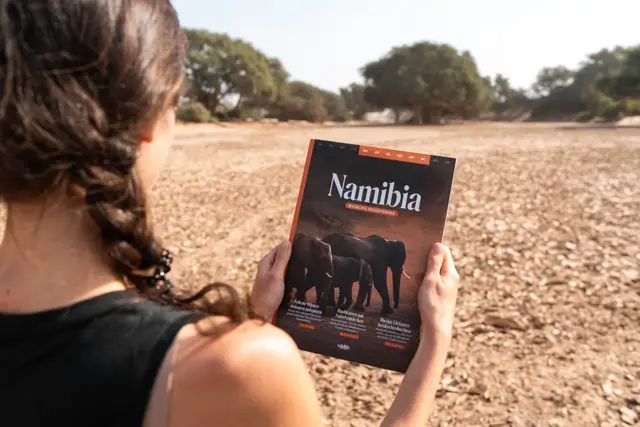
We have written a travel guide for Namibia. In it we present the most beautiful wildlife regions in the country and share practical tips on how to watch animals respectfully in their natural habitat.
Damaraland is also one of the most beautiful wildlife regions. In the travel guide you’ll find helpful information if you want to explore Damaraland as a self-drive traveller. There are detailed maps, for example of the Hoanib with the waterholes, wildlife watching tips and activities.
The travel guide is also ideal if you’re travelling to Namibia for the first time, as we still remember very clearly the worries and questions we had back then. You can easily order the Namibia travel guide in our shop.
Sustainability and protection of Namibia’s desert lions
Lions are large and powerful predators. No wonder they are particularly feared by rural communities. Due to droughts, it happens again and again that lions come close to villages and kill the livestock of the people living there. The predators in this region are therefore frequently exposed to human–wildlife conflict.
For lions to survive in this part of Namibia outside national parks, local people must be able to benefit in order to want to live alongside wildlife. The animals need to have value for the population. We as tourists can play an important role here, because we visit a region in order to be able to watch these animals there. We sleep in lodges or on campsites and pay for our stay. The local population benefits from the money that tourists bring into the region.
This is possible because in Namibia, especially in the north-west, there are community conservation areas known as conservancies. The 1990s were a special time for Namibia:
Before Namibia’s independence in 1990, residents had few rights regarding wildlife. After legal changes in the 1990s they can now actively manage wildlife and other resources and benefit from them by creating protected areas. The conservation areas bring people together with the common goal of managing their resources. Today, a quarter of Namibia’s rural population lives in more than 60 communal conservancies.
Alongside the communal conservancies there is also a non-profit organisation called “The Desert Lion Trust”, founded by Dr Philip Stander.
For decades now Dr Stander has been studying the lives of desert lions in Namibia. To do this he follows the lions through the desert in a Land Rover called Arnold and documents their behaviour. There is probably hardly anyone who knows more about these desert-adapted animals.
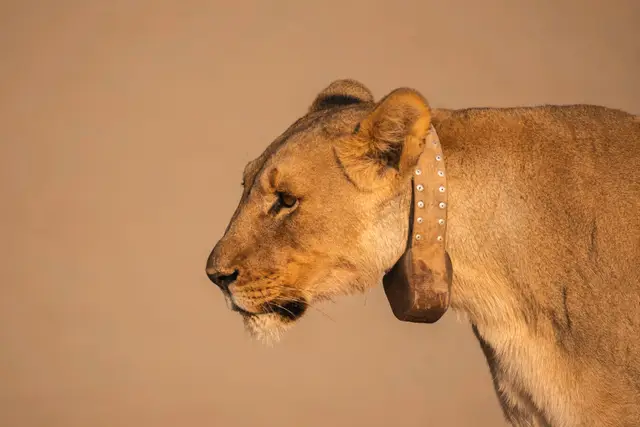
The work of “The Desert Lion Trust” includes researching the behaviour of the lions in order to develop protection strategies, monitoring the lion population, managing human–wildlife conflict and fitting them with radio collars.
If you’d like to find out more about desert lions and the work of Dr Stander, we recommend these documentaries:
Our conclusion
The life of the desert lions in the north-west of Namibia is shaped by many challenges, especially conflicts between people and wildlife. But there is hope, and it lies in the connection between tourism and local communities.
The creation of conservancies has helped ensure that the local population is developing a growing interest in protecting the desert lions. Through sustainable tourism, we as travellers can actively help to conserve these majestic animals and their habitat.
With our own Namibia Travel Guide we not only support local guides, you also receive a detailed map of the Hoanib with all the waterholes. We also answer important questions to help you travel safely through the region.
Would you like to get more insights into our adventures and exclusive behind-the-scenes stories? Then subscribe to our monthly newsletter and stay up to date.
Together we can help protect and preserve the fascinating world of the desert lions in Namibia. Join in and be part of this special journey!
More articles
Destinations in this article
Plan your trip in the app.
Save activities and places to stay, put your route together and take everything with you offline.