Translated from German. We write our content in German.Show original
Namibia national parks: The best places to watch wildlife

By Laura & Tobi · ·
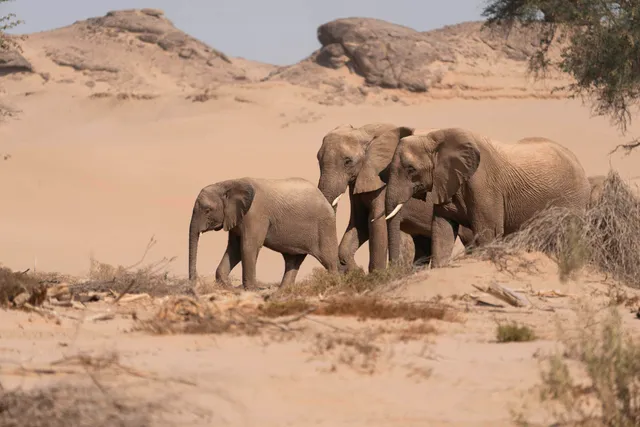
The national parks are the highlight of any trip to Namibia, as many different wild animals live there. Tracking them down and watching them is a unique experience that will stay with you for a long time.
In Namibia the national parks are an excellent destination for watching animals in their natural habitat. Even today many wild animals still live in Namibia, including elephants, lions, leopards and rhinos. But these are by no means all the animals you can discover on a self-drive safari. In this article we show you the most beautiful national parks where you can enjoy unforgettable safari experiences.
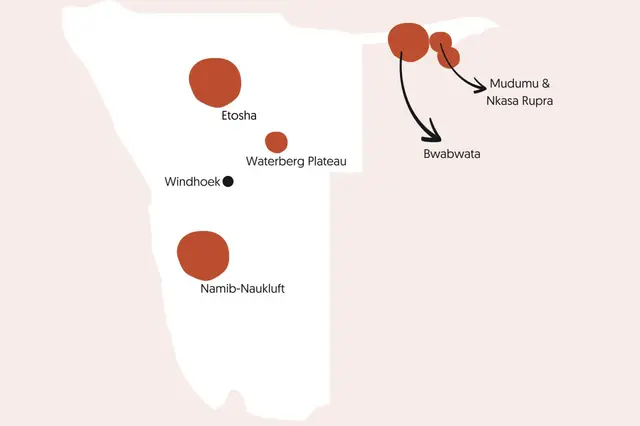
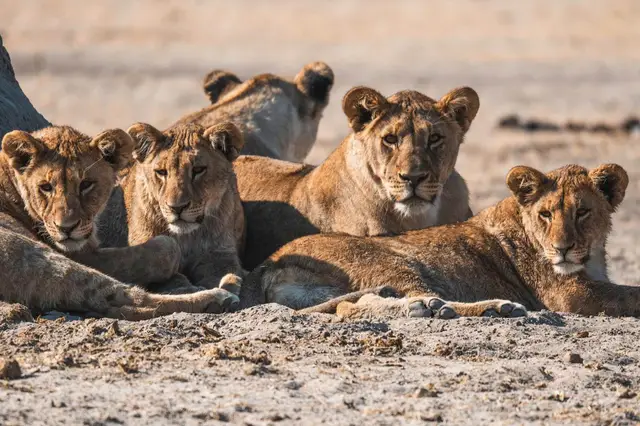
Etosha National Park – the heart of wildlife watching in Namibia
Etosha National Park is Namibia's most famous wildlife reserve and offers the highest density of animals in the country. Especially in the dry season, elephants, lions, rhinos, giraffes and numerous antelope species gather at the remaining waterholes – a real spectacle for safari fans. With its well-developed road network, the park is ideal for self-drivers.
Alongside the impressive wildlife, the landscape is also unique: the huge Etosha Pan covers a third of the park and its bright white surface creates fascinating contrasts with the surrounding savannah.
Highlights:
- High chances of seeing lions, leopards and rhinos
- Namibia's highest density of animals with great sightings at the waterholes
- Perfect safari destination for self-drivers thanks to the well-developed road network
- The impressive Etosha Pan as a scenic highlight
Our tip: Etosha definitely belongs on your route through Namibia. We have put together route recommendations for exciting game drives (as safaris are also called in Namibia) for you in our app. On them you will find the best waterholes in Etosha National Park.
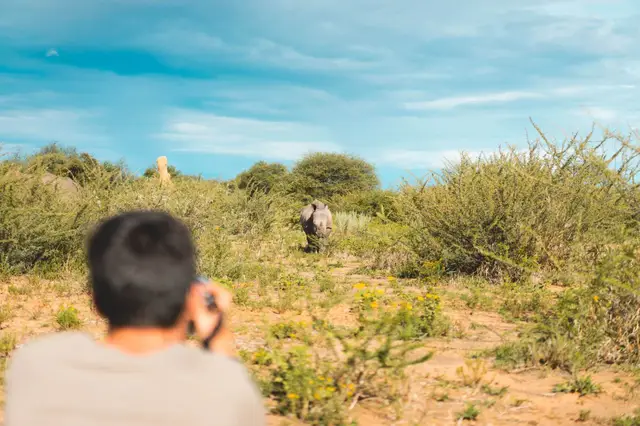
Waterberg Plateau National Park – Namibia's green table mountain
The Waterberg rises as a green plateau from the dry savannah and offers a completely different landscape from most of Namibia's other national parks. Threatened species such as white and Black rhinoceros live here, as well as a large population of baboons. The dense forests also provide a home for birds and antelopes.
Highlights:
- Option of guided safaris and walking safaris such as rhino tracking
- Home to white and Black rhinoceros
- Short hiking trails with spectacular viewpoints
- Rare antelope species such as sable antelope and eland
In Waterberg Plateau National Park, however, you cannot go on safari in your own vehicle. You can instead join guided game drives to see the animals.
Our tip: For us, the Waterberg Plateau is one of the most beautiful wildlife regions in Namibia. Our Namibia travel guide gives you an overview of the most beautiful regions and activities, while you can save your favourite places in it.
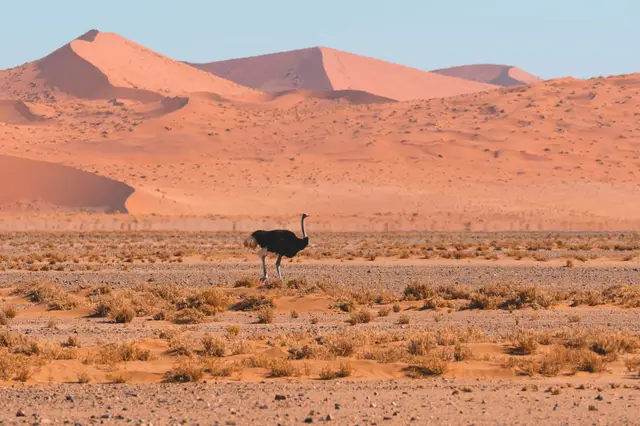
Namib-Naukluft National Park – desert wildlife in a surreal landscape
Namib-Naukluft National Park protects the oldest desert in the world and offers breathtaking landscapes with the famous red sand dunes of Sossusvlei. Despite the extreme conditions there is an astonishing variety of wildlife here, including gemsbok, springbok, South African ostriches and jackals. The wildlife amazes with creative techniques for obtaining water.
Highlights:
- Gemsbok and South African ostriches in a unique setting
- Impressive dunes of Sossusvlei and the Deadvlei
- Small creatures often go unnoticed – make them glow on a night walk
- Look for spotted eagle-owls in the branches of the camelthorn trees
Our tip: The park is part of our Namibia travel guide, as it is one of the most beautiful wildlife regions in the country. In the travel guide you will find hand-picked activities – simply let yourself be inspired and discover your favourite places.
Bwabwata National Park – wilderness in the Caprivi Strip
Bwabwata National Park links the Caprivi Strip with the Okavango River and is an important migration route for elephants and other wildlife. Thanks to the combination of wetlands, floodplains and savannah, the park offers an incredible variety of animals, including buffalo, lions and a large population of hippopotamus and crocodiles.
Highlights:
- Large elephant herds along the rivers
- A paradise for birdwatchers with over 400 species
- Take a boat trip at sunset on one of the rivers
- Low visitor numbers for exclusive wildlife encounters
Our tip: Adventure begins where the mobile masts end. Bwabwata National Park is such a place. That is why you can download everything there to your smartphone and use it offline.
Mudumu National Park – untouched wilderness on the Kwando River
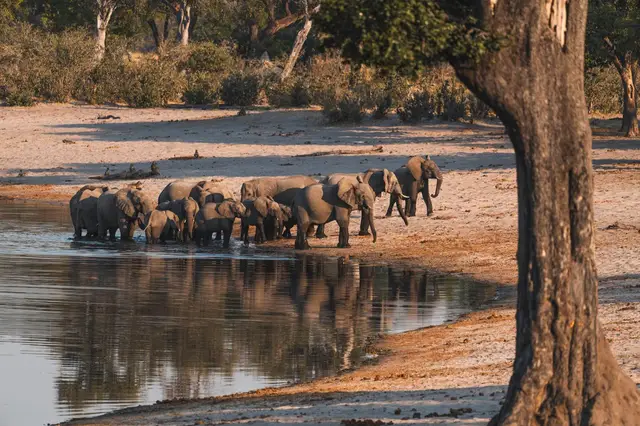
Mudumu National Park is one of Namibia's lesser-known parks but offers a real safari experience away from the crowds. The open landscape with riverine forest and floodplains attracts numerous animals, including buffalo, bohor reedbuck and lions. Particularly impressive are the huge elephant herds that regularly come down to the river.
Highlights:
- Large buffalo and elephant herds that you can watch from a hide
- From here you can see Botswana and watch water-loving antelope species
- Spend the night at the adventurous campsite in the middle of the national park, which is not fenced
- Few tourists, so authentic safari experiences and a bush breakfast at the hippo pool
Our tip: Mudumu National Park is included in our app. With the app you can save all activities in this remote national park and always have everything to hand.
Nkasa Rupara National Park – the 'little Okavango Delta' of Namibia
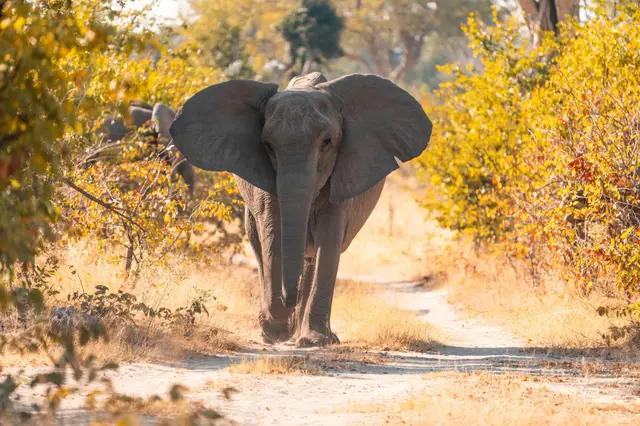
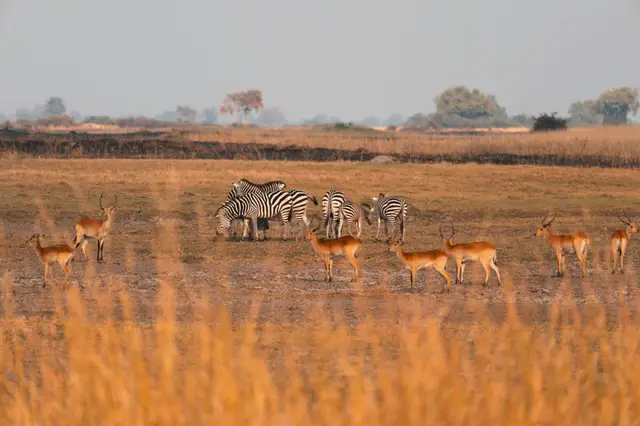
This park is Namibia’s most water-rich protected area and with its numerous waterways and wetlands it is strongly reminiscent of the famous Okavango Delta. During the rainy season the park turns into a vast swamp that attracts an incredible number of waterbirds. You can also see elephants, various antelope species and buffalo here.
Highlights:
- Unique wetland landscape with many river channels
- Perfect for birdwatchers with numerous rare species
- A good spot to track lion spoor on the lonely sand tracks
Our tip: Nkasa Rupara National Park is included in our app. With the app you can save all activities in this remote national park and always have everything to hand.
How much do Namibia’s national parks cost?
Entrance to Namibia’s national parks can be paid directly at the park gate. Fees are charged per person, vehicle and day.
The fees consist of two components:
- Entrance + conservation fee for the Game Trust, which is intended to compensate people affected by human–wildlife conflict.
- Vehicle fee + conservation fee, which goes to the Ministry of Environment, Forestry and Tourism
| National park | Entrance 2025 |
|---|---|
| Etosha National Park, Namib-Naukluft Park, Waterberg Plateau National Park | 150,00 NAD adults, children under 16 go free 50,00 NAD vehicle |
| Bwabwata National Park, Mudumu National Park, Nkasa Rupala National Park | 100,00 NAD adults, children under 16 go free 50,00 NAD vehicle |
What defines a national park in Namibia?
Namibia has countless protected areas – to be precise, there are 148, of which 21 are state managed protected areas whose aim is to protect Namibia’s biodiversity.
What is particularly remarkable about Namibia is that the entire coastline is protected. Hardly any other country in the world can say this. And that is a good thing, because Namibia has a rich marine ecosystem created by the Benguela upwelling system. The coastal waters are among the most fish-rich in the world.
Namibia is also part of several transboundary conservation areas such as /Ai/Ais-Richterveld, Iona Skeleton Coast and KAZA (Kavango-Zambezi Transfrontier Conservation Area).
As you might already have guessed, Namibia has exceptional conservation areas. Conservation is even enshrined in Namibia’s constitution. Here too Namibia is a pioneer, as there are only a few countries where conservation is anchored in the constitution.
Most protected areas in Namibia fall into category II of the IUCN (International Union for Conservation of Nature) and therefore carry the designation “national park”. National parks are protected areas that are managed primarily to protect ecosystems and for recreation.
In addition to the national parks Namibia has other protected areas. These are divided into communal conservancies and concession areas. The latter are state-owned land that is leased to private concessionaires for a specific period. And then there are a few private reserves. These include for example:
- Palmwag concession in Damaraland and
- NamibRand Nature Reserve.
Do you still have questions about any of Namibia’s national parks? Then feel free to write to us in the comments.
Plan your trip in the app.
Save activities and places to stay, put your route together and take everything with you offline.