Cette page n’existe pas encore en français : nous te montrons la version disponible.
Namibia as it was 200 years ago

Par Laura & Tobi ·
It’s hard to imagine how rich in wildlife Namibia must have been hundreds of years ago. Here you can get an impression of it.
Wow, Namibia’s wildlife has been pretty impressive so far, hasn’t it? And now Bwabwata is luring you in with its wetlands, through which elephant herds and antelopes roam. Namibia is just incredibly rich in wildlife. But what was it actually like 200 years ago, before the colonial powers had taken possession of the African countries?
From abundance to threat: elephants through the ages
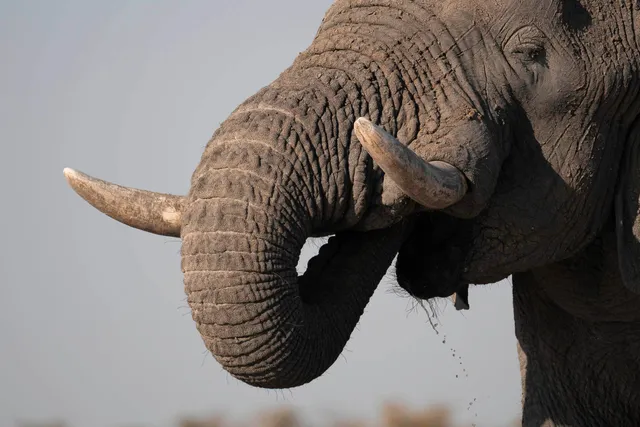
Back then an estimated 20 million elephants roamed across the entire African continent. An unimaginable number when you consider that there are only 350,000 elephants left today.
Since colonisation elephants have been heavily threatened because of their ivory tusks. Poaching is putting huge pressure on populations and their habitat is becoming ever smaller and more fragmented. While there used to be many continuous wilderness areas, today elephants repeatedly encounter inhabited regions in their search for habitat. Conflicts between people and animals are then often inevitable.
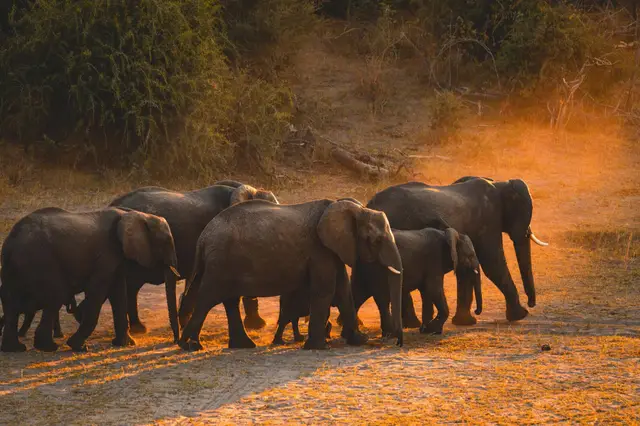
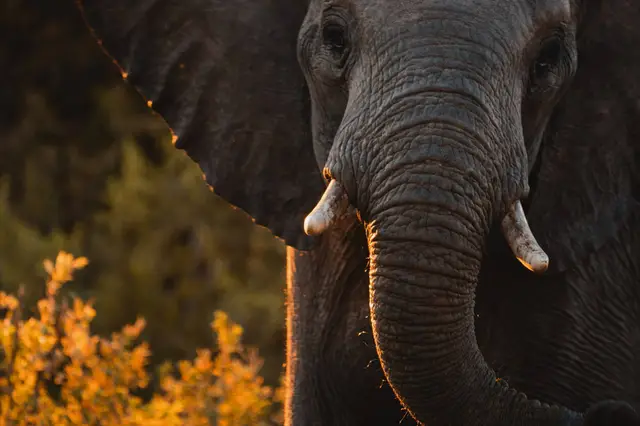
Veterinary fences may prevent the spread of disease, but they also interrupt migration routes.
Conflicts between people and wildlife
Just imagine elephants in search of food coming across small villages and destroying the farmers’ meagre harvest in no time at all. It is very tragic when, in the struggle over the crops, either people or elephants lose their lives.
Bwabwata National Park as a refuge for elephants
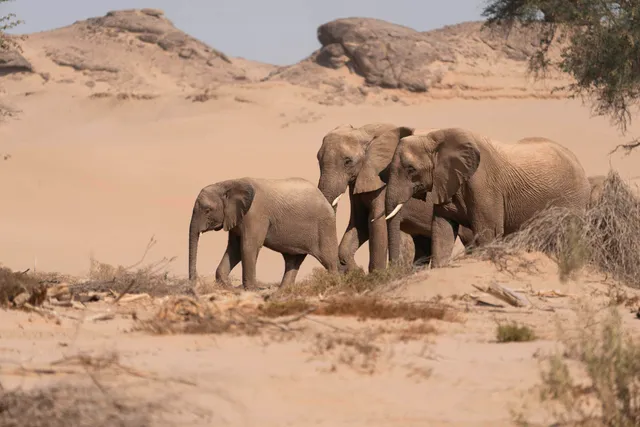
Because of its location, Bwabwata National Park is an important cross-border corridor to the neighbouring countries Angola, Botswana and Zambia. In Namibia the majority of elephants live in this region, as they can move freely here and find good living conditions.
The national park is not fenced in as a whole, but there are some isolated veterinary fences to prevent diseases and epidemics from being transmitted from wild animals to livestock. Border fences and roads also partly restrict elephants in their migrations. You can see that even in this region elephants encounter people and have to share their habitat with them.
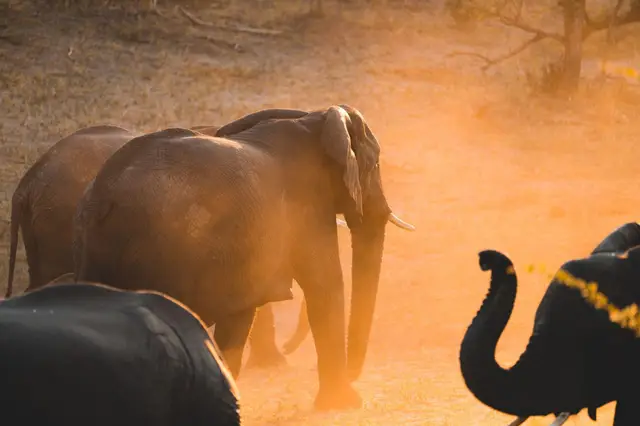
At the time of your trip your chances of seeing large elephant herds are better than ever.
One of the largest conservation areas
How wonderful would it be if the animals’ old migration routes were fully restored and elephants could move around safely. And how amazing would it be if the local population benefited directly from tourism? And you know what? That is exactly what is happening in this region. There is a huge project that aims to restore the migration routes while at the same time involving the local people. The project is called KAZA.
KAZA is a transboundary conservation area of the five states Namibia, Botswana, Angola, Zambia and Zimbabwe. As early as 2011 the heads of state signed the treaty for KAZA with the aim of connecting a total of 36 national parks, reserves and protected areas in these countries with corridors. The total area of KAZA will be around 520,000 square kilometres, 1.5 times the size of Germany. Not bad, because only Northeast Greenland National Park will then be an even larger protected area.
To be honest, the entire KAZA area still resembles more of a patchwork quilt today. But some livestock fences have already been dismantled or fitted with gates that are opened at night so that elephants can pass through. And even if many protected areas are still isolated from one another, in Bwabwata you already get a good impression of what it could one day be like everywhere.
Elephant migrations in Bwabwata
During the rainy season the elephants in Bwabwata find water in addition to the river systems. At this time they are therefore not dependent on the rivers and can even migrate into one of the neighbouring countries, as in Bwabwata no fence stops them from leaving the park. At the time of your trip it’s different, because now elephants can quench their thirst only at the rivers that carry water all year round. So your chances of watching elephants extensively in Bwabwata National Park are better than ever.
Enjoy your time in the Caprivi Strip!
Pour aller plus loin
Planifie ton voyage dans l’app.
Enregistre activités et hébergements, compose ton itinéraire et emporte tout hors ligne.