Cette page n’existe pas encore en français : nous te montrons la version disponible.
Big Five safari in Namibia: These are the best spots

Par Laura & Tobi ·
We show you the best places to experience the Big Five in Namibia – whether on your own or on a guided tour with a guide.
Are you ready for an unforgettable encounter with Africa’s most powerful wild animals? In Namibia’s vast savannas and stark desert landscapes, a unique wildlife experience awaits you. Here, the famous Big Five – lion, leopard, elephant, rhinoceros and buffalo – live under special conditions that make them true masters of survival.
As we take you through Namibia’s different regions, you’ll not only find out where you can best watch the Big Five, but also how they have adapted in fascinating ways to the extreme conditions. From the legendary desert elephants to the rare white rhinoceros – every encounter tells its own story of adaptation and survival.
Which animals are part of the Big Five?
The Big Five are among Africa’s most fascinating wild animals. Originally, big game hunters used the term for the most dangerous animals; today they are the most sought-after photo subjects on safari. In Namibia you can experience all these majestic animals in the wild – especially in Etosha National Park.
These are the Big Five:
- African bush elephant: The largest land animal on earth impresses with its intelligence and social behaviour. In Namibia, rare desert elephants live here, perfectly adapted to the arid landscape.
- White rhinoceros: Threatened with extinction, but thanks to conservation projects the population is slowly recovering. You can observe these impressive animals especially at Waterberg Plateau.
- African buffalo: Unpredictable and powerful – in large herds they cross the more humid north-east of Namibia. Keep an eye out for the “Dagga Boys”, old bulls that roam on their own.
- Lion: As a symbol of the wilderness, lions can be found in Namibia among other places in Etosha National Park and as desert lions in the north-west. Best time to see them: dry season at waterholes.
- Leopard: Shy and nocturnal – leopards are difficult to spot, but with a bit of luck you can see them in rocky areas or at Okonjima, where guided safaris offer good chances.
The Big Five are not evenly distributed in Namibia. Here you’ll find the key regions:
- Etosha National Park: Main habitat for lions, leopards and elephants
- Damaraland: Home of the famous desert elephants and black rhinoceros
- Waterberg Plateau: Important protected area for rhinoceros
- Caprivi Strip: Only region with buffalo
Ready for your own Big Five adventure? With our app you can plan your safari perfectly – including the best spots for wildlife watching, also available offline. Plan your route so that you have the best possible chance of seeing all of the Big Five!
Etosha National Park – lions, elephants, leopards and rhinoceros
Etosha National Park is the ultimate destination for wildlife viewing in Namibia and one of the best places to experience four of the legendary Big Five. Here, lions, elephants, leopards and the rare rhinoceros gather at the numerous waterholes – only the buffalo is missing in this impressive park. The unique landscape with its huge salt pan and the excellent infrastructure make the park a must-see on your Namibia trip.
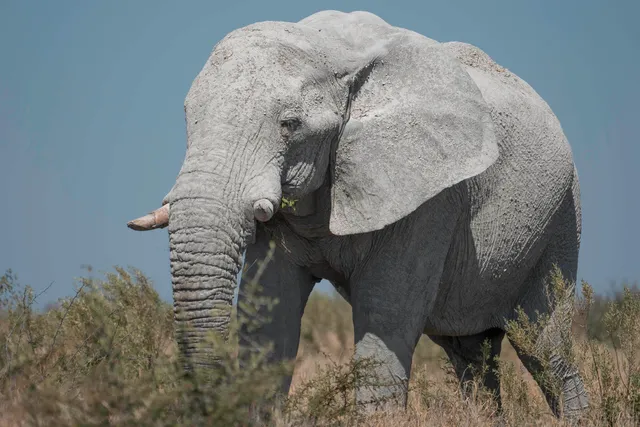
What makes Etosha so special are the floodlit waterholes in the camps. Here you can watch the fascinating wildlife at night too – an unforgettable experience when elephants, rhinoceros and lions come to drink under cover of darkness.
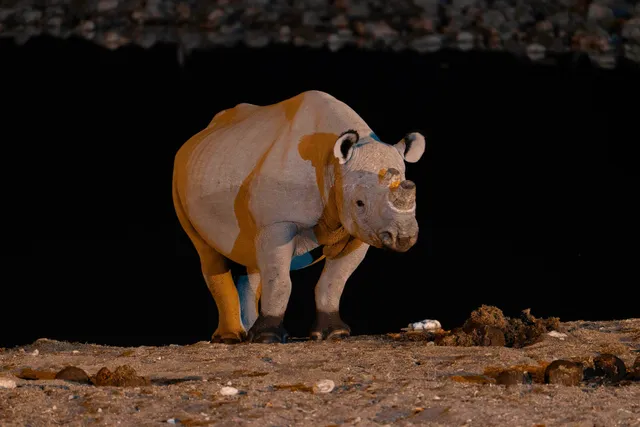
The gigantic salt pan is the heart of the park. In the rainy season it turns into a shallow lake and attracts thousands of flamingos. During the dry season, the mineral-rich soils attract countless animals – a spectacular natural spectacle that you can experience on various game drives.
The park is excellently developed and offers:
- Well-developed roads to all the main waterholes
- Several camps with accommodation and campsites
- Strategically placed viewpoints
- Petrol stations and shops in the main camps
Where can you see the animals?
- Lions: These majestic predators can be seen particularly well at waterholes such as Okaukuejo
- Elephants: Large herds visit the waterholes every day – an especially impressive sight
- Leopards: These shy big cats can be spotted with a bit of luck in the early morning and evening hours
- Rhinoceros: Both black and white rhinoceros live here in a protected environment
Ready for an unforgettable safari? You’ll find the best waterholes and which animals you’re most likely to encounter there in our free app.
Bwabwata National Park – lions, leopards, elephants and buffalo
In the heart of the Caprivi Strip lies Bwabwata National Park – a fascinating wildlife paradise that is home to four of the legendary Big Five. Here, where expansive savannas alternate with dense forest areas, you gain a unique insight into Namibia’s wild soul. Particularly remarkable is the park’s role as an important migration corridor for elephant herds between Angola and Botswana.
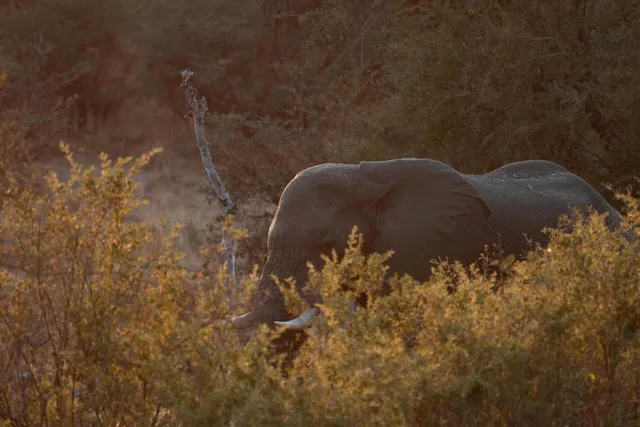
The park gives you the chance to experience four of the Big Five in their natural environment:
- Lions: These majestic predators roam through the savanna landscape. Watch out for them in the shade of bushes and trees.
- Leopards: These shy hunters are particularly active in the early morning and late evening hours.
- Elephants: Large herds cross the park on their traditional migration routes and often congregate at waterholes in the afternoon.
- Buffalo: These imposing herbivores are often found close to waterholes.
The rhinoceros is unfortunately missing from this impressive list – a sobering reminder of how important it is to protect these endangered species. Would you like to find out more about the dramatic situation of rhinoceros? Then read our article on rhinoceros poaching in Africa.

Sustainable tourism and ecological importance
Bwabwata National Park is more than just a protected area – it is a flagship model for sustainable tourism. The local population benefits directly from visitor income, which contributes to the region’s economic development. It’s best to plan your safari in the park with our app, which also provides reliable information offline.
The park also plays a central role in preserving biodiversity in the region:
- Migration corridor: Important migration corridor for elephant herds between Angola and Botswana
- Diversity of vegetation: Protection of various vegetation zones from wetlands to dry savanna
- Important water sources: Preservation of key waterholes for wildlife
- Preserving migration routes: Safeguarding traditional migration routes for various wildlife species
Particularly fascinating is watching the elephants as they follow their centuries-old routes through the park. These majestic animals are a living symbol of the importance of cross-border conservation areas.
Waterberg – rhinoceroses, leopards and buffalo
The Waterberg is a truly special gem for wildlife viewing. Here the focus is mainly on the rare white rhinoceroses and black rhinoceroses, shy leopards and powerful buffalo. Unlike many other parks, the Waterberg is home to no elephants or lions – but that certainly does not make it any less exciting. A unique adventure awaits you here, with tracking tours on foot offering particularly special encounters.
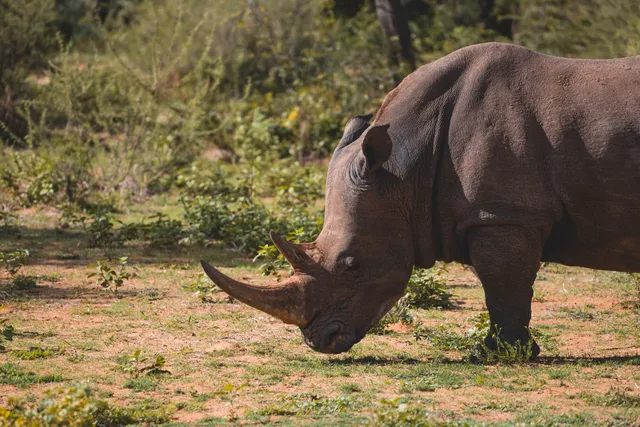
When exploring the Waterberg we are repeatedly fascinated by the dense vegetation of bush and acacia woodland. It does make wildlife viewing more demanding, but that is exactly what makes every moment of a sighting so especially intense. We recommend you use it so that you always have the best spots for wildlife viewing readily to hand offline as well.
Important information for your visit
- Access only with a guide: The plateau may only be entered when accompanied by a ranger – for your safety and to protect the animals
- Special tracking tours: The highlight activity is tracking rhinoceroses on foot or the Rhino Drives
- Optimal viewing times: Early morning and late afternoon offer the best chances of sightings
Hoanib – elephants, lions, leopards and rhinoceroses
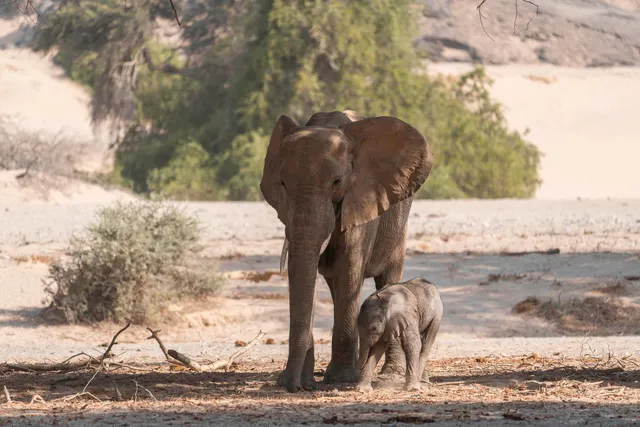
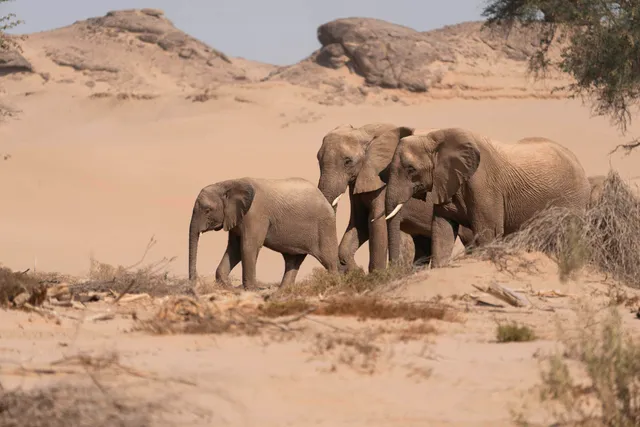
The Hoanib in the north-west of Namibia is a fascinating example of how wildlife can adapt perfectly to extreme living conditions. Here you will find a unique population of the Big Five that has adapted over thousands of years to life in one of the driest regions in Africa. It is especially the desert lions and desert elephants that make this region a truly special place.
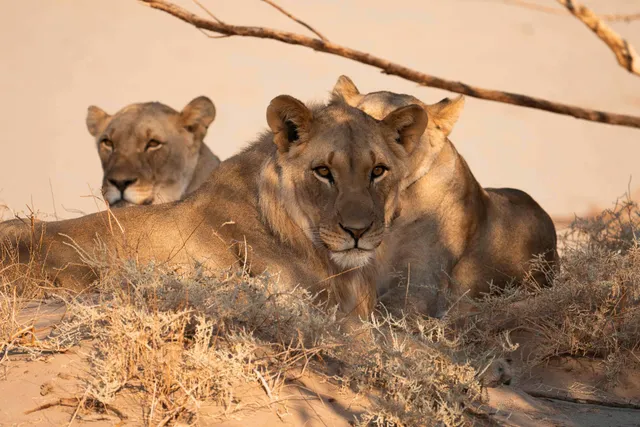
The desert elephants and lions of the Hoanib have developed astonishing adaptation strategies:
- Cover long distances: They travel significantly greater distances than their counterparts in other regions
- Lower water consumption: Their water consumption is considerably reduced
- Efficient use of resources: They have learnt to use the few available resources to optimum effect
Leopards and the highly endangered black rhinoceroses have also found a home in the Hoanib. They move freely through this inhospitable area and have developed special survival strategies. While leopards are mainly active at night to escape the heat, the rhinoceroses have learnt to get by with minimal water consumption.
Would you like to experience these unique animals for yourself? With our app you can plan your safari perfectly – including offline mode when you are on the road. We have already marked the best spots for wildlife viewing for you!
Strategies for spotting the Big Five in Namibia
Spotting the Big Five requires not only patience but also the right strategy. We show you how to maximise your chances of unforgettable encounters with lion, leopard, elephant, rhinoceros and buffalo – whether on a guided safari or as a self-driver. Particularly important: the right planning and knowing the best times for wildlife viewing.
Guided safaris vs self-drive tours
On guided safaris you benefit from the rangers' expert knowledge. They know where the animals are currently staying and exactly where, for example, the lions in Etosha prefer to hang out. The downside: you are tied to the tour schedule and cannot spontaneously linger longer at an exciting spot.
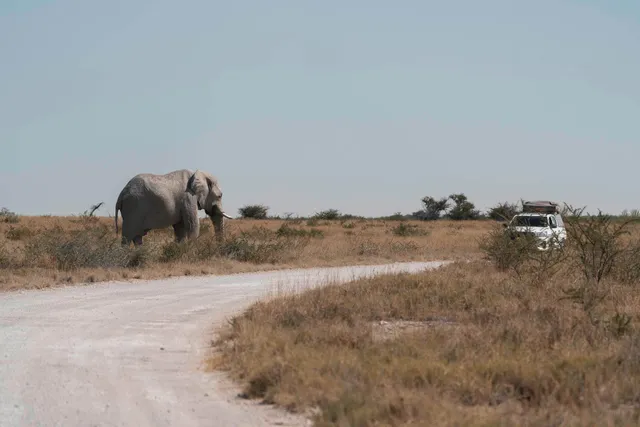
As a self-driver you enjoy maximum flexibility. You decide yourself when and how long you stay at a waterhole. With the app you also have offline access to the best spots for wildlife sightings. Perfect for spontaneous route changes when you discover fresh animal tracks.
Private reserves as an alternative
Private reserves offer exclusive advantages:
- Smaller visitor numbers
- Possibility to drive closer to the animals
- Often specialised in particular species (e.g. leopards)
- Luxurious accommodation with waterhole views
Timing is everything: the best viewing times
The dry season from May to December promises the best sightings. The animals then congregate at the few remaining waterholes. Particularly promising are:
- Early morning: sunrise to 9am is the ideal time for big cats
- Late afternoon: 4pm to sunset with a high chance of the Big Five
- At night at illuminated waterholes: chance of shy leopards or rhinoceroses
Our tip: Book accommodation such as Okaukuejo Camp with a view of a waterhole. This means you can also watch the animals during the hot midday hours from the comfort of your terrace.
Challenges in protecting the Big Five in Namibia
Protecting the Big Five in Namibia is a complex undertaking that presents various stakeholders with major challenges. In particular, conflict between humans and wildlife as well as the economic burdens on the local population call for well thought-out solutions. We show you which measures are being taken and how you, as a responsible traveller, can contribute to species conservation.
Human–wildlife conflict
Especially in rural areas of Namibia there are regular conflicts between people and desert elephants as well as other large game species. In their search for food and water the animals often roam through settlements, which can lead to dangerous encounters. As a traveller you should therefore always keep a respectful distance.
Economic challenges for the population
The local population often bears the economic burden of wildlife conservation:
- Destroyed harvests caused by elephant herds
- Loss of livestock to big cats
- Damaged infrastructure such as water points and fences
- Restricted freedom of movement in wildlife corridors
Protective measures and possible solutions
Namibia has found innovative ways to ease conflict between humans and wildlife. A key element is involving local communities in conservation:
- Communal Conservancies: Local communities benefit directly from tourism and wildlife conservation
- Compensation programmes: Compensation for loss of livestock and crop damage
- Ranger programmes: Training local wildlife rangers
Special focus: rhinoceros conservation
Protecting rhinoceroses from poachers has top priority in Namibia. At the Waterberg Plateau you can experience for yourself how committed the rangers are to preserving this endangered species. It is best to plan your route to the best viewing points with our app.
Promoting local acceptance
Long-term species conservation only works with the support of the local population. Important measures include:
- Education programmes in schools and communities
- Creating jobs in nature conservation
- Fair distribution of income from tourism
- Integrating traditional knowledge into conservation concepts
Impact of predators on Namibia's wildlife
The presence of large predators such as lions, leopards and cheetahs decisively shapes Namibia's fascinating ecosystem. In this exciting interplay between hunter and hunted, a captivating natural spectacle unfolds that we can experience up close on our wildlife watching in Namibia.
The sophisticated interaction between predators and their prey ensures a dynamic balance in the savannah. Especially in the best time to travel for wildlife watching you can study this behaviour particularly well. Impalas and kudus have perfectly adapted to the constant threat – they form larger groups and develop astonishing survival strategies.
Behavioural changes in prey animals
- Forming larger herds: Antelopes join together in larger groups to increase their chances of survival
- Heightened vigilance: At least one animal in the group is always on the lookout for predators
- Strategic waterhole visits: Prey animals choose specific times of day for drinking to avoid predators
Best wildlife watching opportunities
The Zambezi Region offers you particularly exciting insights. Here animal activity increases especially in the early morning hours and at dusk. With a bit of luck you might witness a lion hunt here or spot a leopard.
Our tip: Download our app to find the best spots for wildlife watching even when you are offline. The app also shows you the optimal times of day for wildlife watching at different waterholes.
Natural corridors and protected areas
The preservation of natural migration corridors is crucial for the survival of many species. In Namibia's national parks these habitats receive special protection:
- Connecting different ecosystems through wildlife corridors
- Creating safe migration routes for prey animals
- Natural spread of predator populations
- Maintaining genetic diversity through exchange between populations
Conclusion: unforgettable encounters with Namibia's Big Five
We have taken you on a journey through Namibia's most fascinating wildlife regions. From the desert elephants in Hoanib to the majestic lions in Etosha – the Big Five reveal a very special side here. With the right preparation, a bit of patience and our tips, nothing stands in the way of your dream safari. Plan your route with our app and experience for yourself how the legendary Big Five turn the Namibian wilderness into a unique adventure. We wish you a fantastic trip!
Pour aller plus loin
Planifie ton voyage dans l’app.
Enregistre activités et hébergements, compose ton itinéraire et emporte tout hors ligne.