Cette page n’existe pas encore en français : nous te montrons la version disponible.
Wildlife in Namibia: When and where you can experience it best

Par Laura & Tobi ·
Find out which areas are particularly good for watching wildlife in Namibia and when you can see it there at its best.
Namibia is a land of contrasts, breathtaking landscapes and incredible wildlife. So it can be quite difficult to choose the best wildlife regions for a road trip. But don’t worry! This article makes it easy for you.
This is what you can expect from this article:
- The best wildlife regions in Namibia
- Find out for each region which animals live there
- Get a recommendation for the best time to visit
We hope you enjoy this article!
Namib-Naukluft Park
Imagine you are standing in front of a sea of red sand stretching all the way to the horizon. The dunes in Namib-Naukluft Park are like waves shaped by time, reaching to the horizon. This is the oldest desert in the world, a place so quiet that you can hear nature whisper. But in this seemingly hostile landscape there is also life that is perfectly adapted to the extreme conditions.
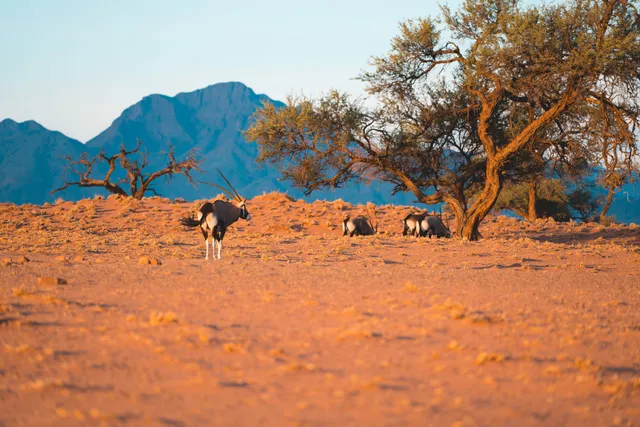
Animals that call the desert their home:
- Oryx antelopes: These majestic animals are true survival experts. Their ability to regulate their body temperature allows them to endure the scorching heat. With their long horns and slender bodies they are the symbol of the desert.
- Springboks: These nimble animals are masters of adaptation. Their feeding and breeding strategies have enabled them to survive in this inhospitable environment.
- Weaver birds: These small birds build impressive nests that look like hanging gardens. They use the sparse vegetation and the few waterholes to survive in this dry area.
Swakopmund & Walvis Bay
Imagine a landscape where the endless yellow sand dunes of the Namib Desert meet the cool, rough Atlantic Ocean. That is exactly what awaits you in the region around Swakopmund and Walvis Bay in Namibia. The interplay between desert and sea creates a unique environment that is the perfect habitat for some very special animal species.
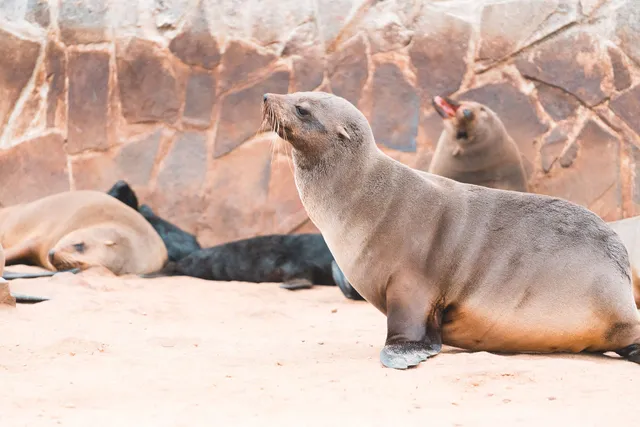
Animals that find their habitat here
- Flamingos: These elegant birds love salty lagoons and shallow waters. Their long legs and specialised beaks allow them to search for krill and other tiny organisms in the shallows. The plentiful food and few natural predators make this region a paradise for them.
- Seals: The coast at Cape Cross is home to one of the largest seal colonies in the world. Why? The cold, nutrient-rich waters of the Atlantic provide them with plenty of fish. The remote beaches are also an ideal place for sunbathing and resting.
- Black-backed jackals: These clever opportunists are perfectly adapted to life between desert and sea. They feed on anything they can find. You often see them near seal colonies where they look for orphaned seal pups or dead animals.
Damaraland
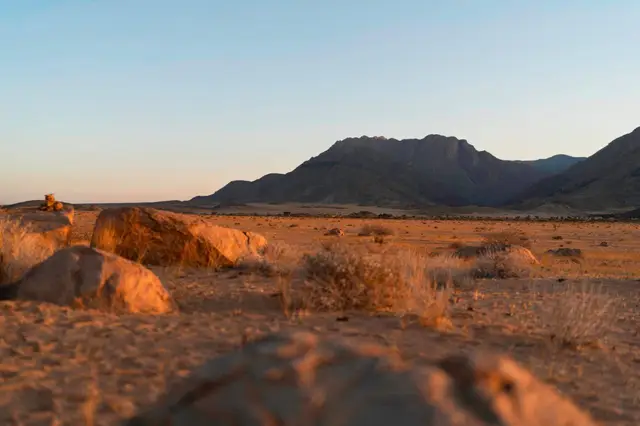
If you want to experience Namibia at its roughest and wildest, you shouldn’t miss Damaraland. Picture a landscape shaped by rugged rocks, dry riverbeds and sparse vegetation. Damaraland, especially around Brandberg and the mysterious dry river Hoanib, is a place like another world. And it is precisely this raw beauty that attracts some of Africa’s most impressive animals.
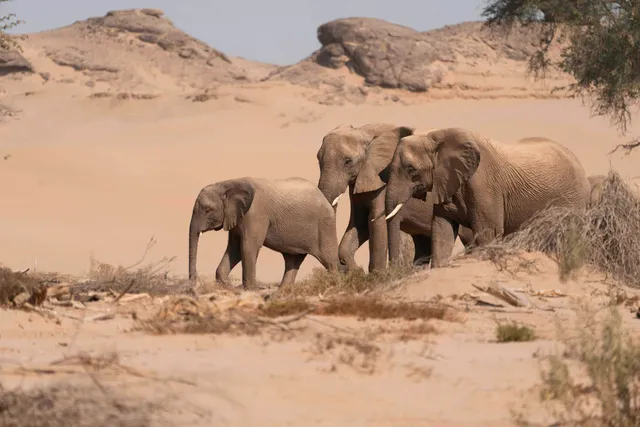
These animals you can see here
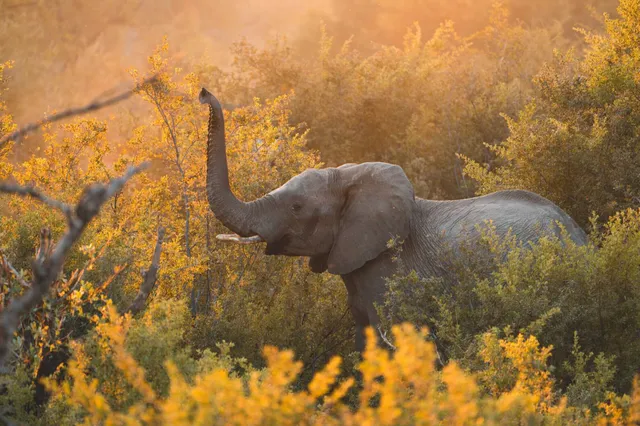
- Desert elephants: These giants have developed longer legs and broader feet so they can cover long distances in the desert. They have learned to cope with less water and dig deep holes to reach the precious water in underground reserves.
- Desert lions: Unlike their relatives in the savannah, these lions have adapted to life in the desert. They are often slimmer and can go longer without water.
- Black rhinoceroses: These imposing animals have thick skin that protects them from the scorching sun. They are nocturnal to escape the heat of the day and rely on their sharp senses to find food and water in this arid landscape.
Etosha National Park
Imagine an endless, white salt pan surrounded by golden grassland and open acacia woodland. This is Etosha National Park in Namibia. This unique landscape attracts an impressive diversity of animals that are perfectly adapted to life here. By the way, Etosha National Park is the region with the richest wildlife in all of Namibia.
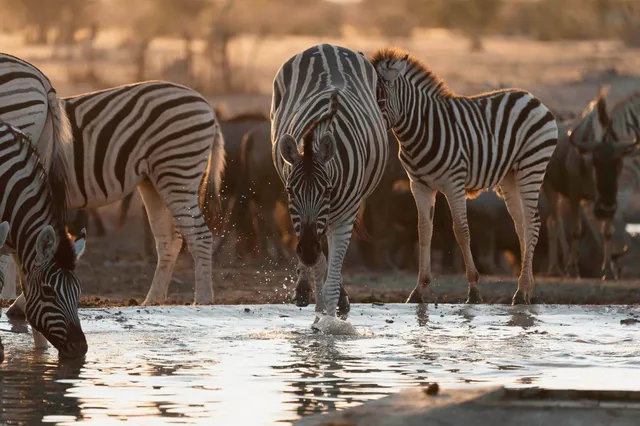
These animals live in Etosha, among others
- Lions: The king of the animals has learned to rest in the shade of the scattered trees and to hunt at dusk. The open landscape provides them with a perfect view of their prey.
- Giraffes: These gentle giants use their long necks to reach the highest leaves on the trees. Acacias are their favourite food. Their thick, rough tongues can easily cope with the thorny leaves.
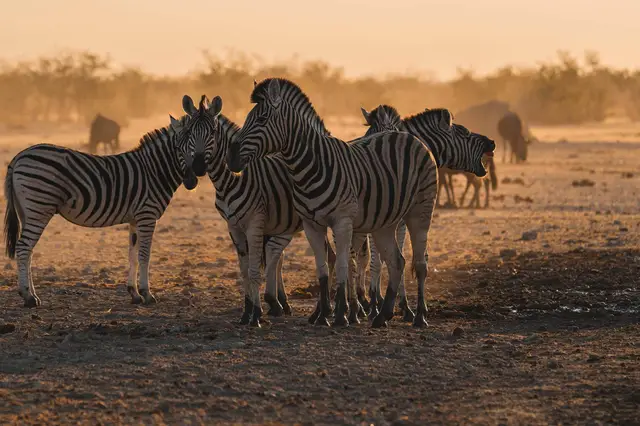
- Zebras: With their striking stripes they are surprisingly well camouflaged in the shade-giving grass. They are masters at finding waterholes and often follow the rains.
Caprivi Strip
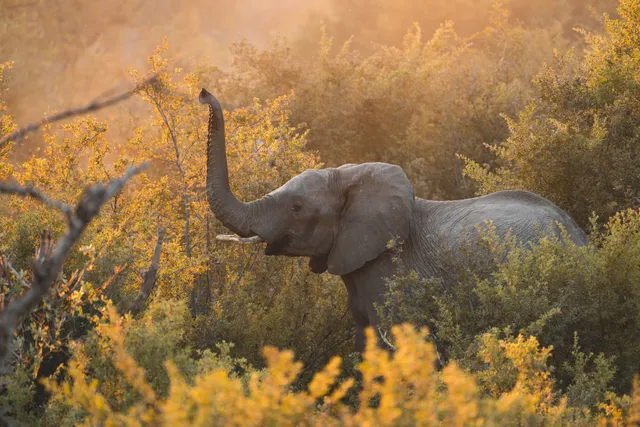
Imagine a landscape where dense forests alternate with open savannahs, criss-crossed by mighty rivers and quiet lagoons. This is the Caprivi Strip, and right in the middle lies Bwabwata National Park. This green oasis of Namibia attracts animals that love water and lush vegetation or depend on it for survival.
These animals you can see here
- Elephants: These gentle giants find enough water here throughout the year. The dense forests also provide them with protection from the scorching sun and plenty of food.
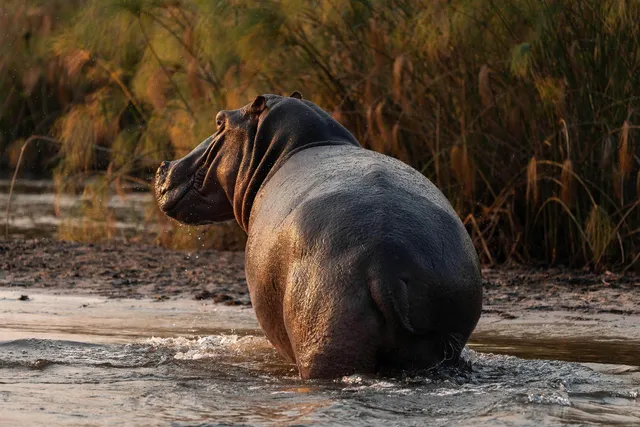
- Hippos: They spend most of the day in the water to protect themselves from the heat. The rivers and lagoons of Bwabwata are ideal for them. At night they come out to graze on the lush pastures.
- Buffalo: These massive animals love the park’s open savannas. As social animals they move around in large herds, always in search of fresh grass. The dense forests offer them protection from predators.
Waterberg Plateau
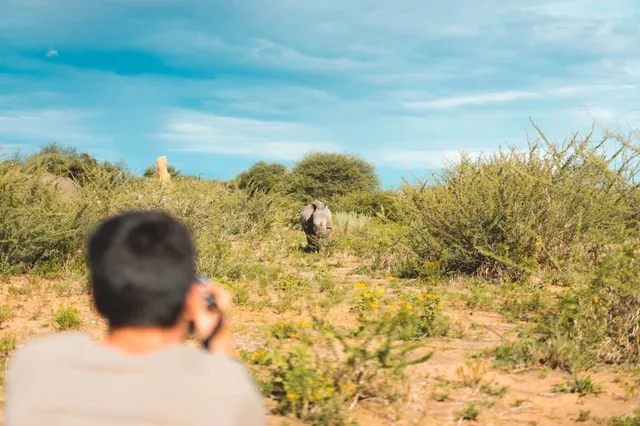
The Waterberg Plateau is a place that will enchant you with its majestic beauty. Imagine an oasis rising above the flat surroundings, with dense forests clinging to the red sandstone cliffs. This unique landscape attracts a wide variety of animals that are perfectly adapted to life here.
These animals you can see here
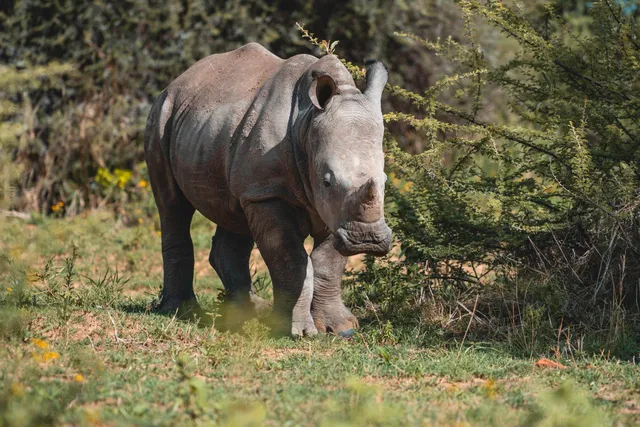
- Rhinos: These powerful animals have found a safe retreat in the dense bush on the plateau. Their thick skin protects them from the heat. Here they can graze in relative safety and rest in the cooler forested areas.
- Eland antelope: The eland antelope is the largest antelope species. With their strong legs they move skilfully over rocky terrain. And thanks to their ability to draw water from their food even during dry periods, they are perfectly equipped for life on the plateau.
- Damara dik-dik: These tiny antelopes are masters of camouflage. With their sandy-coloured coat they blend seamlessly into their surroundings. They prefer the shady areas of the plateau, where they can hide from predators and quietly browse on the low bushes.
Our conclusion
Namibia is such a diverse country, where every region has its own very unique vegetation. And that’s a good thing, because it means you can keep discovering new animals along your route.
If you’re still looking for a wildlife-rich route for your trip to Namibia, then we recommend our Namibia travel guide to help you plan.
And if you can do without the printed edition, then have a look at Namibia+. In the exclusive online area you’ll find all the content of the travel guide and quite a bit more. Do feel free to take a look.
We wish you an unforgettable journey full of impressive wildlife encounters in Namibia!
Pour aller plus loin
Planifie ton voyage dans l’app.
Enregistre activités et hébergements, compose ton itinéraire et emporte tout hors ligne.