Cette page n’existe pas encore en français : nous te montrons la version disponible.
Lions in Etosha: Will we finally get the perfect photo?

Par Laura & Tobi ·
We travel to Etosha National Park hoping to find the lions in the park and photograph them in the most beautiful morning light.
On our last trips to Namibia in 2018 and 2019 we were deeply moved by the big cats, even though we saw relatively few of them. Our desire to be able to watch more of these fascinating predators in their natural habitat kept on growing. We also really wanted to photograph lions once in soft morning light, as until now we had only had photos in harsh midday light. At least that’s how we would have put this wish to the well-known safari sightings fairy.
Then corona entered all our lives and this next safari dream was not going to come true for a few years. In 2023 it was finally time. Not only was the next Africa trip coming up, the enforced travel break was also going to have a positive side for us. We were better prepared, because we had spent three years working on our travel guide to Namibia and of course researching a lot about animals in the process. One animal was at the centre of it all: the lion. Feared because of its size and strength and yet fragile in the face of changing environmental conditions and the shrinking habitat that threatens its existence.
In Etosha National Park around 300 lions live here, making the park an exceptionally good place to observe these predators. From Namibia’s capital Windhoek Etosha is also easy to get to, so you can be there in just four hours with a hire vehicle.
Preparation: This time it has to work at last
Although lion density in the national park is relatively high, we didn’t want to leave our chances of seeing lions in Etosha entirely to fate (or the sightings fairy) and soaked up every book and forum post that seemed at all useful.
Because Etosha is a national park, there are of course a few rules that all visitors must follow. These include, for example, the park opening times when you are allowed to drive through the park. We can therefore only be out and about in the park between sunrise and sunset. So it was important for us to know where the lions spend their day. Lions mostly hunt at night and spend the morning at waterholes. As the morning goes on they look for shade under bushes to doze in on hot days and are then often hard to spot.
Our wish was to photograph lions in the most beautiful morning light. That immediately presented us with the next challenge. The time in the morning when we have good light for photography only lasts about an hour. After that the light deteriorates or just becomes harsher. So we had to find the lions in as short a time as possible right at first light. And that in an area as large as the German federal state of Hesse. So the chances are particularly good at the waterholes in the morning – but at which ones?
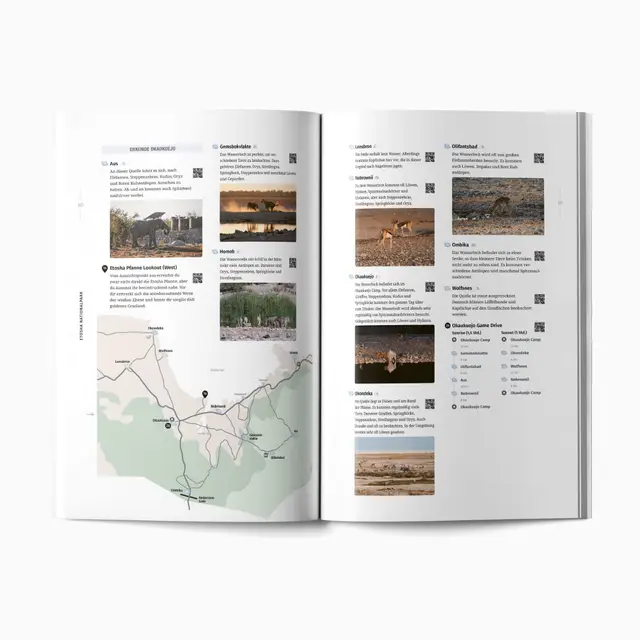
We looked into this question “Which animals do you actually see at which waterholes?” while researching our Namibia travel guide. We researched 44 waterholes and compiled which animals favour which waterholes and are therefore more frequently seen there. And as we were already reading so much, we thought it would also be handy to know what the light conditions are like at the waterholes. That way you immediately know where you can photograph best at which time of day.
It begins: Will all the preparation pay off?
Armed with our newly acquired knowledge, we created a waterhole map and when a trip to Namibia finally became possible for us again in 2023, we could hardly wait to be back on safari. With our freshly printed travel guide in our luggage we set off for Namibia in June. Our route takes us from Windhoek to Damaraland, on to the Kunene region and then further into wildlife-rich Etosha National Park. After that we continue to the Caprivi Strip and via the Waterberg Plateau back to Windhoek. Now we’d like to tell you about our search for the Etosha lions.
Day 1 in Etosha: We explore the western part of the park and spend the night at our first camp
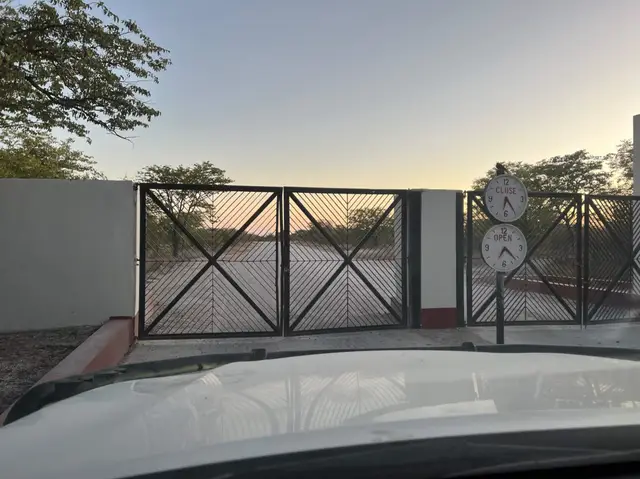
As we pass through Etosha’s park gate, we finally leave the tarmac road behind us. Excitement sets in, because from now on not only common warthogs and baboons can appear at the roadside, but also elephants, rhinos or lions, which are right at the top of our wish list.
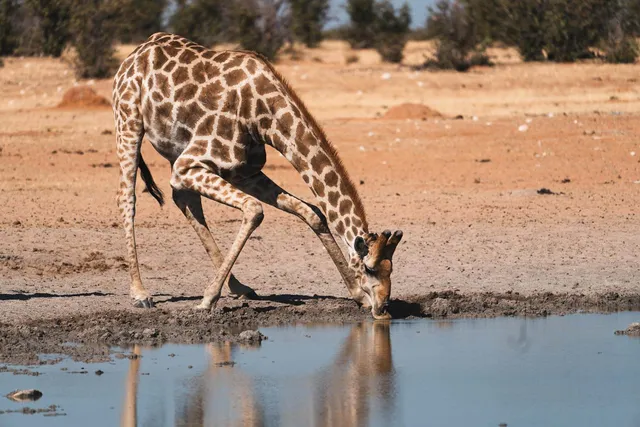
We use the drive to our first camp as a safari straight away. Although it is already midday and the sun is blazing down from the sky, we see dozens of zebras, some giraffes and several elephants. We hardly encounter any other cars and enjoy finally being back on safari. This feeling of never knowing what will appear behind the next bush or around the next bend is like playing hide and seek. Every time we spot an animal, a little rush spreads through our bodies.
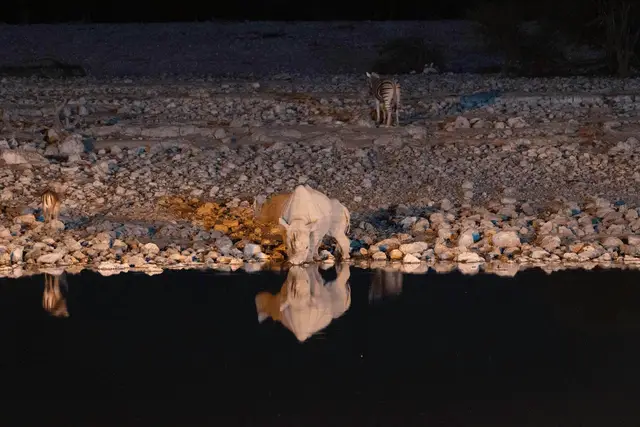
On our first safari day we take our time and visit all the waterholes along our route. In the afternoon we roll into our campsite, cook some pasta and spend the evening at the camp’s waterhole. There is a hide here from which you can look down on the waterhole through open windows. Behind it lies the savannah. When it gets dark a black rhinoceros appears at the water with her youngster. All of a sudden the two of them are just there. It’s always so crazy when it is dark and you’re just staring into the blackness and then, as if from nowhere, two rhinos are suddenly standing there. How badly we humans must see in the dark!
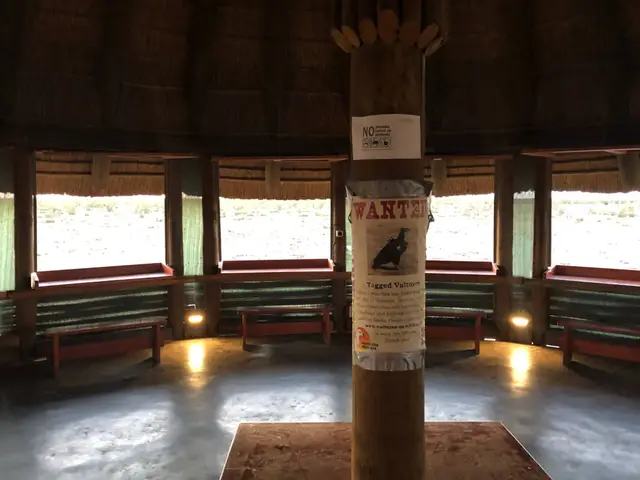
While we are sitting in the dark hide, we hear lions roaring somewhere in the distance. We wait, but nothing happens. As we are about to leave, the other guests on the left-hand side of the hide are suddenly very excited. We look to see what is going on and spot a brown hyena carefully approaching the waterhole. She drinks and quickly disappears back into the darkness. Wow, what a lovely evening. We are already tired and want to make an early start the next morning. Tomorrow we can finally make our first attempt to find lions at one of the waterholes.
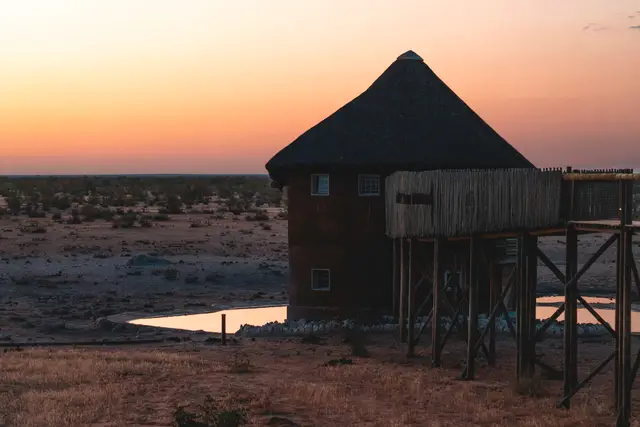
Day 2 in Etosha: The first chance to see lions in morning light
A cool night lies behind us as we climb out of the roof tent in the dark. To be honest it always takes a bit of willpower to leave the warm sleeping bag and slip into cold clothes. At the same time, it is also somehow lovely to step out of your comfort zone and, thanks to the roof tent, be able to sleep so close to nature. The temperature display in the car shows 10 degrees. That’s actually fine, we think, we’ve experienced colder.
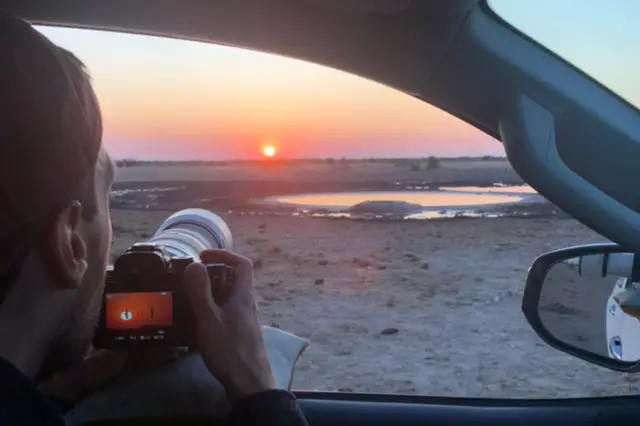
The camp gate opens at 7.25am and we are already waiting in front of it at 7.15am. We have to laugh at ourselves because we may be a bit over-motivated. Our camp neighbours were still packing up. But hey, our roof tent is a hard-shell tent that is super quick to put up and take down. That’s real luxury among campers. It’s 7.25am, we’re off.
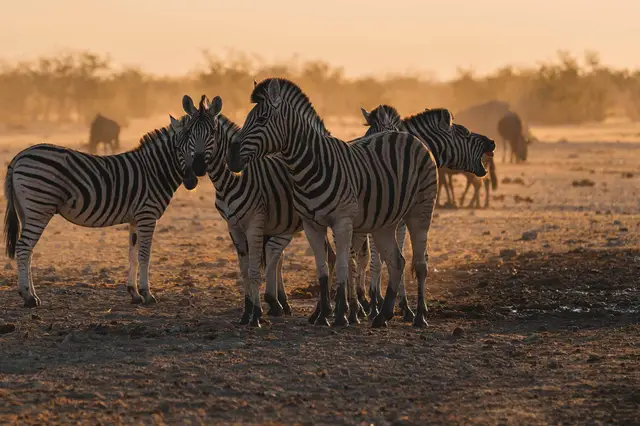
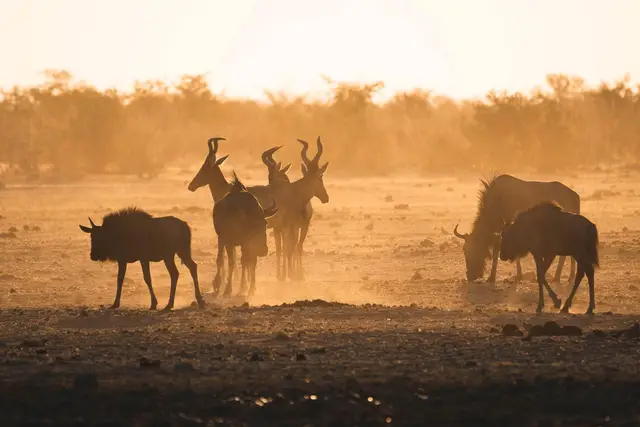
We reach the waterhole we have chosen, switch off the engine and wind down the windows. A large herd of wildebeest moves down to the water. Zebras are already standing around the waterhole. More and more animals come to drink. The dust they stir up catches the light. It is fantastic. As we stand here watching, we are completely in the moment. That’s what we love so much about Namibia, you are so often simply in the here and now.
After a while we decide to move on and try our lion luck at the second waterhole of the morning. And in fact, we are in luck. As we approach we already see them: the Etosha lions. Are there 6, 7 or even 8? There are eight animals in total, including young ones. No tiny babies any more, but still very young. By the way, you can roughly tell their age from the colour of their nose. With young animals the nose is always pink. The older the animal gets, the darker the nose becomes. Only at around seven years old is the nose completely black.
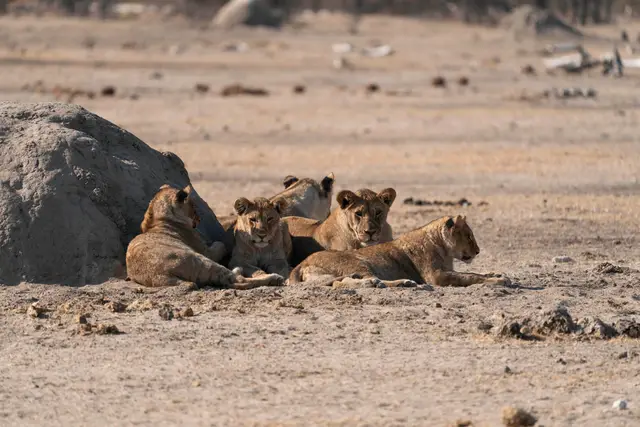
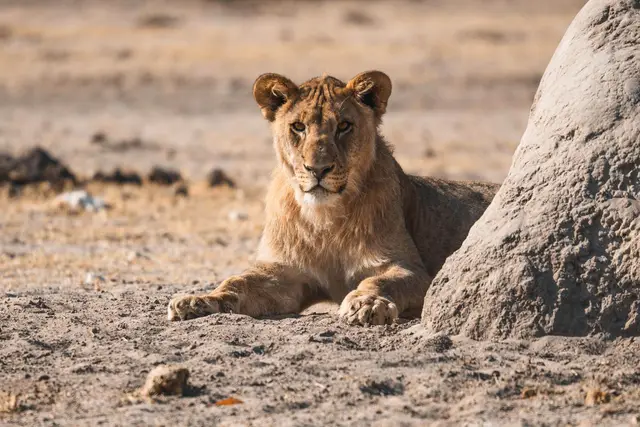
With the windows down we notice a strong wild animal smell. We didn’t have that at the previous waterhole so it must be the lions. A few zebras are standing in the distance, watching the scene closely. A few lions are sitting at the water and moving towards the rest of the group, which is lying a little way off. It’s really fantastic to see an entire pride here. The only downside is that the sun is already so high that the light is pretty harsh.
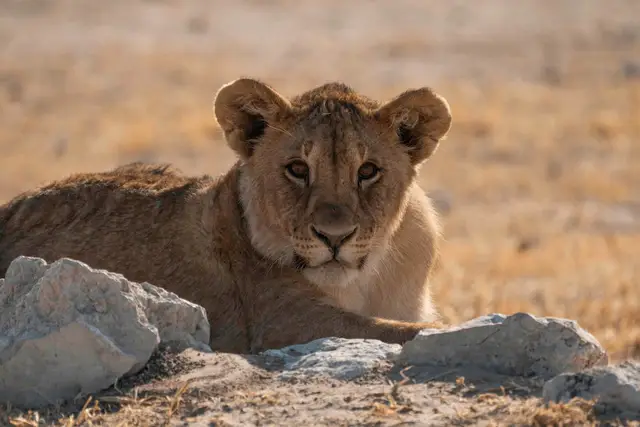
The lions keep looking in our direction and sometimes you get the feeling they’re looking straight at you. Their gaze is somehow piercing. But they don’t seem at all bothered that we’re watching them. They seem completely unimpressed.
An off-road vehicle from the anti-poaching unit comes up to the waterhole and pulls up next to us. On the open loading area stands a ranger with a dog in a K9 harness. The K9 Patrol Unit also watches the lions and gives us a tip: at the next waterhole there are supposed to be four male lions.
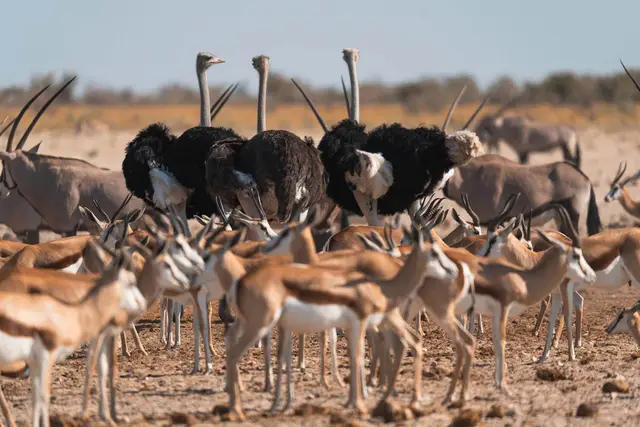
We tear ourselves away from the sight of the lion family and drive on to see the four males. When we reach the waterhole we see so many animals standing together that we wonder where the water even is. Springbok, gemsbok and South African ostriches stand side by side. We count the Springbok to get a feel for the numbers. To do that, we count in groups of ten and then look at how many groups of ten the Springbok form here. There are actually at least 200 Springbok. Incredible. We can’t find the lions here; they have probably left the waterhole by now and handed it over to the plains game.
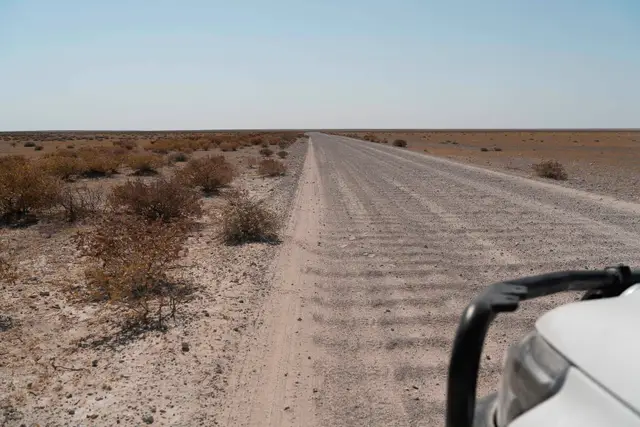
Around midday we reach the western edge of the Etosha Pan via a pretty awful corrugated track. The area is known for its lion sightings. The local waterhole lies in the dunes with the pan in the background. The vastness is indescribable and with the Springbok, wildebeest and South African ostriches standing on the edge of the pan, the landscape looks almost surreal. We scan the landscape for lions. Our chances at midday are slim but perhaps they’re lying in the shade of a tree we’ve christened “lion tree” because lions have often been spotted there. But we don’t see anything – or do we? Wasn’t there something in the bushes? No. Only the white bones and skulls scattered across the landscape hint at the presence of predators.
By now our stomachs are growling and we want to stretch our legs. So we drive to Okaukuejo Camp and check in at the campsite. We shower, cook, Tobi backs up photos and in the afternoon we head out on safari again – without any major sightings. What can we say, at the waterhole we’d picked we didn’t have a single sighting. You couldn’t even rely on the Springbok. Instead we sat in the car broiling in the heat with a towel over the windscreen. Nothing is meant to happen this evening, but that’s part of a safari too. Success and no success. It makes you appreciate the next sighting all the more.
Before the camp closes at sunset, we head back and sit down with a beer at the camp’s waterhole. We watch rhinos coming to drink but we don’t stay very long because we’re simply too tired. Tomorrow we’ll have our next chance of lions in the morning light.
Day 3 in Etosha: does a new morning also mean new luck?
The alarm goes off early again, it’s not quite as cold as yesterday and we slip into our clothes before climbing out of the roof tent. Everything is packed up quickly and we take a thermos flask that we filled with hot water the evening before with us into the cab. Together with rusk, that will later be our safari breakfast.
Right on time we’re back at the gate, which has not yet opened. Once again we’re the first. Wow, we really are such swots. Will we be lucky with lions this morning? We have to decide, do we drive to the waterhole in the west or the one in the east? Once the gate opens we’ll only have an hour of good light for photography. The gate opens, we roll off. In front of us the track splits to the west and east. We choose the right-hand track. In every sense of the word.
When we reach the waterhole, we don’t need eagle eyes. Almost at the same time we both say: “There are lions.” There are several adult animals. How many might there be? We first have to get an overview because two lions are sitting on a stone wall that protects the solar pump. There are four lions.
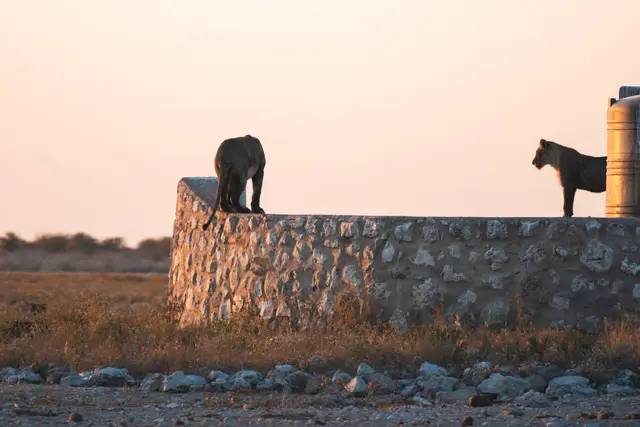
And what happens now really knocks our socks off. A lioness starts playing with a clump of earth. She jumps back and forth and in her play kicks up lots of sand, which shimmers golden in the soft light. It’s somehow an intimate moment because, suddenly, the lioness also shows a vulnerable side to us. These predators are increasingly struggling to find a habitat where they are tolerated by us humans. They are kings without land. Then the lioness brings another pride member into her game and starts to stalk it. Both spring towards each other so that the sand just flies. The moment when the lioness appears vulnerable is over; now she is once again the majestic big cat. Click, click, click – our memory card fills up at lightning speed.
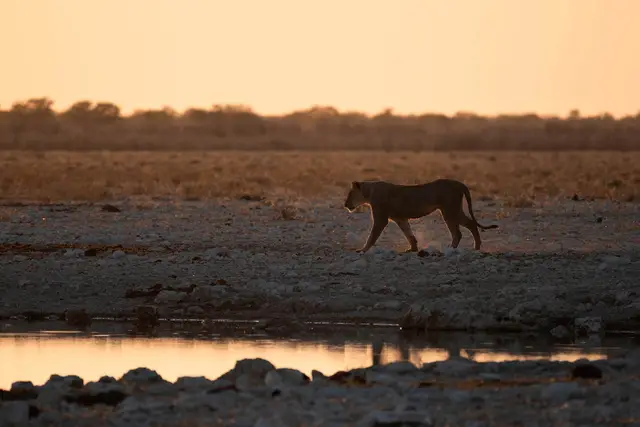
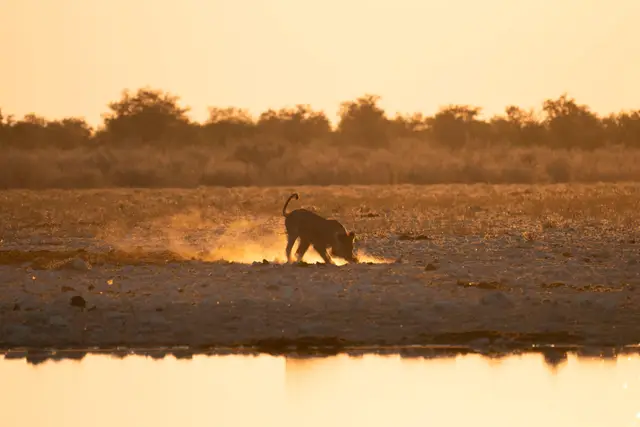
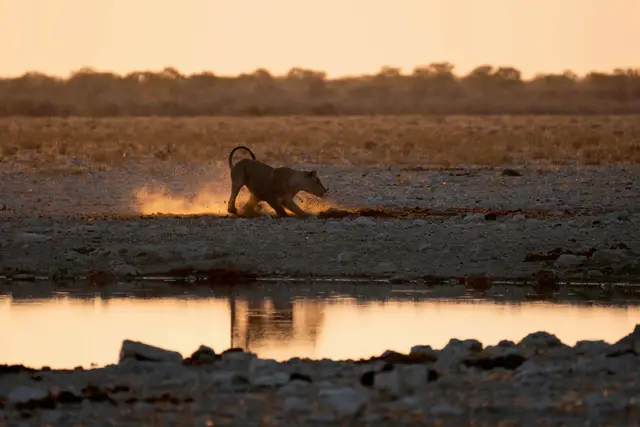
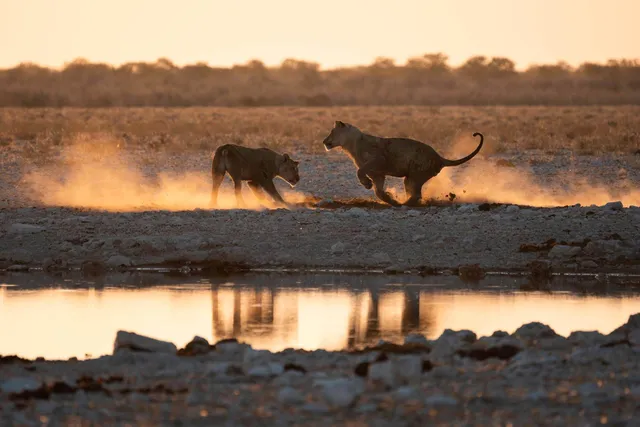
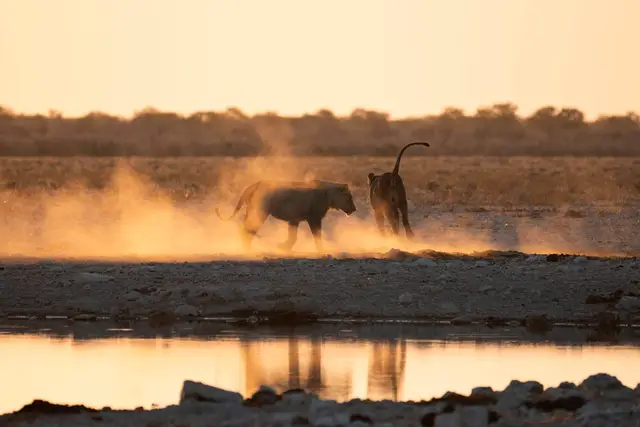
The scene in front of us is beautiful. Along with us, only two other vehicles are at the waterhole watching the game. We decide to stay a bit longer and have breakfast in the car. We pour the hot water from the thermos over the instant coffee. We feel the cool air through the open windows and dip the rusk into the steaming mug of coffee.
After what feels like an eternity we say goodbye to the lions and drive on. Our wish has actually come true. We spend a few more days in Etosha before continuing our journey through Namibia.
Our conclusion: the long travel break was worth it!
Back at home, as we scroll through the countless photos, we’re once again struck by the unique sightings we were able to experience in Namibia. The moments in the gentle morning light with the Etosha lions are memories that will stay with us forever.
The map with the waterholes proved to be incredibly valuable. It helped us to pick out, from the multitude of waterholes, those that offered the best chances of seeing lions. Thanks to this preparation we saw more lions in their natural habitat than ever before on our travels.
If you feel the same and want to increase your chances of seeing lions in Etosha, you can use the waterhole map in our printed travel guide. With our app you’ll also have all the waterholes with you offline.
Start planning your unforgettable Namibia adventure now. We look forward to sharing our enthusiasm and love for this wonderful country with you.
Pour aller plus loin
Planifie ton voyage dans l’app.
Enregistre activités et hébergements, compose ton itinéraire et emporte tout hors ligne.