Cette page n’existe pas encore en français : nous te montrons la version disponible.
Desert elephants in Namibia: These are the best spots

Par Laura & Tobi ·
Ready to discover Namibia’s fascinating desert elephants? Find out more about their astonishing adaptations and the challenges they face today.
Have you ever imagined what it feels like to encounter one of the last 150 desert elephants in Namibia in the endless expanses of the Namib? These majestic survivors are perfectly adapted to one of the driest ecosystems on earth. We’ll take you on a fascinating journey to meet the gentle giants of the desert and show you where and how you can experience these unique animals up close.
The best places for desert elephants in Namibia
Namibia’s north-west is home to the fascinating desert elephants. We’ve put together the key areas in Damaraland for you, as this is where you have the best chances of seeing these unique animals in their natural habitat. From the spectacular rocky landscapes of the Brandberg to the remote regions around Puros – each area has its very own character and offers you unforgettable encounters with the gentle giants of the Namib.
Brandberg & Ugab River
Amidst majestic rock formations at the Brandberg you’ll find one of the most popular spots for desert elephant sightings. With a 4x4 vehicle you can follow their tracks along the Ugab River or join a guided tour with a guide.
Why is this area special?
- The Brandberg is the southernmost part of Damaraland and easy to reach.
- The route to the Brandberg is also manageable for beginners.
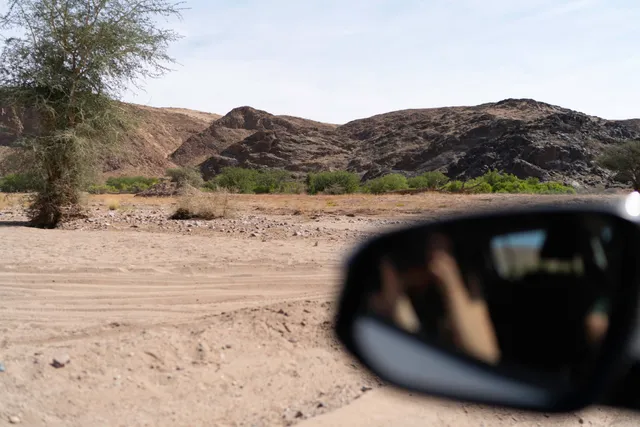
- The dry Ugab riverbed is ideal for watching desert elephants at the right time of year.
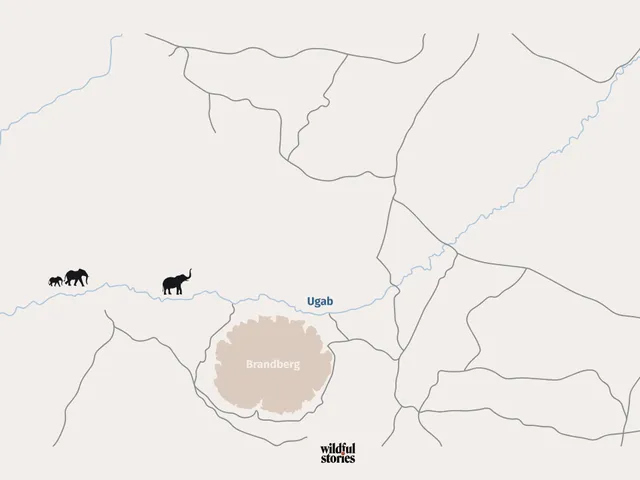
A stay at the Brandberg White Lady Lodge is particularly recommended, as you can set off on your safari from here early in the morning. At the lodge you can hire a local guide or set off in a 4x4 vehicle to search for them in the riverbed on your own.
These are the best spots for desert elephants:
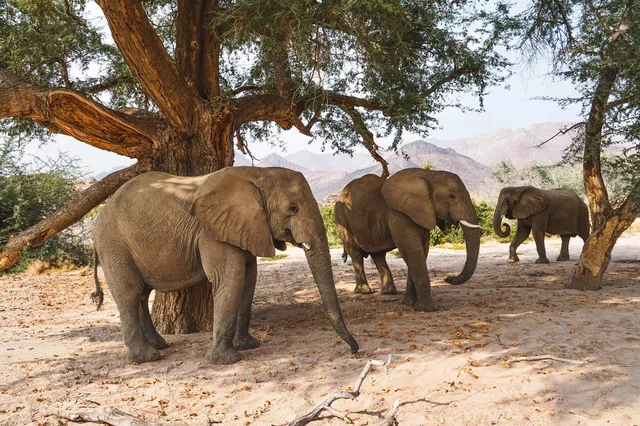
Twyfelfontein & Aba-Huab
This region around Twyfelfontein combines cultural heritage with unique wildlife viewing. In the morning you can explore the famous rock engravings, then in the afternoon keep an eye out for the elephants in the riverbed. The Twyfelfontein Adventure Camp is the perfect base for your explorations.
Why is this area special?
- Twyfelfontein lies a little north of the Brandberg and is also easy to reach.
- The route to Twyfelfontein is also manageable for beginners.
- The dry Aba-Huab riverbed is also ideal here for watching desert elephants at the right time of year.
These are the best spots for desert elephants:
Palmwag Concession & Uniab River
The Palmwag Concession is a true natural paradise and one of the best places to see desert elephants. Important: A permit is absolutely required for the concession. You can get it directly at the gate. Stay at the Palmwag Campsite or Palmwag Unterkunft and be sure to plan a trip to the Uniab River.
Why is this area special?
- Palmwag lies a bit further north than Twyfelfontein and is reminiscent of a rocky desert surrounded by table mountains.
- The route to Palmwag is manageable, but within the so-called concession a 4x4 vehicle is essential.
- The dry Uniab riverbed is a popular spot for desert elephants. They can often also be seen at the Aub.
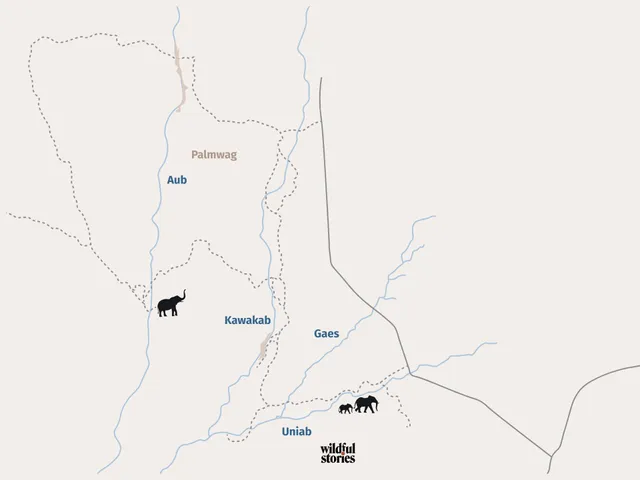
These are the best spots for desert elephants:
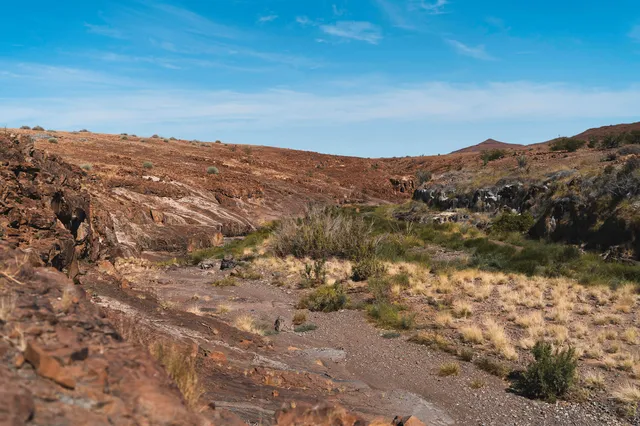
Sesfontein & Hoanib River
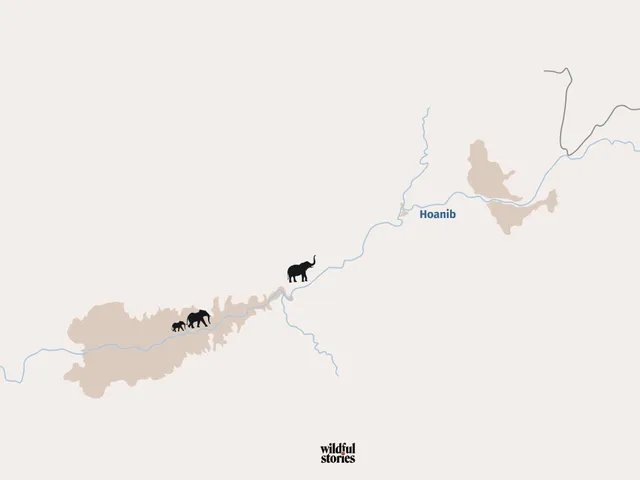
Sesfontein and especially the Hoanib dry riverbed are a real hotspot for wildlife viewing. Here you can not only see desert elephants but also desert lions and giraffes. The region is well developed and part of important conservation projects. The Sesfontein Guesthouse or the Elephant Song Campsite offer you a comfortable base for your explorations.
Why is this area special?
- The Hoanib lies a little further north of Palmwag and is already much more remote.
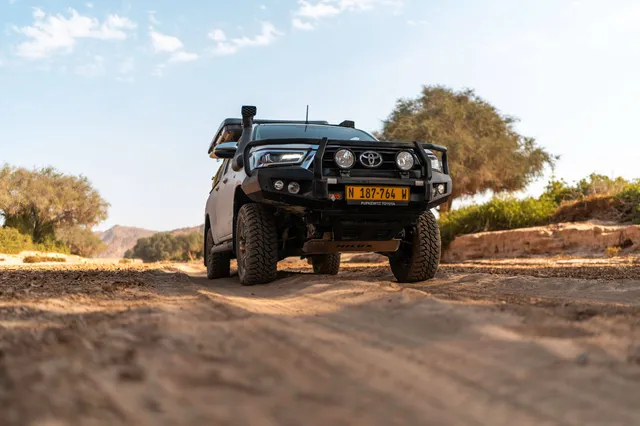
- The route to Sesfontein is manageable, but the Hoanib is very sandy and only doable with a 4x4 vehicle.
- The Hoanib stretches all the way to the Atlantic. Desert elephants can be seen along the dry riverbed.
These are the best spots for desert elephants:
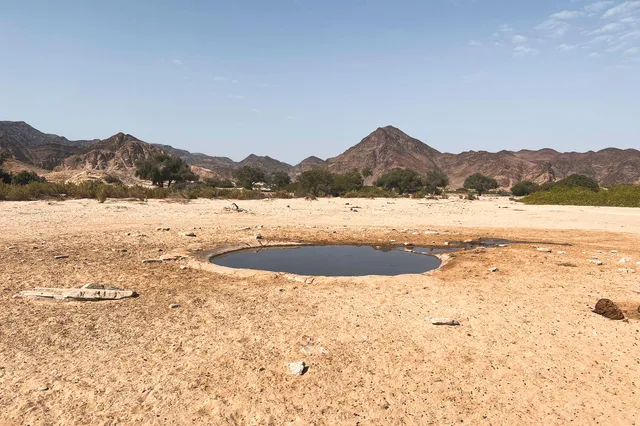
Puros & Hoarusib River
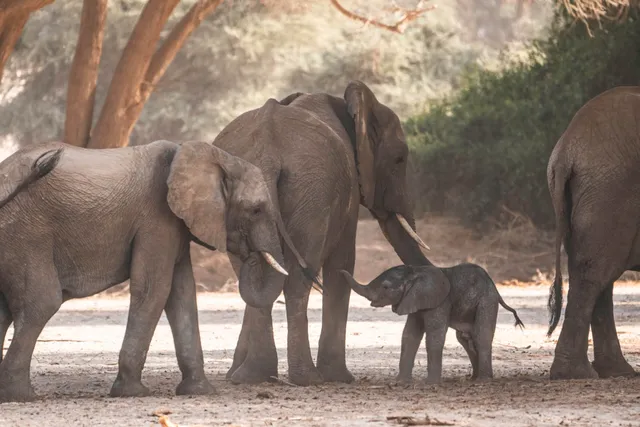
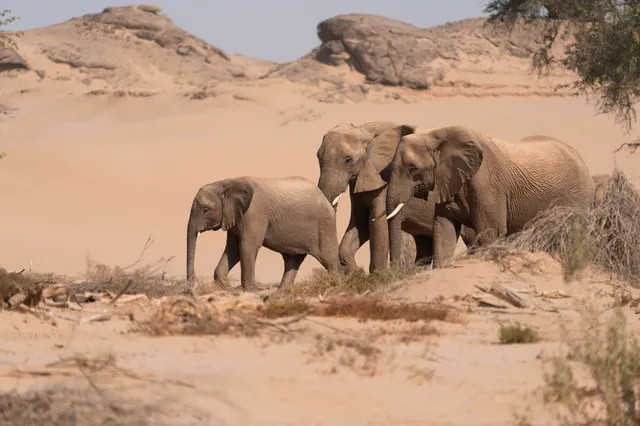
This remote region offers you a unique combination of nature experience and cultural exchange. However, there are also worrying developments: according to the latest 2024 report, there has not been any successful reproduction of desert elephants recorded here for years. All the more reason to be especially considerate during your visit.
Why is this area special?
- The region around Puros and the Hoarusib is very remote in northern Damaraland.
- The Hoarusib stretches all the way to the Atlantic. Desert elephants can be seen along the dry riverbed.
- Even though desert elephants live in the Hoarusib, their numbers are very low.
Tip: It’s best to plan your route with our app. With offline mode you’ll stay oriented even in remote areas and find the best spots for elephant sightings.
Development and habitat of the desert elephants in Namibia
Imagine you are standing in the dusty riverbed of the Hoarusib when suddenly a majestic figure appears on the horizon: a desert elephant, perfectly adapted to one of the driest ecosystems on earth. These fascinating giants are true survival experts – but their story is also a story of loss. Of once more than 3 million African bush elephants in total, only about 150 of these special desert elephants remain in Namibia today.
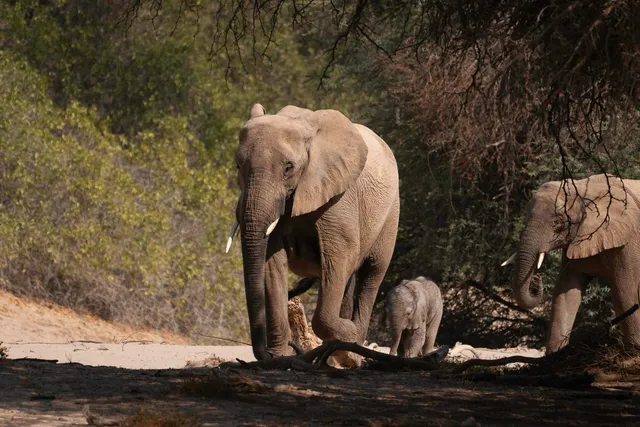
The story of the desert elephants is closely linked to the fate of all African bush elephants. Where once millions of these majestic animals roamed the savannas and deserts, today only a fraction is still fighting for survival. The dramatic decline from over 3 million to around 450,000 elephants in the last century tells a story.
These are the reasons for the decline:
- Poaching: increasing poaching for the illegal ivory trade
- Habitat loss: loss of important migration corridors due to human settlement
- Conflict: conflicts between people and elephants over limited resources
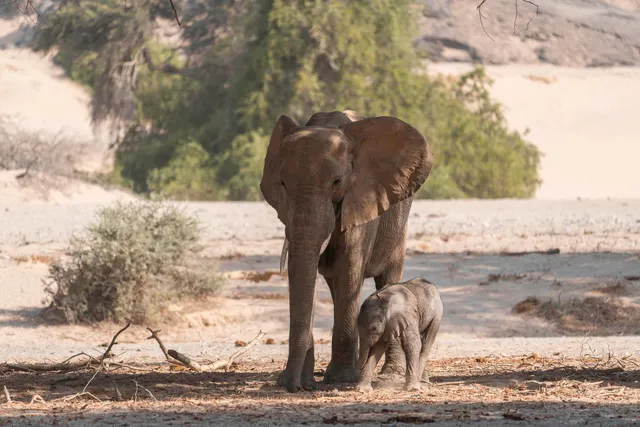
In Namibia’s rugged landscapes, desert elephants have adapted perfectly to their harsh surroundings over generations. Contrary to what you might first think, they are not a separate species – their special traits are the result of fascinating behavioural adaptations.
These three things make desert elephants special:
- Larger feet: Make it easier to walk on soft sand
- More slender build: Helps save energy in the barren environment
- Special migration behaviour: They know the hidden water sources in the dry river valleys
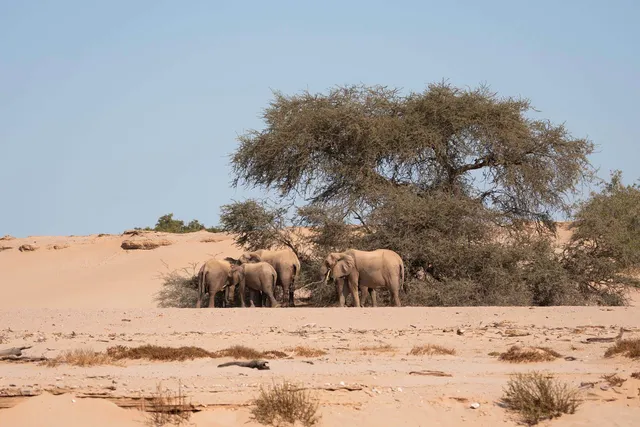
Their range stretches along Namibia’s dry rivers like a lifeline through the desert. From the northern fringes of the Kunene to the southern Kuiseb you’ll find these remarkable animals mainly in the riverbeds – the typical dry river valleys of Namibia. The best ways to find them are for example with a local guide or with your own vehicle.
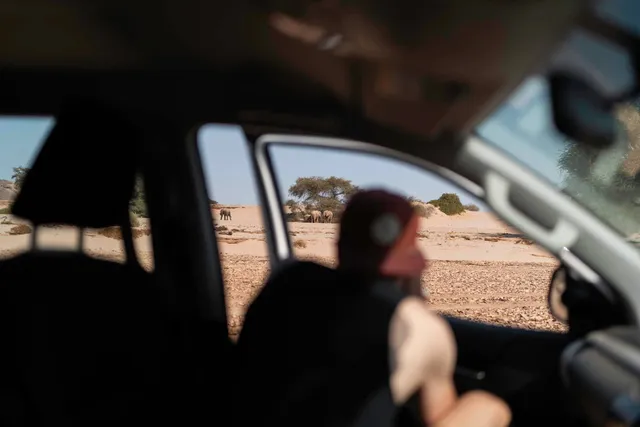
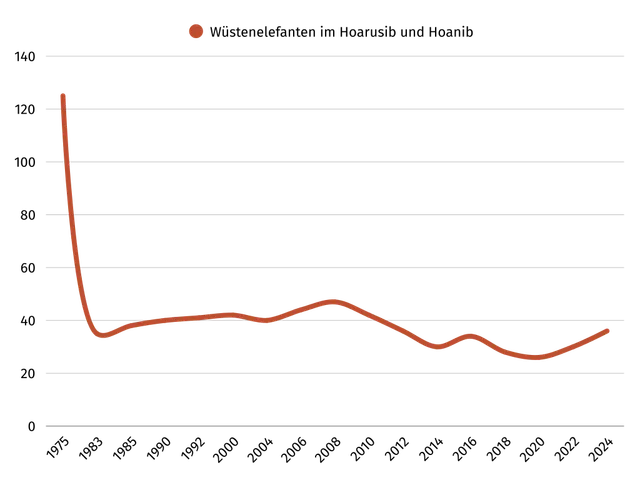
But the current situation is alarming: With only around 150 animals remaining, the population is at a crossroads. Especially in the Hoarusib river valley, one of their most important habitats, recent studies show a worrying decline. To experience these unique animals, we recommend a stay at Elephant Song Campsite or Brandberg White Lady Lodge, from where you can either explore on your own or join guided safaris.
Our tip: Do you want to plan the route to the desert elephants in the best possible way? With our app you have all the important spots with you offline and you definitely won’t miss any highlights on your safari.
Challenges in the desert elephants’ struggle for survival
Namibia’s desert elephants are facing a dramatic fight for survival. While we admire their impressive ability to adapt, we are at the same time confronted with a harsh reality: climate change, human interference and dwindling resources are threatening these unique animals more than ever. The situation is particularly alarming in the Hoarusib valley, where reproduction has already come to a standstill according to Desert Elephant Conservation.
The growing scarcity of water
Have you ever imagined what it is like to walk up to 70 kilometres in the blazing heat of the Namib Desert just for a sip of water? For the desert elephants this is a harsh reality. Periods of drought are getting longer and rainy seasons more and more unpredictable. The situation is especially tragic for elephant cows with their young.
Extreme temperatures and lack of shade
- Temperatures of up to 45°C in peak season
- Hardly any natural shady spots in the barren landscape
- Extreme UV radiation due to the lack of vegetation
The desert elephants have developed remarkable survival strategies. They make use of even the tiniest patches of shade and cool themselves down by skilfully throwing sand onto their backs – a kind of desert sun cream. At waterholes you can watch how they regulate their body temperature by spending a long time bathing.
Would you like to watch these majestic animals yourself? With the app you’ll find the best spots and times for responsible elephant watching with a local guide.
Threat from human influence
Despite their remarkable ability to adapt, the desert elephants are facing growing challenges caused by humans:
- Poaching is constantly reducing the population
- Conflicts with farmers over the few water resources are increasing
- Infrastructure projects cut through traditional migration routes
The alarming situation in the Hoarusib valley
The "2024 DEC Preliminary Report" by Desert Elephant Conservation paints a bleak picture: in the Hoarusib valley there is no longer any reproduction. This reproductive extinction could be the beginning of the end. We are at a critical turning point – now it is more important than ever that we stand up for the protection of these extraordinary animals.
If you want to visit the desert elephants, it’s best to plan your route via the well-known waterholes. Elephant Song Campsite is a perfect base for responsible wildlife watching. Make sure you keep plenty of distance, as the elephants are less used to people than in other regions of Namibia.
Adaptations of desert elephants to the desert environment
Imagine encountering Africa’s most fascinating survival artist: the desert elephant. These astonishing giants have adapted perfectly to life in one of the most inhospitable regions on Earth. Their story is one of constant change – from ordinary savannah elephants to highly specialised desert dwellers. Let’s discover together how these impressive animals manage to survive in the Namib Desert.
Physical adaptations for desert life
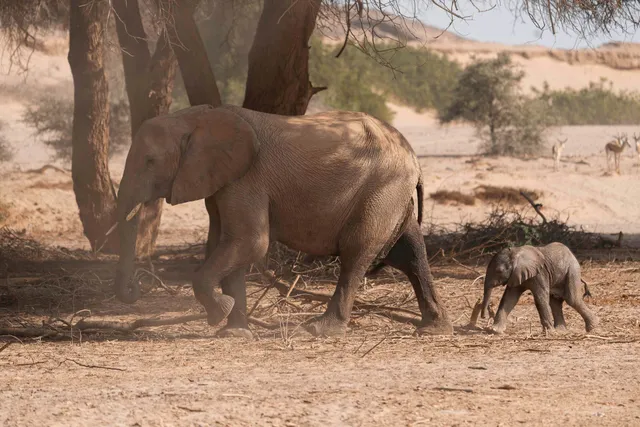
Evolution has equipped the desert elephants with remarkable physical features. Compared to their relatives in the savannah they have a much slimmer build – an adaptation that helps them use less energy. Their longer legs and larger feet are made for walking through soft desert sand. These traits enable them to cover long distances between the few water sources.
Social behaviour and reproduction
The harsh life in the desert has also shaped the social behaviour of these majestic animals. Unlike the large herds of savannah elephants, which can consist of 20 or more animals, desert elephants live in small family groups. These more compact units are better adapted to the limited resources of the desert. On a guided tour you can experience these fascinating family structures up close.
Survival strategies in the desert
Their true ability to survive is revealed in the way desert elephants handle water:
- Water resistance: They can go without water for up to 4 days, males even for up to 5 days
- Finding water: With their sensitive trunks they can detect and uncover underground water sources
- Well builders: They create their own waterholes, whose water quality is often better than that of natural surface water
Sustainable behaviour
What makes these giants especially remarkable is how consciously they interact with their environment. They have learnt to conserve their resources and use them sustainably. When feeding they hardly damage the plants and they use water sources with astonishing care. At waterholes you can watch this impressive behaviour for yourself.
Our tip: Do you want to experience these fascinating animals yourself? With our app you can plan your journey to the desert elephants perfectly – including maps and detailed information on the best viewing spots.
The ecological role of desert elephants in Namibia
Do you know that feeling when nature surprises you with its perfect balance? That is exactly what we experience with Namibia’s desert elephants. These astonishing giants are true architects of the desert – they create life where others see only sand and stones. As a keystone species they not only shape the landscape but also enable countless other species to survive in this barren environment.
Waterholes as a source of life
Imagine you are watching animals at the waterhole – a fascinating spectacle. With their enormous strength and their sense for hidden water, they dig holes in dried-up riverbeds that become valuable oases. These water sources are like natural meeting points where life gathers:
- Jackals and other smaller predators
- Various antelope species such as oryx and springboks
- Numerous bird species that you can also spot on a birdwatching session at the waterhole
Natural gardeners of the desert
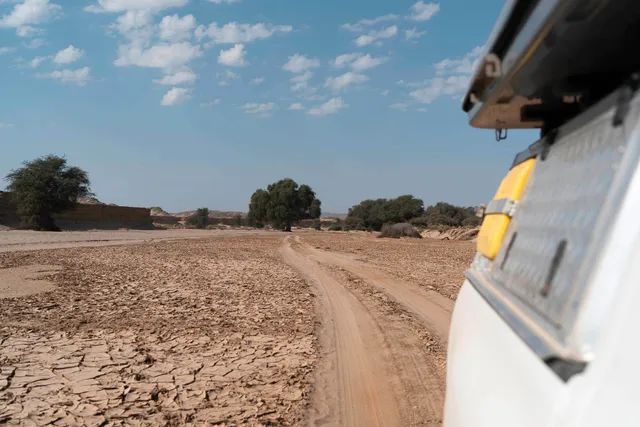
What many people don’t know: desert elephants are true masters of seed dispersal. On their long migrations through dry riverbeds such as the Uniab River they carry seeds over long distances – sometimes up to 50 kilometres.
The desert elephants in Namibia ensure:
- Dispersal of seeds: Seeds are spread through dung and fertilised at the same time
- Landscape care: By trampling hard ground they create new surfaces for germination
- Promotion of biodiversity: Their selective choice of food promotes the diversity of vegetation
Gentle giants
Unlike their relatives in wetter areas, desert elephants have learnt to treat their environment with great care. They only break off the branches they really need and strip bark so carefully that the trees can survive. This adaptation is vital – and you can experience it up close on a guided tour with a local guide.
Survival experts and teachers
Particularly fascinating is how knowledge is passed on within the herds. The experienced leaders know:
- Ancient migration routes to hidden water sources
- Edible plants even in times of drought
- Safe paths through the difficult terrain
Would you like to experience these fascinating animals for yourself? With our app you can plan your route to the best viewing spots – also available offline. Discover the perfect balance between adventure and responsible wildlife tourism in one of the most fascinating regions in Africa.
Distinguishing between desert and savannah elephants
If you think an elephant is just an elephant, let the fascinating survival expert of the Namib teach you otherwise. Desert elephants have developed into true masters of the desert through astonishing adaptations. While their relatives in the savannah live in large herds, these impressive giants have learnt to survive on minimal resources.
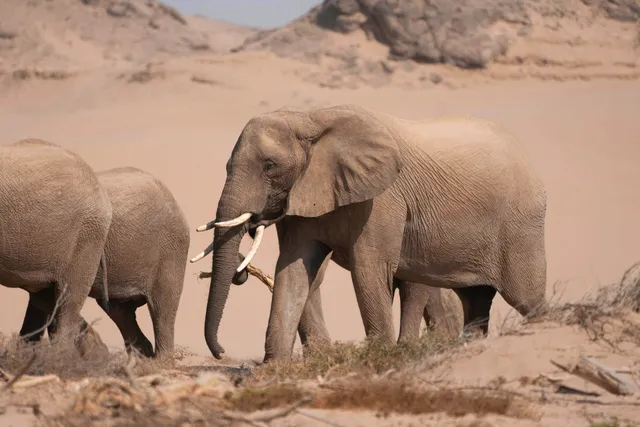
The physical adaptations of desert elephants are remarkable. Compared to their savannah relatives they have:
- More slender build: A slimmer, almost athletic build
- Longer legs: Noticeably longer legs to move through the deep desert sand
- Larger feet: Larger feet that make walking on sand easier
Surviving in one of the driest regions in the world has also fundamentally changed their social behaviour. Unlike the large herds of savannah elephants, desert elephants live in small, flexible family groups of 2–3 animals. These smaller units are perfectly adapted to the harsh conditions of the Namib Desert.
Particularly fascinating is their ability to save water: while savannah elephants need up to 200 litres of water every day, desert elephants have learnt to get by with significantly less. They can survive for up to four days without water – a vital adaptation in their water-scarce environment.
Our tip: Would you like to experience these unique animals for yourself? With our app you’ll find the best spots for desert elephant sightings and can plan your route offline too.
Conclusion
We have seen that desert elephants in Namibia are true survival experts. With only 150 animals left, however, their future is hanging by a thread. If you want to experience these fascinating giants for yourself, then plan your route to Brandberg (Ugab dry river), Twyfelfontein (Aba-Huab dry river), Palmwag (Uniab dry river) or Sesfontein (Hoanib dry river). There you’ll have the best chance of seeing these special elephants in their natural habitat. We wish you truly wonderful moments!
Pour aller plus loin
Planifie ton voyage dans l’app.
Enregistre activités et hébergements, compose ton itinéraire et emporte tout hors ligne.