Translated from German. We write our content in German.Show original
Preparing for the wilderness in Botswana – how to go about it

By Laura & Tobi ·
In this article we write about how we prepared for the wilderness in Botswana. We spend a total of nine nights in Botswana’s parks.
In this article we want to tell you about how we prepared for the wilderness in Botswana. We travelled for three weeks in a Toyota Land Cruiser. We experienced many wonderful moments and were especially deeply impressed by our tour through the Moremi Game Reserve and Chobe National Park.
Altogether we spent nine nights in the two parks. For us this was an incredibly great and intense time during which we neither had the possibility to go shopping nor to fill up with fuel. A trip to Botswana, especially if you want to explore the national parks and game reserves on your own, takes quite a bit of planning. In this article we write about four topics that particularly occupied us before the trip.
Pro tip: download our free app and find the most beautiful spots for your Botswana trip.
Navigation in Botswana and the parks
First of all, we start with the topic of navigation. Even before the start of the trip we researched the distance and travel time between the individual camps. As there are only sand tracks and many deep sand sections in the Moremi and Chobe parks, it was especially important for us there to know how long we would need for each leg.
If you would like to read more about the individual stages and route descriptions of our Botswana route in combination with Namibia, have a look at the linked article.
Preparing for the wilderness in Botswana with different maps
The Tracks4Africa maps (paper maps) are excellent for planning the route and driving distances. We have them for Namibia and Botswana. The maps include time information and distances for all routes outside the parks, regardless of whether it is a gravel, sand or tarmac road. For Moremi, Khwai and Savuti, for example, the map includes detailed maps, but without time indications.
For planning inside the parks we used the Iwanowski travel guide Botswana Okavango & Victoriafälle. The main routes are described in the guidebook with kilometre information.
In Botswana we bought the Tinkers map for Moremi and Chobe National Park. The maps include all the tracks you can drive on game drives. In addition there are distance indications and GPS data for individual points. You can buy the maps in many shops in Botswana and, quite recently, also in the shop of Tracks4Africa.
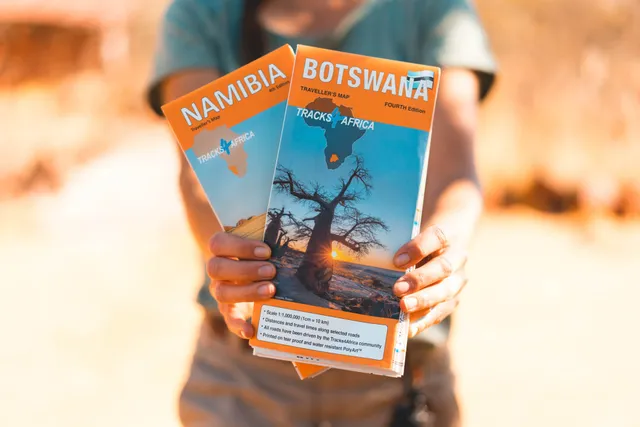
GPS maps for Botswana
For orientation we did not want to rely exclusively on paper maps or on a single source. For locating ourselves we downloaded Google Maps offline maps for the relevant regions. We knew in advance that Google Maps would not show us all the important tracks. The offline map was only meant to help in an emergency situation. Because with our Toyota Land Cruiser from Bushlore we had rented a satnav with a GPS map from Tracks4Africa. The worst-case scenario then happened when we discovered at South Gate that we had been given the satnav from Bushlore without the Tracks4Africa map.
The drive to our first campsite, Third Bridge, was very adventurous for us. At times, narrow tracks with dense vegetation lead through deep sand and again and again elephants cross our path. Even though we did not get lost despite the missing GPS map, we first had to get a feel for navigation in the parks. You can also see how overwhelming that first day in the wilderness was in our vlog on YouTube.
Loading the video sends data to YouTube.
Air rescue with Okavango Air Rescue
In preparation for the wilderness in Botswana we decided to take out membership with Okavango Air Rescue (OAR). OAR was founded in Maun in 2011 by Swiss doctors with the aim of building up an air rescue service for remote areas of Botswana. Since then OAR has had to fly an average of twice a month on rescue missions. As we had booked campsites for a total of nine nights in Moremi and Chobe, we decided to become members.
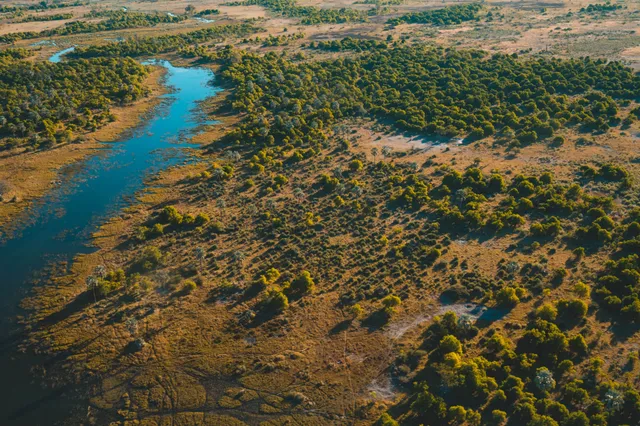
The background is that our international health insurance does not have the option of extracting us from hard-to-reach regions in an emergency and being able to help quickly. As we were going to spend quite a long time in the parks, we registered with OAR before the start of the trip. It is important to know that the air rescue service only flies for members, as the flights are financed through membership fees. Annual membership costs around €180 per person. Registration is very simple and straightforward via the Okavango Air Rescue website.
Once payment had been received we were sent a membership card by email to print out. Fortunately we did not have to call on the air rescue service. The costs for the one-year membership are relatively high and you have to decide for yourself whether you consider air rescue to be worthwhile. We see it like this: we are glad we did not have to use the air rescue service and still supported OAR. Because besides tourists, the main aim is for local people to have the possibility of receiving medical care in an emergency in remote areas. Locals pay a lower contribution than tourists, which we consider fair.
Stocking up on food and water supplies
In Maun we specifically stocked up on supplies for the coming days in the wilderness areas. We bought many tins and long-life products in the supermarket. Supermarkets in Botswana are generally well stocked so you can get everything you need. You can read where you can buy good meat in Maun, for example, in our Maun tips.
For our big shop we planned a dish for each day and wrote the ingredients on our shopping list. Then we simply added a bit more for emergencies so that we had a generous reserve and could also help out other travellers. If you need a bit of inspiration for camping recipes, have a look here.
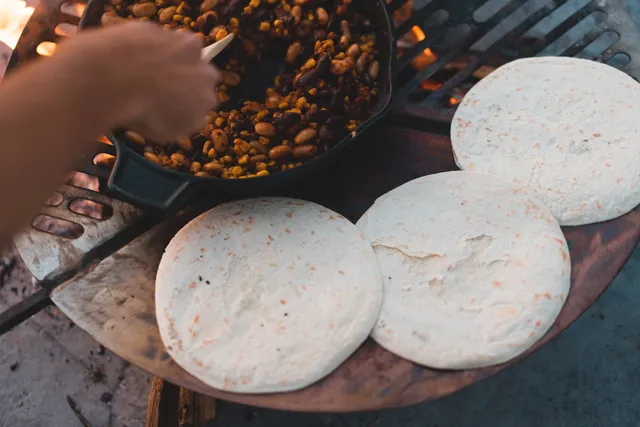
In Botswana we bought 5-litre water containers in the supermarkets. For our tour through Moremi and Chobe we planned 5 litres per person per day. That way we had enough with us for drinking, making coffee and for a possible emergency. When we arrived in Kasane and once again had access to shops, we still had water containers left over.
To our surprise there was a small shop at both Third Bridge and Savuti campsites. But we would not rely on always being able to get something there. Our motto definitely was: better to have it than to need it. If there is still something left at the end of the trip, other travellers or local people will be happy about the products.
Equipment in our vehicle
When it came to the equipment in our vehicle it was important to us that we could rent two additional jerry cans (diesel cans). With the two jerry cans we had an additional 2 x 20 litres on top of the 130 litres (including the extra tank). That gave us a good feeling, as there are many deep sand sections in Moremi and Chobe where the car uses more fuel than we are typically used to.
We also rented a satellite phone as the network coverage is not very good in many regions.
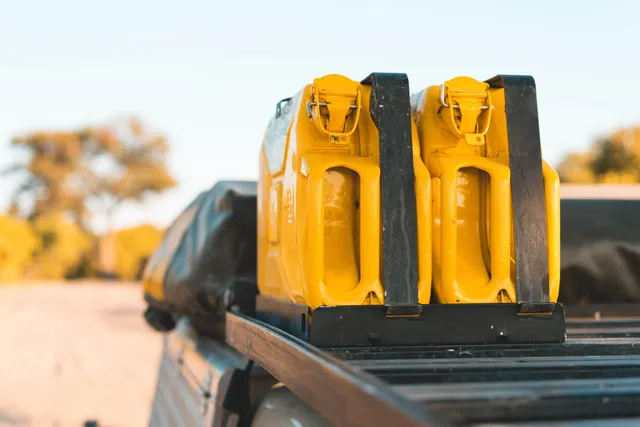
The rest of the equipment, such as two spare tyres and a high-lift jack so you can change a tyre, is part of Bushlore’s standard vehicle equipment. Sand ladders and a spade are also included so you can dig yourself out again if you get stuck.
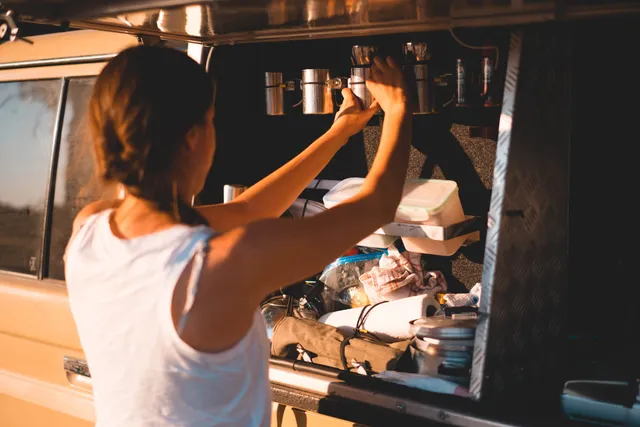
It was also important to us that our everyday equipment, such as cooking gear and food, was quickly to hand. Thanks to the practical kitchen unit we always had cutlery or spices within easy reach. An extra drawer in the rear of the vehicle was especially handy for storing food. There was even room in the drawer for the Dutch oven. We found the interior fit-out of the vehicle very practical. On our Namibia road trip the year before, we hired a Hilux with four boxes in the canopy for crockery and food. That works too, but it involves more pushing and stacking of the boxes.
These were our tips to help you prepare as well as possible for a trip into the wilderness in Botswana. Are you also planning a trip to Botswana? Tell us in the comments about how you’re getting ready for the wilderness in Botswana!
Plan your trip in the app.
Save activities and places to stay, put your route together and take everything with you offline.