Translated from German. We write our content in German.Show original
Botswana self-drive round trip: The ultimate guide for your safari adventure

By Laura & Tobi ·
Ready for the ultimate self-drive adventure in Botswana? Discover our tips on routes, equipment and the best time to travel.
Botswana self-drive round trip – does that sound like an adventure? Imagine steering your 4x4 through endless savannahs, encountering majestic elephants in the wild and feeling the boundless freedom of travelling entirely under your own steam. We’ll take you on a journey through unspoilt wilderness, show you the most beautiful routes and reveal how to plan your safari perfectly – from the ideal time to travel to the most important equipment.
Basic information for planning a Botswana self-drive round trip
Do you dream of an authentic safari experience where you take the wheel yourself? A self-drive round trip through Botswana is just right for you! Here you’ll find the most important basics for your planning. From the best time to travel to the country’s sustainable tourism policy – we’ll show you what matters when it comes to preparation.
What makes Botswana special
Unlike in many other travel destinations you’ll hardly find classic sights in Botswana. Instead you can look forward to pure, unspoilt nature. The country focuses entirely on its breathtaking wildlife and vast national parks. The few tarmac roads make the country a real adventure for self-drivers.
- The main attractions are the numerous national parks and nature reserves
- The focus is on game drives and wildlife viewing
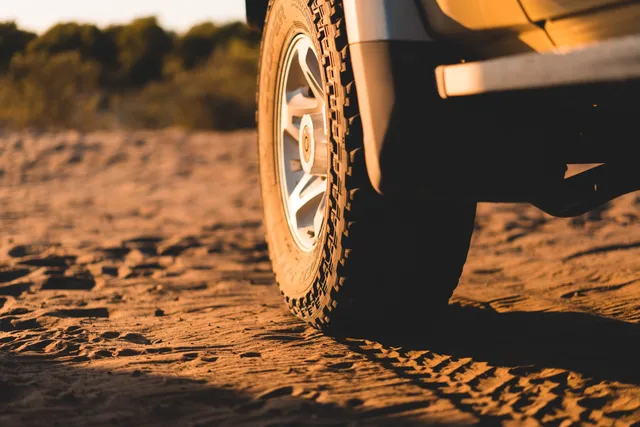
- Infrastructure is geared towards 4x4 vehicles
Choosing the best time to travel
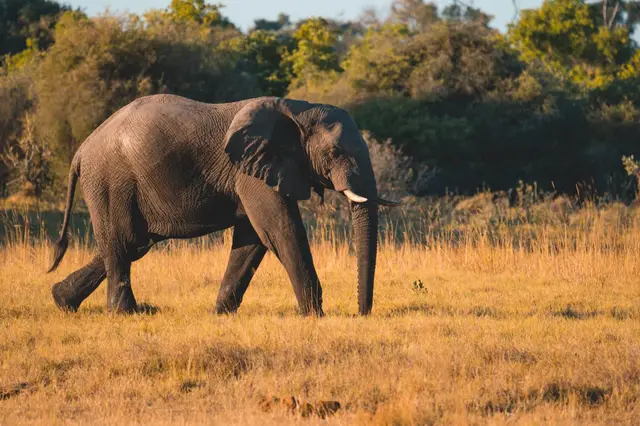
Choosing the right time to travel is crucial for your safari experience. Depending on the season the animals concentrate in different regions:
Dry season (May to November):
- Best time for wildlife viewing at waterholes
- Ideal conditions for Moremi Game Reserve, Khwai concession and Chobe National Park
- Especially good sightings along the Boteti River
Rainy season (November to April):
- Spectacular zebra migration in the Makgadikgadi Pans
- Lush greenery in Nxai Pan National Park
- Best time for the Central Kalahari Game Reserve
Sustainable tourism and planning
Botswana pursues a sustainable tourism model with limited visitor numbers. For you this means:
- You need to book campsites and accommodation well in advance
- Limited availability in high season
- Higher prices but in return exclusive nature experiences
It’s best to plan your route with our app. It offers you beautiful accommodation as well as campsites and valuable tips for your self-drive safari.
Equipment and vehicle
The remote parks require thorough preparation:
- Off-road capable vehicle with four-wheel drive is essential
- Complete camping equipment for the wilderness
- Sufficient water and fuel supplies
- Satellite phone recommended for emergencies
- GPS and detailed maps
For further details on the equipment you’ll need we recommend our article on the Botswana packing list.
Important sights and destinations on a Botswana self-drive round trip
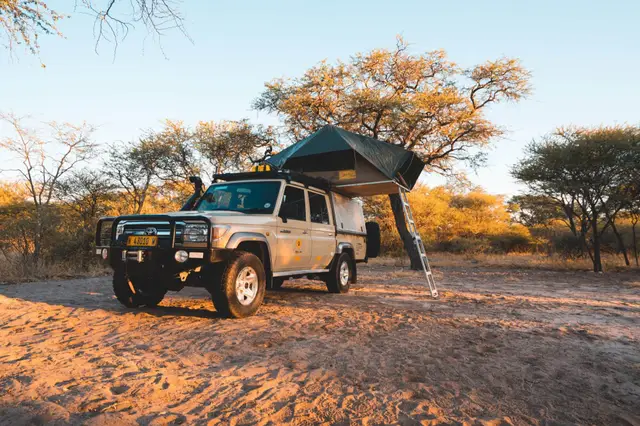
On a Botswana round trip you can look forward to some of Africa’s most impressive natural spectacles. From the vast elephant herds in Chobe to the mystical water world of the Okavango Delta – each region has its very own character. We’ve put together the most important highlights for you so you can plan your route perfectly. With our app you’ll also have all the information with you offline.
The Okavango Delta – Africa’s water world
The Okavango Delta is a true natural wonder and a UNESCO World Heritage Site. Here the Okavango River spills into the Kalahari and creates a unique mosaic of waterways, islands and lagoons. The best access points for self-drivers are:
- Moremi Game Reserve – the eastern part of the delta with an excellent road network for safaris
- Third Bridge – known for spectacular encounters with lions and leopards
- Khwai Community Area – here you can watch bathing elephant families
Chobe National Park – realm of the elephants
Chobe is home to the largest elephant population in Africa. Especially along the Chobe Riverfront you can sometimes see hundreds of elephants at once. Highlights include:
- Chobe Riverfront – ideal for watching elephants along the river
- Savuti – famous for its big cats and ancient rock paintings
- Linyanti – remote area with excellent wildlife viewing
The Makgadikgadi and Nxai Pans
The vast salt pans of Botswana offer a surreal landscape and are home to one of Africa’s last great zebra migrations. Special experiences include:
- Baines Baobabs – magical sunsets at the iconic baobab trees
- Kubu Island – granite island in the middle of the salt pans
- Nxai Pan – between December and March the stage for the zebra migration
Central Kalahari Game Reserve (CKGR)
The CKGR is one of the largest protected areas in the world and offers a real wilderness experience. Here you’ll find:
- Deception Valley – made famous by the book "Cry of the Kalahari"
- Passarge Valley – ideal for viewing lions and cheetahs
- Sunday Pan – important waterhole for Kalahari wildlife
Tip: Before your trip download our app. It contains detailed activities and insider tips for all these regions – also available offline!
Best time to travel for a Botswana self-drive round trip
The best time to travel for your Botswana self-drive trip depends very much on your personal preferences and the regions you want to visit. While the dry season from May to November is particularly popular with most travellers thanks to excellent safaris and pleasant temperatures, the rainy season from November to April also offers unique experiences. Let’s find out together which time is best for your adventure.
Dry season (May to October): optimal conditions for safaris
The dry season is the classic high season for self-drivers in Botswana. Conditions are ideal at this time:
- Excellent wildlife sightings - Wildlife viewing is particularly good in the Moremi Game Reserve, Chobe National Park and the Khwai concession thanks to the sparser vegetation.
- Best road conditions - The sandy tracks are easier to drive than after rainfall. Even so, there are deep sand tracks and water crossings are possible in Moremi and Khwai.
- Pleasant climate - Daytime temperatures are moderate, but it gets very cold at night.
A special highlight in the dry season is the Chobe Riverfront, where hundreds of elephants gather at the river. Plan your route so you don’t miss this one-of-a-kind spectacle!
Rainy season (November to April): the green paradise
The rainy season offers you very special experiences away from the usual tourist trails:
- Makgadikgadi Pans & Nxai Pan - Experience the spectacular zebra migration
- Central Kalahari Game Reserve - Watch the desert come to life
- Lush vegetation - Perfect time for photographers and birdwatchers
Tip: Download our app to have offline access to important information and routes. Especially in the rainy season, when some tracks can become muddy, good navigation is particularly important.
Bear this in mind when planning: driving conditions can become challenging in the rainy season. Experienced handling of a four-wheel-drive vehicle and good preparation are then especially important. Find out in advance about the most important preparations for the wilderness.
Practical tips for self-drivers on a Botswana round trip
A Botswana self-drive round trip is the ultimate adventure for anyone who wants to experience Africa’s wilderness up close and at their own pace. But to make your safari a success, you need to consider a few important points. We’ll share our experiences with you so that you are perfectly prepared.
Choosing the right vehicle
Let’s start with the most important element of your trip – the vehicle. For the best rates we recommend renting your vehicle in Windhoek or Johannesburg. Prices there are usually lower than in Botswana itself.
Your vehicle should meet the following minimum requirements:
- 4x4 drive with high ground clearance
- At least two spare tyres
- Sand tracks for emergencies
- Air compressor to adjust tyre pressure
- Satellite phone
- Reliable GPS system
Before you set off you should familiarise yourself with driving in deep sand. Conditions are challenging all year round.
Camping and overnight stays
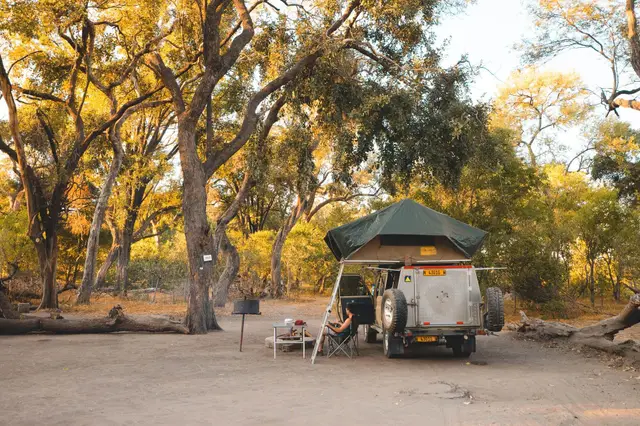
Wild camping is strictly forbidden in Botswana. So plan your overnight stays carefully:
- Book campsites, especially in the national parks, several months in advance
- Use only official campsites
- Download our app to have offline access to all campsites as well
Supplies and provisioning
The supply situation in Botswana requires good planning:
- Refuel your petrol reserves at every opportunity
- For longer driving distances, additional petrol cans are recommended
- Buy groceries in well-stocked supermarkets such as in Maun or Kasane
- Plan enough water supplies (at least 5 litres per person per day)
- Pack a basic selection of spare parts and tools
Travel planning and route recommendations for Botswana self-drivers
A self-drive round trip through Botswana is an unforgettable adventure that requires careful planning. We recommend allowing at least three weeks so you can explore the country’s highlights at a relaxed pace.
The most important basics for your route planning
- Time frame: Plan at least 3 weeks, especially if you start from Namibia or South Africa
- Starting points: Windhoek or Johannesburg are ideal for the start of your trip
- Flexible planning: Don’t plan your route too tightly in case of unexpected events such as a flat tyre on the vehicle
Our recommendation: the perfect 10-day route through northern Botswana
For adventurers with a four-wheel-drive vehicle and roof tent we have put together a tried-and-tested route that links the most beautiful spots in the region. The route is particularly suitable during the dry season:
- Day 1: Start in Maun – overnight at Audi Camp
- Day 2-4: Moremi Game Reserve – Third Bridge Campsite
- Day 5-6: Khwai concession – Magotho Campsite
- Day 7-8: Chobe National Park – Savuti Campsite
- Day 9-10: Finale in Kasane – Senyati Campsite
By the way, with our app you can also plan the best spots and campsites on your route offline and have all the important information at your fingertips at all times.
Practical tips for your route planning
- Plan for no more than 4-5 hours of driving time per day
- Allow extra time for game drives and wildlife viewing
- Book campsites early, especially in high season
- Note the best time to travel to Botswana
Conclusion: your adventure as a Botswana self-driver
We hope this guide has inspired you to plan your own Botswana adventure. A self-drive round trip through this fascinating country does require thorough preparation, but it rewards you with unforgettable nature experiences away from well-trodden paths. With the right equipment, a reliable four-wheel-drive vehicle and our tips, nothing stands in the way of your safari.
Have you already gained experience with self-drive safaris in Botswana? Share your stories in the comments – we’re excited to hear about your adventures!
Plan your trip in the app.
Save activities and places to stay, put your route together and take everything with you offline.