Translated from German. We write our content in German.Show original
Biodiversity thanks to the Benguela Current

By Laura & Tobi ·
In a fascinating way, the Benguela Current turns the Atlantic off Namibia into one of the most fish-rich waters on our planet.
It is really very fascinating how an entire ecosystem depends on a fog that has its origin in the depths off the coast of Namibia. But what if this deep water were not only responsible for the Namib desert, but also created a fascinating biodiversity in the Atlantic and thus one of the most fish-rich areas in the world?
Four oases of life in the world’s oceans
That is exactly how it is. There are only four of these particularly fish-rich areas in our world’s oceans in total. Off Peru and Chile, the Peru Current creates particularly high marine biodiversity, off California and Oregon it is the California Current. In Africa there is also the Canary Current system, which provides high fish densities off Morocco, Mauretania and Senegal. And right here off Namibia you have the fourth, the Benguela Current. These four areas alone, which make up only about 0.2 % of the world’s ocean surface, provide around 20 % of the total catches of the global fishing industry.
The wonder of upwelling areas
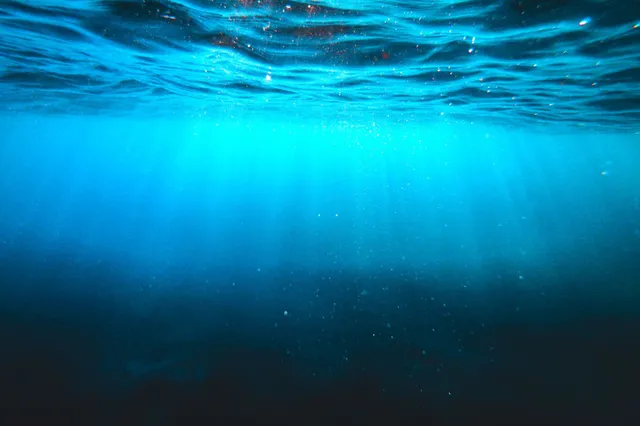
There is a very special and exciting reason for this. These are what are known as upwelling areas. Along the coasts of the oceans, a constant wind blows parallel to the shore, pushing the surface water out into the open ocean. This allows the cold deep water to rise. Do you remember?
The deep water of the Benguela Current originates in Antarctica and creates ideal conditions for the bacteria that live there. They are important because through decomposition processes they produce many nutrients such as phosphates, nitrates and ammonium. The upwelling of the Benguela Current then continuously pushes this natural fertiliser up to the surface, where it works together with the sun to let the phytoplankton grow. It grows so strongly that you can sometimes even see it from outer space. Incredible, isn’t it?
The Benguela Current food chain
Although this alone is already fascinating, it is only the beginning. The phytoplankton is the starting point for an entire ecosystem off the coast of Namibia.
The animal zooplankton feeds on the plant-based phytoplankton and in turn is the basis of the diet for sardines and herring. Predatory fish such as hake, anglerfish, Jacks, mullet, tuna and the strange ocean sunfish feed on them.
In addition to these impressive food chains, this rich ecosystem also has great economic importance. The Benguela Current is the backbone of Namibia’s fishing industry. It not only provides an abundance of fish, but also jobs and food for the local population. The rich supply of food and the diverse biodiversity of the Benguela Current show how closely interlinked and interdependent the communities of life in this area are.
A paradise for birds and marine animals
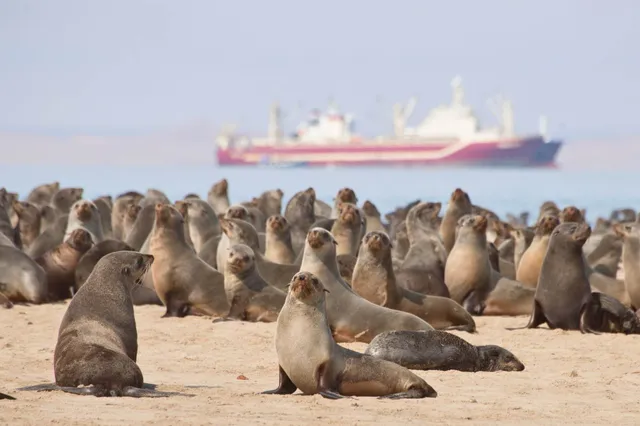
Larger animals also benefit from the food chain off the coast. Attracted by the abundance of fish, seals and various dolphin species are found here. In addition to the common bottlenose dolphin, one of the smallest dolphin species lives here, the Heaviside's dolphin.
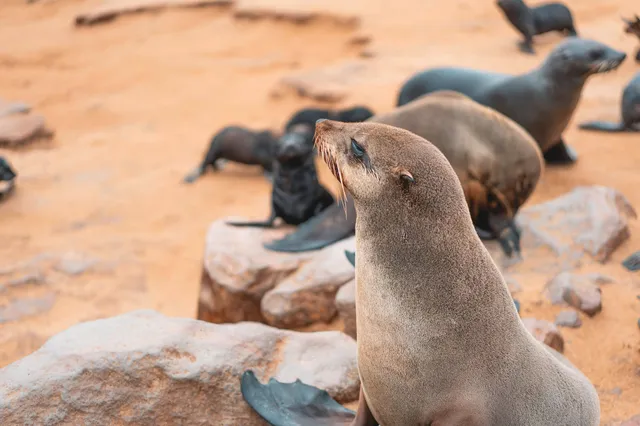
Isn’t it fascinating how a cool current from Antarctica off Namibia brings forth so much life? The plankton that forms is directly or indirectly responsible for the rich diversity of life off the coast and makes this region so impressive. The ecosystem is not only of great importance for the animals living in the water, but also for many bird species.
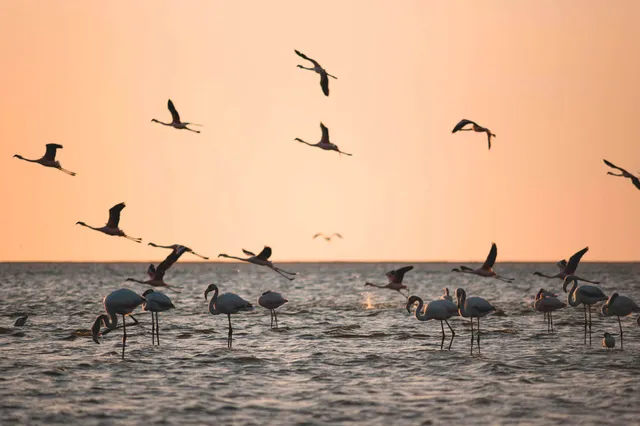
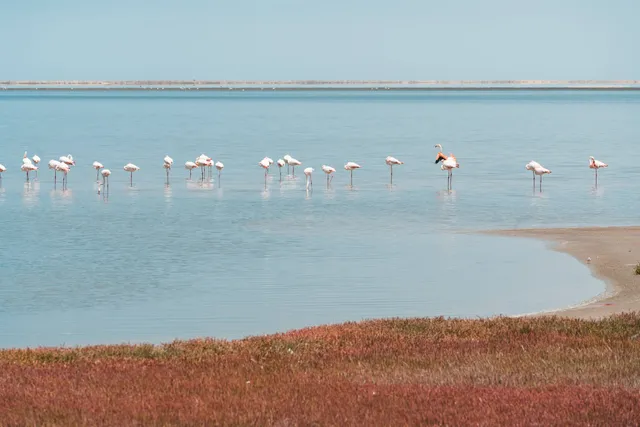
Flamingos in particular, both the greater flamingo and the lesser flamingo, gather here in large numbers to make use of Namibia’s rich waters. The two are not competitors for food. Lesser flamingos filter phytoplankton with their specialised beak, while greater flamingos also search for small crustaceans, molluscs and even small fish.
Pelicans, known for their impressive bills, use the region’s abundance of fish as their main source of food and are often seen near fishing boats, hoping to snatch a bite.
Great cormorants, on the other hand, are true diving artists and hunt their prey underwater. They are often seen along the coast, drying their wings in the sun.
You can experience this biodiversity in Swakopmund and Walvis Bay in many different ways. Are you ready?

Plan your trip in the app.
Save activities and places to stay, put your route together and take everything with you offline.