Cette page n’existe pas encore en français : nous te montrons la version disponible.
Namibia malaria: is prophylaxis necessary?
Par Laura & Tobi ·
In some regions there is an increased malaria risk. In this article we explain which regions these are and what that means for you.
In this article you find out everything you need to know about malaria in Namibia. We take a look at how it is spread, symptoms and protective measures you should take. In doing so we answer the question of whether malaria prophylaxis is necessary and which options are available to you.
In this article you find out…
- which regions in Namibia are affected by malaria,
- which appropriate protective measures you can take and
- share our personal experiences with you.
Important points in brief
- Malaria in Namibia: Risk varies by region and season
- High-risk areas: In the north and north-east (Caprivi Strip, Zambezi Region, Kavango West, Kavango East)
- Prophylaxis: Protective measures and preventive medication recommended
- Vaccine: There is currently no effective vaccine against malaria.
General information about malaria
Malaria is an infectious disease caused by parasites that is transmitted from mosquitoes of the genus Anopheles to humans. The mosquitoes are mainly active between sunset and sunrise.
Symptoms and course of the disease
The most dangerous form of malaria, malaria tropica, is characterised by fever, headaches, muscle pain, weakness, vomiting, coughs and diarrhoea. Severe cases can lead to acute kidney failure, convulsions, circulatory collapse and coma. Other malaria pathogens cause regular bouts of fever: malaria tertiana (every three days) and malaria quartana (every four days).
If malaria is recognised in time it is easy to treat.
Important to know: If you return from a trip to a malaria area and develop symptoms such as fever, you should definitely tell your doctor that you have recently been in a malaria area. Without this information the doctor may not consider the disease.
Malaria in Namibia: overview of all regions
We have shown the incidence per 1,000 people for you on a map. On the map you can see that the malaria risk increases the further north your route takes you.
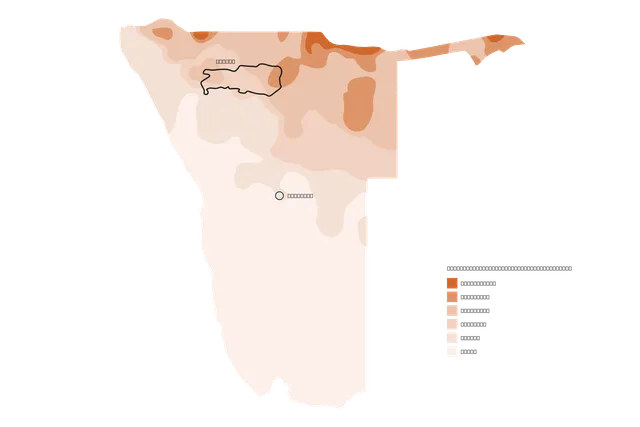
Geographical spread of malaria in Namibia
- High risk:
- All year in the north and north-east (Zambezi or Caprivi Strip, Kavango East, Kavango West, Ohangwena)
- Seasonal (November - April) in the north-east of the country (including the towns of Grootfontein and Tsumeb)
- Medium risk:
- All year in northern regions (Etosha National Park, Kunene, Omusati, Oshana, southern parts of Oshikoto, Otjozondjupa, Omaheke)
- Seasonal (May - October) in the north-east of the country (districts of Oshikoko, Otjozondjupa, Omaheke including the towns of Grootfontein and Tsumeb)
- Low risk:
- All year in the rest of the country (apart from in the malaria-free regions)
- Malaria-free regions:
- Windhoek, coast, Namib Desert, regions around and south of Mariental
Seasons and climate factors
The rainy season and the months afterwards (November to June) significantly increase the malaria risk, as standing water provides ideal breeding grounds for Anopheles mosquitoes.
Which malaria prophylaxis makes sense for Namibia?
Preventive malaria medication is recommended for trips to high-risk areas. In less affected regions, careful use of protective measures (mosquito protection without medication) can be sufficient.
Good to know: There is currently no vaccine against malaria.
Recommendations from health organisations
However, as we are not doctors, you should ideally get medical advice. We have summarised the most important recommendations from the Institute of Tropical Medicine for you.
The Institute of Tropical Medicine advises:
- In the higher risk areas, preventive use of atovaquone / proguanil (Malarone®) or in special cases mefloquine (e.g. Lariam®) is recommended. Alternatively, doxycycline is an option. It is recommended by the WHO as an alternative and has been used successfully worldwide for years. Doxycycline is not approved as malaria prophylaxis in Germany. In the low- to medium-risk areas, during the risk period it is only recommended that you take atovaquone / proguanil (Malarone®) or artemer / lumefantrine (Riamet®) with you as emergency medication.
Protect yourself from bites: Namibia malaria prophylaxis options
Which medications are there?
There are medicines against malaria that protect you from a severe course of the disease. You can take the tablets preventively or take them with you as emergency medication on your trip and take them if you develop symptoms.
- Malaria medication atovaquone/proguanil: Well tolerated, side effects are rare. Nausea and digestive problems can occur as side effects.
Which non-medication measures are there?
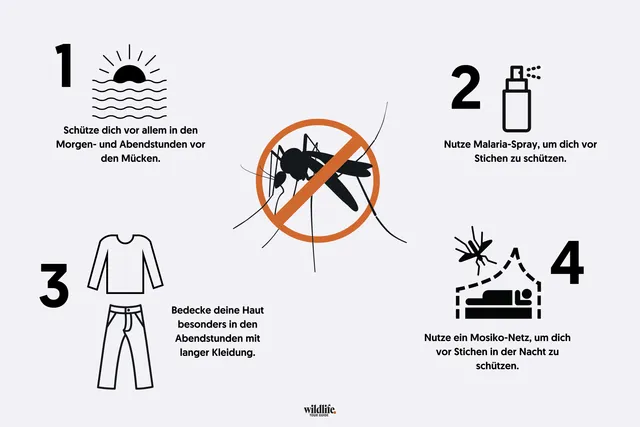
- Clothing: Wear long, impregnated clothing or bite-proof safari clothing
- Mosquito nets: Use impregnated nets
- Mosquito spray: Apply regularly, especially in the evening and at night
Effective mosquito repellents
We keep hearing that mosquito repellents from Namibia are supposed to work better than those available on the market in Germany. We therefore took a closer look at the different products and compared them.
- Peaceful Sleep: available in Namibia
- Tabard: available in Namibia
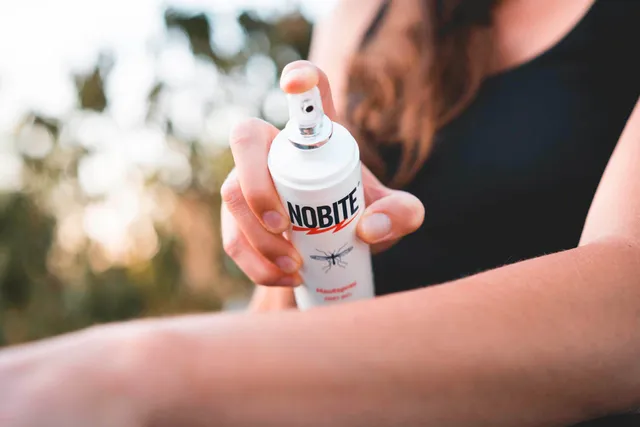
- Nobite: available in Germany
Comparison of all three products
- Peaceful Sleep: 15% DEET, 22.5 g DEET per 150 g can
- Tabard: 15% DEET, 22.5 g DEET per 150 g can
- Nobite skin spray: 50% DEET, 50 g DEET per 100 ml bottle
Conclusion
Nobite skin spray is significantly more effective in terms of active ingredient content, as it has a DEET concentration of 50%, compared to 15% DEET in Peaceful Sleep and Tabard. This means that Nobite skin spray offers stronger and longer protection against mosquitoes. If maximum protection is required, Nobite skin spray would be the best choice of the three products.
Important advisory services for trips to Namibia
For a safe and well-prepared trip to Namibia it is important to find out about current health information and recommendations. Here are some useful links and sources of information:
- Travel and tropical medicine advisory centres: These offer comprehensive advice on health risks and necessary preventive measures for travel to tropical countries. You can find an overview of tropical institutes in Germany here.
- WHO and CDC: These organisations provide up-to-date information on malaria and other tropical diseases worldwide.
Written travel consultation
If no travel medicine specialist is available near you, you can also make use of a written travel consultation. The Centrum für Reisemedizinische Vorsorge (CRV) offers this service. You will receive a comprehensive written consultation to help you prepare for your trip in the best possible way.
- Link to the written travel consultation by the CRV: Written travel consultation
Malaria in Namibia: our experiences
Finally, we want to share our personal opinion about malaria in Namibia with you. However, we emphasise that individual consultation with a travel medicine specialist is essential.
Before our first trip we heard very different opinions on the topic of malaria in Namibia. Most health organisations advise you to protect yourself sufficiently against malaria – especially in the north of Namibia and also regardless of the time of travel.
We travelled through Namibia for the first time during the rainy season and therefore decided to take a malaria medication. The prescription-only medication with 12 tablets costs around 40 EUR. We started taking it the day before entering Etosha National Park. After that, we took one tablet every day until the pack was finished. We tolerated the medication very well.
Today we would no longer take such a medication. We share the view of the tropical institute that the best protection against malaria is to avoid being bitten: no bite – no infection. The active ingredients, on the other hand, can cause nausea, digestive problems and headaches. So it is not an easy medication that you can just take casually.
What is our context?
- In Namibia there is a medium to high malaria risk. The actual infection rate is not low compared to other African countries, but it is manageable.
- We do not belong to the at-risk group.
So what do we do?
- In malaria areas we use insect spray every day.
- On our trips we sleep in a tent and keep the mosquito net closed.
- We impregnate our long clothing before the trip and put it on in the evening.
For us, protection against bites is overall the best solution.
But that is only our opinion and not a medical recommendation for you. After all, your risk profile may be different due to pre-existing conditions or age. In any case, we hope you have a trip from which you return home healthy!
Pour aller plus loin
Planifie ton voyage dans l’app.
Enregistre activités et hébergements, compose ton itinéraire et emporte tout hors ligne.