Translated from German. We write our content in German.Show original
Wildlife in Canada: The best places to see animals on your trip

By Laura & Tobi ·
Watching wildlife in Canada: we tell you where and when you have the best chance of seeing bears, whales, moose and more on your trip.
Are you planning a trip to North America and would you like to watch wildlife in Canada? In western Canada there are still many wild animals roaming the vast wilderness. So if you want to see a bear, orca or bald eagle, Canada is exactly the right place for you. In this article we not only tell you in which places you can watch animals particularly well, but also at what time of year.
Watching moose in western Canada
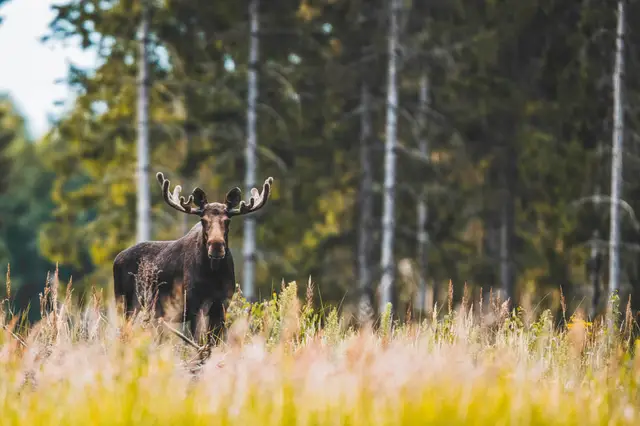
When you think of Canada, you probably picture a moose in a lake straight away, don’t you? Moose are the largest deer species and can be seen all year round in western Canada. If you are in Canada during the summer months, you should watch out for moose near streams and lakes, as they feed along the shores. Moose are very good swimmers, so it is not unusual to see one swimming in a lake. On particularly hot summer days moose stand in the water to cool down.
To watch a moose, we recommend hiring a canoe and gliding silently across one of the countless lakes, for example on Clearwater Lake in Wells Gray Provincial Park. Moose Lake on Highway 16 between Mount Robson and Jasper is also a good option for a stop on your drive to look out for moose. The area around Prince George is also well suited to watching moose, as a large number of moose live there.
Watching bears on your trip to Canada
Seeing a bear in Canada is not only the highlight of the trip for many people, it is the highlight of their whole life. In contrast to most regions of Europe there are still bears in Canada. In British Columbia there are still healthy numbers of American black bears and grizzly bears. There are also still many bears in the neighbouring province of Alberta. Grizzly bears in Alberta, however, now only live in the Rocky Mountains.
If you want to watch bears it is helpful to know that they follow their seasonal food sources and are therefore found in different places.
In spring, after a long winter rest, bears are hungry and start searching for the first tender plants. Dandelions and clover are already flowering in May and June and are therefore a welcome meal. As these plants often grow along roads, with a bit of luck you can watch a bear right at the roadside during your road trip.
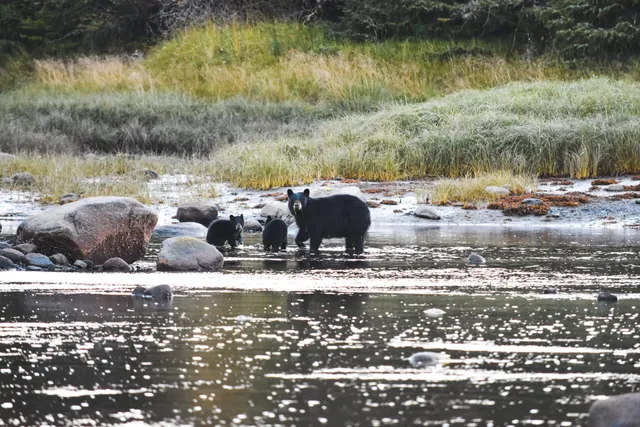
Over the course of the summer, bears in the Rocky Mountains, for example, migrate to higher elevations to search for food such as insect larvae, plants and mammals. As many bears move from the valleys into widely scattered regions, it is more difficult to see bears during the main holiday season in the summer months.
In late summer bears need to put on a thick layer of fat for the winter. As they know very well that they do not have much time left to build up their fat reserves, this season is very stressful for them. In regions where there are salmon, bears can feel as if they are in paradise. Bears that do not have access to salmon have to search for other food such as berries.
Bears spend the winter sleeping in a den, so it is quite unusual to see a bear in the Canadian winter.
The best months to watch bears in Canada are therefore May/June and August/September. At this time bears are intensely searching for food and move through the areas where they find the most.
The travel guide for watching wildlife in Canada
If you want to watch bears in Canada, we recommend our Canada travel guide. We have tailored the guide specifically to the travel period from May to October so that you can see as many animals as possible on your trip.
You will also find all the spots from the travel guide in the app, which you can use to plan your road trip through nature.
Seeing bald eagles in western Canada
Bald eagles are now once again widespread in western Canada. Unfortunately this was not always the case, as the eagles were heavily hunted from the 19th century onwards. Thanks to conservation measures, populations in North America have recovered. On a round trip you have good opportunities to watch bald eagles in British Columbia and Alberta. The eagles are particularly common near lakes, rivers and the coast as they can catch fish, their main food source, there. In the winter months the waters in the interior freeze over, which is why the eagles move to the coastal areas. There the temperatures are milder and hunting is easier.
On Vancouver Island you have very good opportunities to watch bald eagles all year round. The towns of Tofino and Ucluelet on the west coast as well as the north of the island are good places for watching them. In Ucluelet we once saw more than 10 bald eagles sitting in a forest by the harbour.
If you are in Squamish (between Vancouver and Whistler) between November and February you can see gatherings of as many as 1,000 to 2,000 bald eagles there. At this time the spawning salmon enter the rivers around Squamish and attract the hungry eagles.
Elk
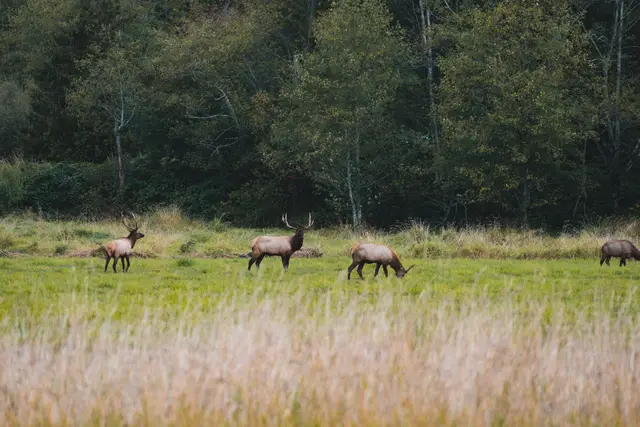
Elk are a widespread deer species in western Canada. You can watch them particularly well during the rutting season from the end of August to mid-October. In the Rocky Mountains you should keep your eyes open in the towns of Jasper and Banff. The animals even come right into town and gather on grassy areas. Two more tips for the town of Jasper are Wapiti Campground and the grounds of the Fairmont Jasper Park Lodge.
You should always keep a respectful distance from wild animals, but this is especially important during the rut. The males can become very aggressive and quickly attack.
Mountain goats
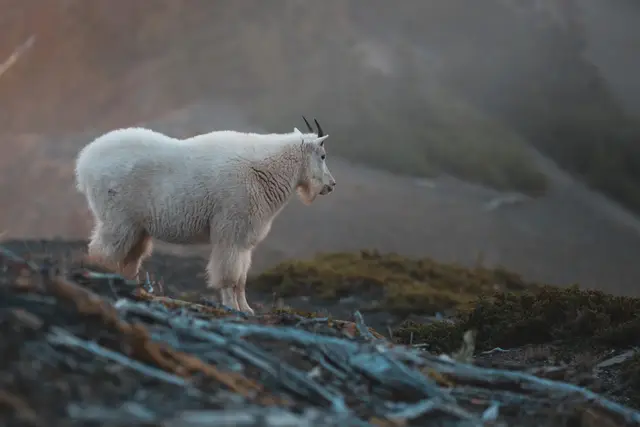
You can watch mountain goats in the mountain regions of British Columbia and Alberta. In the Rocky Mountains you have good chances of seeing the animals on the mountain slopes during the summer months, as their white coats stand out clearly against the darker rocks. If you are travelling along the Icefields Parkway, you should look out for mountain goats near Athabasca Falls. The goats are often seen there licking mineral-rich rocks.
Bighorn sheep
Bighorn sheep live in the mountain regions of western Canada. You have a good chance of seeing these sheep with their massive horns on the Icefields Parkway in the Rocky Mountains. The best place to look out for them is near the famous Columbia Icefield and the Columbia Icefield Center.
Pumas – the secretive wildlife of Canada
Pumas, which are also called mountain lions (English: cougar), are predators that are also at home in western Canada. Catching sight of a puma must be a unique experience. But to be completely honest, the idea that we might one day meet a puma on a hike is pretty frightening. The good news is that it is very unlikely you will encounter a puma, as these big cats are very shy.
One of the largest puma populations in the world lives on Vancouver Island. There are people who have lived on Vancouver Island for years and have never seen one of these fascinating animals. Mountain lions also prefer areas where they are undisturbed and can find enough food, such as white-tailed deer. There is no season that is generally better or worse for spotting them. What you need with this animal is simply a lot of luck!
Whales – more wildlife in Canada
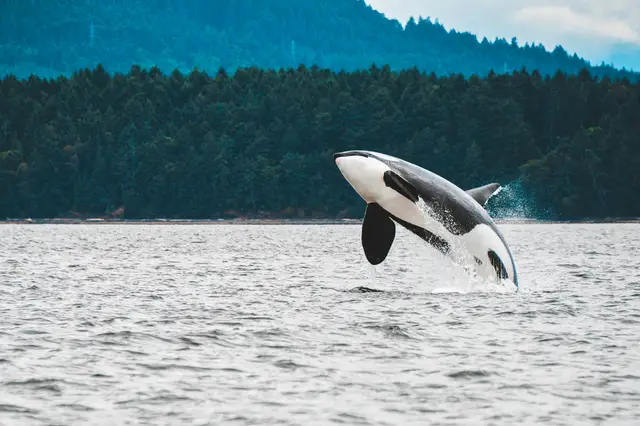
Anyone who loves whales and wants to see these giants at least once in their life should visit the west coast region. Whales convey a sense of freedom like almost no other animal. There are three different whale species living in the North Pacific – orcas, humpback whales and grey whales. There are even Pacific white-sided dolphins, which also belong to the order of whales, living in the North Pacific. But we will only write about them further down.
Your best chances of seeing a whale are on a whale watching tour between May and October. In western Canada tours are offered from Vancouver, Prince Rupert and various places on Vancouver Island. We have put together all the information and tips for whale watching on Vancouver Island for you here. If you want to see a specific species such as orcas, you should pay attention to where you start your whale watching tour.
However, you don’t necessarily have to get on a boat to see whales. It is also possible to watch whales from land. This is also the best way to have as little impact on the whales as possible. If you are at Long Beach near Tofino, for example, you may be lucky enough to see the spout of a grey whale at the surface from land.
Kayaking with orcas off Vancouver Island
Another way to see whales is on a kayaking tour, for example from Telegraph Cove. We once stayed at a multi-day Orca Camp, which was a really cool experience. Unfortunately, the weather put a spoke in our wheel and we couldn’t get out on the water as often as we had hoped. You can read about our experience at the Orca Camp here.
Pacific white-sided dolphins
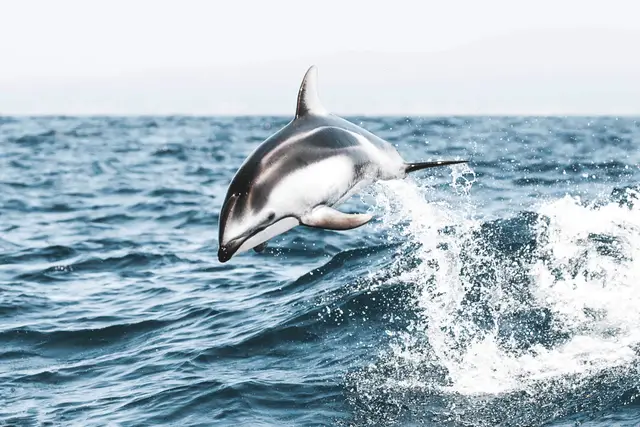
There are even dolphins in the North Pacific – namely Pacific white-sided dolphins. Would you have thought that? Pacific white-sided dolphins live in cool and temperate waters. Although they prefer deep water, they can still regularly be seen close to shore, and all year round.
The dolphins often surf the bow wave when you cross, for example, on the Vancouver Island ferry, or you might see them during a whale watching tour.
Wild wolves in Canada
You can in principle encounter a wolf at any time of year. However, it isn’t easy to see a wild wolf. You really do need a lot of luck, as wolves are very shy animals. In western Canada there are wolf packs in many regions. In the Rocky Mountains there are currently about 35–40 animals in 4 different packs in Banff. One pack often stays along the Bow Valley Parkway. A photographer once managed to capture a truly special moment with his camera when he watched a wolf pack hunting in the middle of Banff. Take a look here.
In the remote coastal areas of British Columbia there are some particularly special wolves: coastal wolves. They even live on some of the smaller offshore islands of western Canada and have specialised in food from the Pacific. If you want to see wolves on Vancouver Island you might be lucky in Cape Scott Provincial Park or in Pacific Rim National Park.
Conclusion: watching wildlife in Canada
If you are planning a trip to western Canada, you have very good chances of seeing animals in their natural habitat. Canada is a large and sparsely populated country with many different landscapes. In western Canada you’ll find mountain ranges such as the Rocky Mountains, as well as forests, lakes and the North Pacific. These varied landscapes make the wildlife of western Canada so diverse and special.
If your wish is to watch wildlife in the Rocky Mountains, then have a look at this article. And we reveal the best places for bear watching on Vancouver Island here.
Wild animals are usually very shy and often disappear long before we even notice them. To watch wildlife in Canada it therefore helps to bring a bit of patience. It is also very useful to have binoculars with you, as that way you can observe animals at a distance much better. We always take these binoculars with us.
You should also always keep a respectful distance from wild animals so that you don’t put yourself or the animal in danger. As it is becoming harder and harder for animals to survive in their natural habitat, our impact on them should be as small as possible. A good tip for recognising whether an animal is disturbed by our presence is to watch its behaviour. If an animal pauses while feeding, for example, that is often a sign that we are disturbing it. In any case we should then move away. We assume you feel the same way and don’t harass wildlife.
We hope our tips help you to watch wildlife in Canada. Tell us in the comments which of Canada’s wild animals you would most like to see.
Photo credits: Titel: Alice Donovan Rouse

Plan your trip in the app.
Save activities and places to stay, put your route together and take everything with you offline.