Translated from German. We write our content in German.Show original
Icefields Parkway: complete travel guide with the best highlights

By Laura & Tobi ·
The Icefields Parkway is one of the most beautiful routes in Canada and belongs on every Canada road trip. This comprehensive travel guide shows you the best highlights along the route between Jasper and Banff. Wonderful landscapes, hiking trails and masses of wildlife are just waiting to be discovered by you.
This is the Icefields Parkway guide with the best highlights and hikes along this dream route through the Rocky Mountains. You’ll also find out when the best time to travel the Icefields Parkway is, how much time you should allow and what the situation is with campsites and supplies.
The Icefields Parkway is one of the most beautiful stretches in Canada. As it was already built in the 1930s with the aim of creating a tourist route through the Rocky Mountains, you go straight from highlight to highlight – and there are plenty of those. Countless sights, hikes and masses of wildlife await you along the Icefields Parkway.
The route is about 230 km long in total and could theoretically be done in a day. But because there are so many highlights, it can definitely make sense for you to plan more time. The landscape is very varied with many 3,000 m high mountains, forests, lakes and waterfalls. An incredible 25 glaciers and seven gigantic icefields also await you.
While the hiking trails and sights themselves are well signposted, it’s not always easy to see where you need to stop for which sight. We therefore recommend that you pick up a free map at the visitor centre to get a good overview of the highlights.
The Icefields Parkway is ideal for travelling in a motorhome. The roads are wide and easy to drive. There are also plenty of large car parks where you can stop right at the highlights.
Highlights along the Icefields Parkway
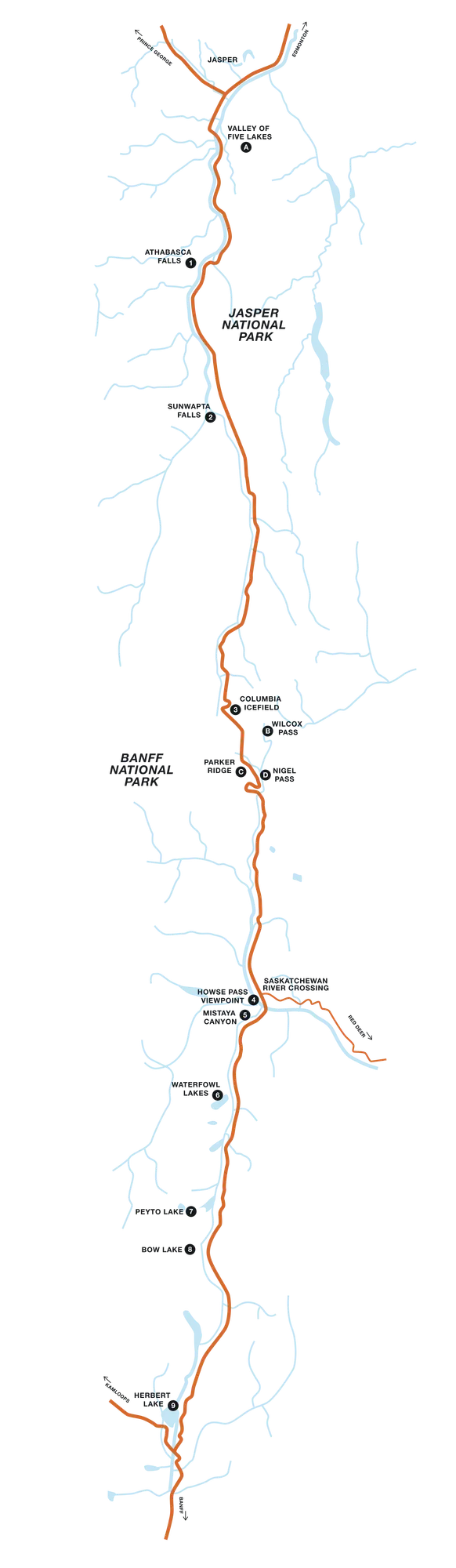
There is so much to see along the Icefields Parkway that you could easily spend days on this route. We’ll give you an overview so you know what awaits you. Then you can pick out a few of the highlights. We start our route from Jasper and drive south to Banff.
By the way, you can also download our Icefields Parkway map with all the highlights for free and print it out.
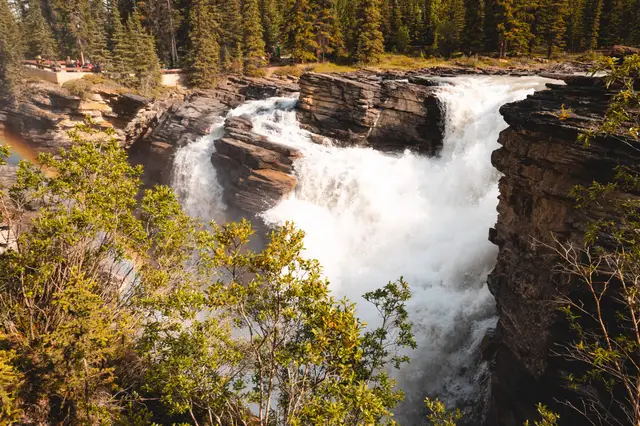
Athabasca Falls
Coming from Jasper, you reach Athabasca Falls after about 30 km. The 23 m high waterfalls in the Athabasca River attract quite a lot of people. It’s best to come here early or late. There is a large car park for motorhomes, from where a short footpath leads directly to the viewing platform.
Sunwapta Falls
About 54 km south of Jasper you reach Sunwapta Falls directly on the Icefields Parkway. Waterfalls up to 18 m high are waiting for you there after you have walked a short path from the car park. A small path runs alongside the waterfall. If you like, you can hike a further 2 km to the Lower Falls.
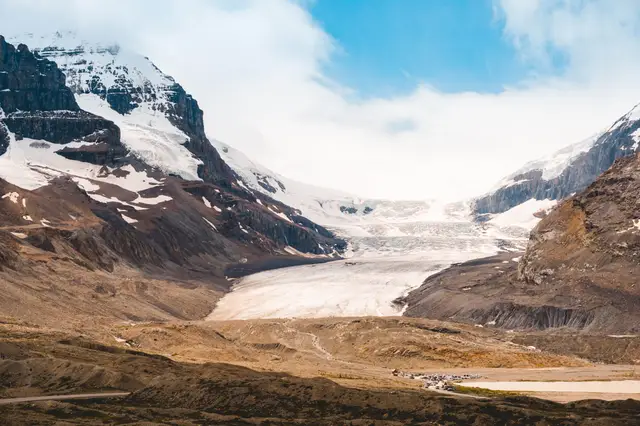
Columbia Icefield
The Columbia Icefield is probably the biggest highlight on the Icefields Parkway. Coming from Jasper, you reach the icefield after about 103 km. Eight glaciers await you here, making it one of the largest contiguous icefields south of the Arctic Circle. Mind-blowing, isn’t it? Right by the Icefields Centre you can see the Athabasca Glacier – the other glaciers can’t be seen directly from the car park. Park your motorhome in the large car park, put on sturdy shoes and walk a short but rocky path right up to the glacier. On our trip it was an utterly overwhelming feeling to get so close to a real glacier. As well as the joy, we also became thoughtful when we discovered the signs marking the retreat of the icefield. There is a sign for every year.
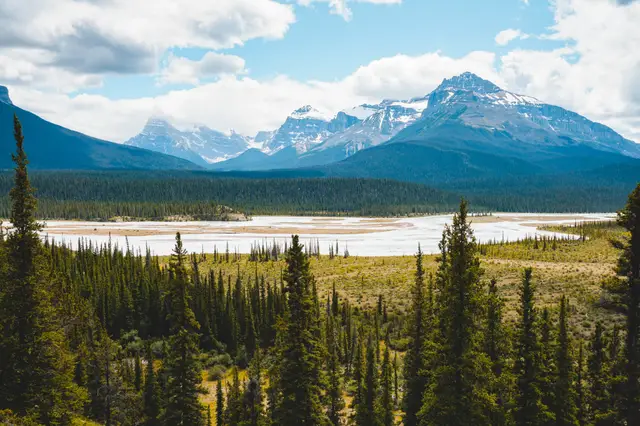
Howse Pass Viewpoint
After 154 km from Jasper you reach the Howse Pass Viewpoint. Picnic areas and a really beautiful view over the expansive landscape invite you to take a short break. You can park your car in a large car park directly on the Icefields Parkway.
Mistaya Canyon
As well as waterfalls, glaciers and great viewpoints, a canyon also awaits you about 159 km south of Jasper. Hardly anyone has this on their radar when they drive the Icefields Parkway. So park the car right at the lay-by and hike 500 m through a forest to Mistaya Canyon and listen to the roar of the Mistaya River, which has carved this canyon over a long period of time.
Waterfowl Lakes
The next stop, at kilometre 173, is Waterfowl Lakes, which are open from the end of June to the beginning of September. What makes the lakes so special is that the surface is a real display of colours. Some areas are green, others more blue, some shimmer turquoise. A lay-by right by the road makes stopping here easy again.
Peyto Lake
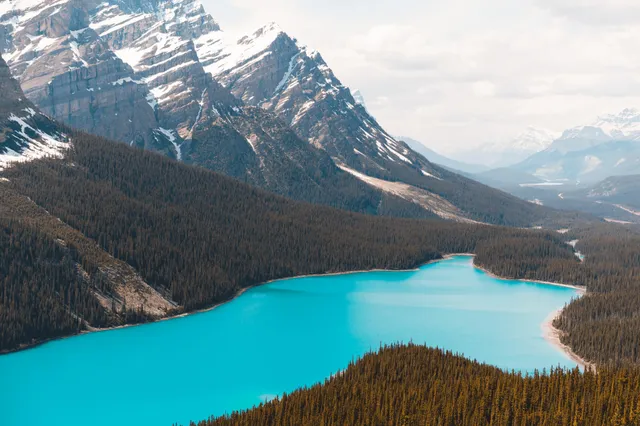
You probably know this lake, as it features on many Canadian postcards. Around 190 km south of Jasper this truly surreal-looking turquoise lake is waiting for you. Glacier water fills the lake and, together with the rock flour from the surrounding 3,000 m high mountains, colours it so incredibly beautifully. Even though a lot of tourists come here and the lake is certainly no insider tip, the view is well worth it. From the motorhome car park a 500 m long path leads directly up to the viewing platform.
Bow Lake
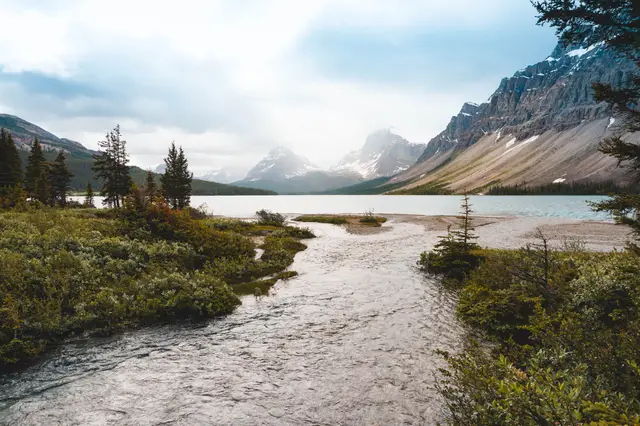
Bow Lake is also fed by glacier water and is located at kilometre 196. A large lay-by with an access road to picnic areas makes this lake another easy but wonderful stopover. Depending on the position of the sun, the colours of the lake change, which makes it really special. We took a break here, cooked ourselves some pasta and simply enjoyed the wonderful view.
Herbert Lake
Herbert is waiting for you – or rather Herbert Lake, which is 227 km from Jasper, so almost near Banff. This lake is not a typical tourist hotspot on the Icefields Parkway but is still very much worth seeing. So if you’d like a break from the tourists, this lake is a great option. Surrounded by forests and mountains, the lake looks particularly impressive when the evening sun casts a warm play of colours on the mountain peaks. There are several hiking trails here as well as great picnic spots.
The most beautiful hikes
Hikes are very well signposted along the Icefields Parkway and there is an opportunity to go hiking at almost every highlight. Some are short, some around three hours and some are full-day hikes. It’s great that every hike starts with an information board that gives you a good overview of the route and shows you how many metres of elevation you have to tackle. We’ve picked out four hikes on the Icefields Parkway that we would recommend.
Valley of the Five Lakes
As the name suggests, you pass five small lakes. On this trail you can observe wildlife and waterbirds very well. The circular hike is around 5 km long, easy to walk and therefore perfect for beginners. The hike takes about 2 hours.
Wilcox Pass Trail
Another hiking trail for beginners. In total, this 8 km out-and-back trail leads you through beautiful scenery. After just about 1.2 km you have a direct view of the Athabasca Glacier. So if you want to shorten the trail, you could turn back here. If you want to hike the entire Wilcox Pass Trail, plan around 4 to 5 hours for this hike.
Parker Ridge Trail
This hike is one of the most beautiful in the northern part of Banff National Park. Along the way you look out at Sasketchewan Mountain with its glacier and also have a fantastic mountain panorama. You often see bighorn sheep and mountain goats here too. A circular walk of around 5 km takes you back to your car in about 3 hours. You should know that you have to overcome about 275 metres in altitude on this trail – so the trail is strenuous, but definitely suitable for beginners. It is important to know that this trail is only snow-free from around the beginning of July.
Nigel Pass trail
Nigel Pass lies on the border between Jasper and Banff National Park. The trail is more for advanced hikers. The last few kilometres up to the pass in particular are quite steep and rocky. You are rewarded with a great view into the valley of the Brazeau River. The hiking trail is 14 km long in total and you should allow around 5 hours for it.
Which animals can you see on the Icefields Parkway?
There are a total of 52 mammal species in the Rocky Mountains and therefore along the Icefields Parkway, making this region one of the most species-rich in all of Canada. Besides black and grizzly bears there are also plenty of elk, moose, bighorn sheep and coyote, but also wolf and puma. If it is your dream to watch animals in the Rocky Mountains, then take a look at our more detailed article. We have plenty of tips for you there.
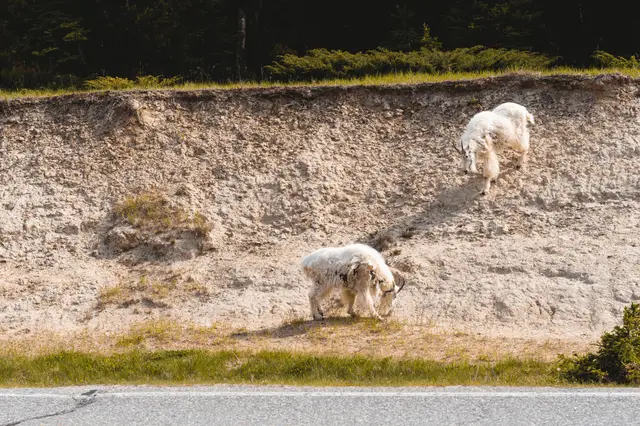
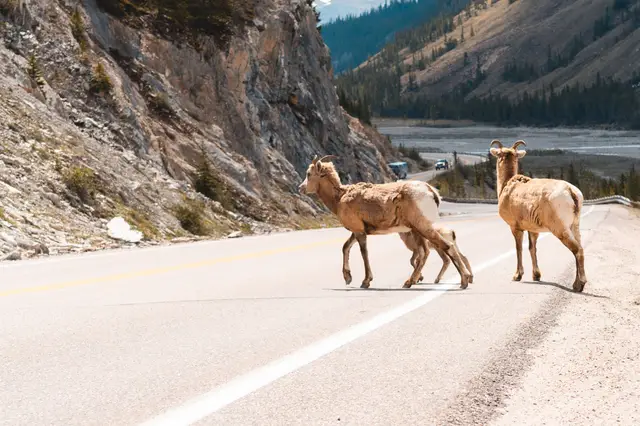
The Icefields Parkway is really wonderful if you enjoy seeing animals. Wild animals are particularly easy to spot in the early morning and evening. You should definitely take care while driving: animals can suddenly be standing in the middle of the road, as can tourists with their cameras or a traffic jam that has formed beside a bear. The sheer number of tourists is often a problem here for the safety of both wildlife and people. We therefore ask you to always keep a respectful distance from wild animals and never try to attract or feed them. If you see an animal along the route that is already surrounded by a crowd of people, it is better for the sake of the animal to drive on. So many animals live in the Rocky Mountains that you are sure to be lucky enough to spot wildlife somewhere else.
You can find more tips on when and where you can watch wild animals in their natural habitat in the article Wild animals in Canada: The best places to see animals on your trip.
Best time of year to travel this route
The Icefields Parkway can be travelled all year round, although travel in the off-season is very limited and in the shoulder season partly limited. We will give you a rough overview of the individual seasons so that you get a feel for when the right time for you is.
Spring
The pre-season starts in spring, when everything begins to bloom. In some places there is still snow while the first flowers are pushing their way to the surface. The mountains are snow-covered and make every kilometre of the Icefields Parkway so unforgettable.
The snow on the mountains begins to melt and makes the water levels in the rivers rise very high. The waterfalls are particularly spectacular at this time. Some lakes, on the other hand, may still be frozen.
When it comes to the weather you have to be prepared for everything. It can still be very frosty with snow or spring-like with temperatures in double figures.
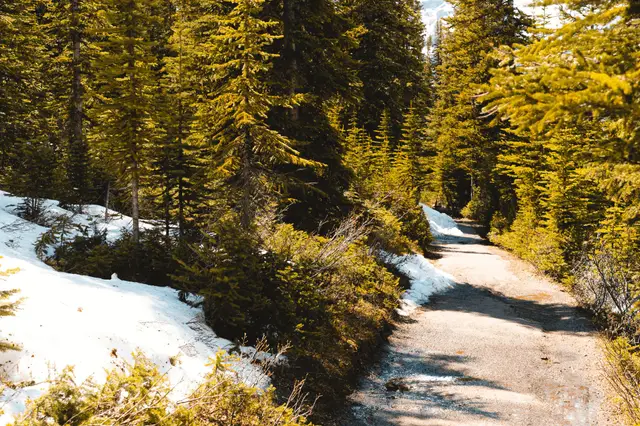
The animals gradually begin to wake from winter rest, such as the bear. Once awake, bears love to eat the fresh grass at the roadside. This is probably the best time of year to travel if you want to watch lots of animals – at the same time there are still few tourists around.
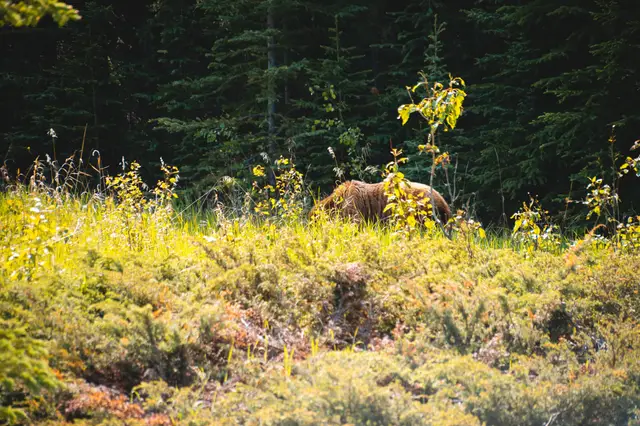
Spring is our absolute favourite time, even if some attractions and campsites are still closed or only partially open.
Summer
Probably the most popular time to travel the Icefields Parkway is summer, which is literally peak season with the best weather. Everything is green, the mountains are only covered in snow in isolated spots and the animals retreat further into the backcountry.
If you want to increase your chances of seeing wildlife, then drive the roads particularly early or late in the day. At those times many animals can be seen directly from the road, while they retreat at midday.
At this time of year all attractions and campsites are open and there are the most tourists around. It can get pretty busy so you should arrive at the campsite early. At the same time summer, especially July, is also the most expensive time to travel in Canada. We have created a cost calculator for Canada which you can use to calculate your motorhome trip through Canada.
Autumn
Do you know those pictures of the Indian summer, when the forests slowly turn into every imaginable warm colour? The shoulder season starts, but it is peak season for your eyes. Red, brown, yellow, orange – all these colours run through the forests you drive past on the Icefields Parkway.
Temperatures are often still mild at the beginning of autumn, but there can also already be snow and frost in places. For many wild animals the last time of year begins in which they can build up fat reserves for the winter. Bears in particular have to find enough food before winter rest, which makes it a stressful time for them.
Similar to spring, some attractions and campsites are already closed or have reduced opening hours. But that is not really a problem, as you could actually drive the route in one day anyway.
Winter
Winter is absolute off-season, but certainly no less worth seeing than the other seasons. Even though all campsites are closed and hardly any tourists are around, you will see something here that you will remember for a long time.
The landscape at this time looks like something out of a picture book. All the lakes are frozen and covered with snow. We found these incredible expanses so beautiful. On top of that it was so quiet. Only the snow crunches under your shoes and here and there a load of snow falls from a tree. If you want to go hiking, this is only possible with snowshoes. But that is a real experience too!
Animals are of course hardly to be seen at this time. If you are lucky, though, you might see a moose moving through the landscape.
As the Icefields Parkway is cleared of snow it can also be driven in winter. A traffic light system at the entrance shows what the current conditions on the road are.
The perfect amount of time to travel this dream road
It is of course always very individual whether you spend more or less time on a particular stretch. Depending on the length of your entire trip you may not have that much time. What we can definitely tell you, though, is that in theory you could easily spend a whole week here. There is so much to see, lots of hikes and again and again the chance to simply let your gaze wander for a while.
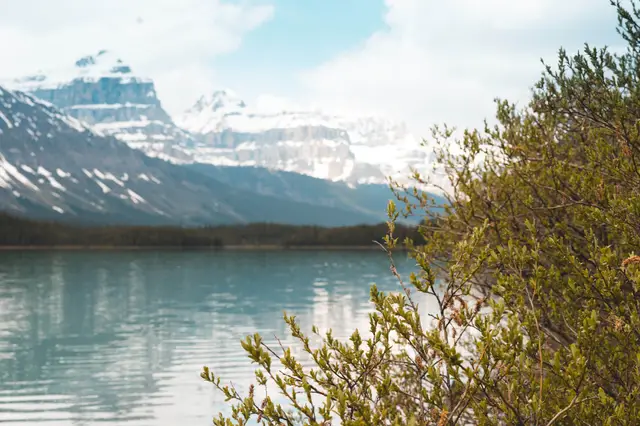
The route is only 230 km long in total, so you could drive it in one go and just make one or two stops. If that is the option you want, you can also plan further day trips from Jasper and Banff.
We recommend planning two to three days so that you have enough time to soak up this fantastic landscape. Especially in the shoulder season the weather is changeable, so an extra day as a buffer certainly won’t hurt.
Campsites between Jasper and Banff
Even though the route is actually short, there are quite a few campsites directly on the Icefields Parkway. Depending on the season, more or fewer – or in winter none – are open. If you are travelling in the shoulder season it is much easier to get a spot. In summer, however, campsites can fill up early. That is a real dilemma, because you actually want to enjoy the wonderful scenery but at the same time you shouldn’t arrive too late at the campsite, otherwise you might not get a space. You can head for all sites from 2pm – check-out is then by 11am at the latest.
Most campsites work on a “first come, first serve” basis – or in other words: if you turn up too late, that’s your bad luck :). Some sites can now also be reserved. The official Parks Canada website lists all the sites and shows which can be booked in advance, if that is an option for you.
Supplies on the Icefields Parkway
The Icefields Parkway is of course very touristy, but at the same time there are not actually as many options for supplies as you might think – and by the way there is also no mobile phone reception. At Saskatchewan River Crossing, however, there is a service station which is quite expensive. Here you can fill up with petrol or do some shopping.
We definitely recommend filling your tank beforehand and stocking up well on food. The landscape is far too beautiful to spend your time in the supermarket anyway.
There are, incidentally, plenty of toilets along the Icefields Parkway – even if some are very basic. There are also restaurants if you don’t feel like cooking after all.
Conclusion
That was our travel guide to the Icefields Parkway. You can easily spend a lot of time here if you want to. You can look forward to a real variety of different landscapes, great hiking trails and plenty of wildlife.
The Icefields Parkway is therefore an absolute must on our route through Canada. As the Rocky Mountains are one of the most beautiful wildlife regions, the Icefields Parkway is also part of our wildlife travel guide. In it you will find lots of secret spots for wildlife watching for the popular travel period from May to October. If you like, you can take a closer look at the guide here: Wildlife-Reiseführer.
Comments
Siegfried werder
March 2020
Once again, as usual, a detailed and exciting report with really good recommendations
Automatically translatedShow original
Wieder wie gewohnt ausführlich und spannend berichtet mit wirklich guten Empfehlungen
You can add new comments and reviews in the app.
Plan your trip in the app.
Save activities and places to stay, put your route together and take everything with you offline.