Translated from German. We write our content in German.Show original
Namibia's wild horses: Encounter the survival experts of the Namib Desert

By Laura & Tobi ·
Discover Namibia's wild horses: masters of adaptation in the Namib Desert, surviving under extreme conditions. Ready for an adventure?
Have you ever wondered how horses can survive in one of the driest deserts in the world? In Namibia's Namib Desert you can encounter one of the most fascinating horse herds on our planet. We take you on an extraordinary journey to Namibia's legendary wild horses – survival experts that have defied extreme heat, endless dunes and hostile conditions for generations. Let yourself be enchanted by their unique story.
Introduction to Namibia's wild horses
Amid the inhospitable Namib Desert lives one of the most fascinating horse herds in the world. Namibia's wild horses defy extreme conditions and have learnt over generations to survive in an environment that at first glance appears lifeless. Their story is shrouded in mystery and their struggle for survival impresses nature lovers from all over the world.
Ready for an extraordinary story? Join us on a journey to these amazing animals that, more than any other horse population, stand for freedom and adaptability. With the app you can also perfectly plan your encounter with the legendary wild horses of the Namib – and it is available offline too!
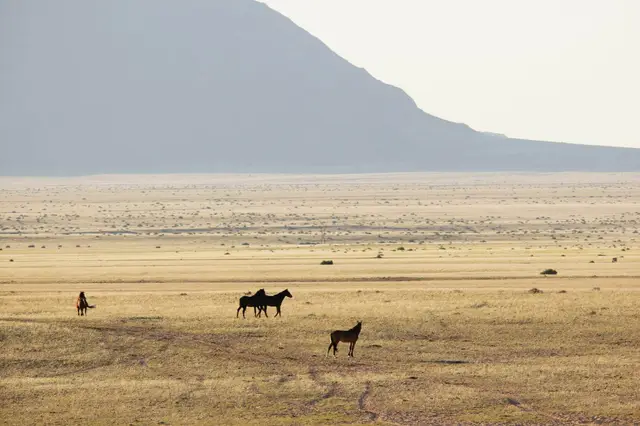
Life in an extreme environment
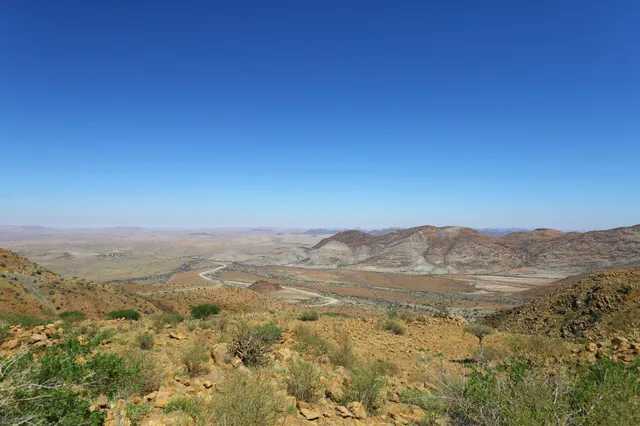
The wild horses have made the barren Namib Desert their home. In a region where daytime temperatures climb well above 40°C and can drop close to freezing at night, these remarkable animals have survived. They can:
- go up to 72 hours without water
- extract food from sparse vegetation
- cover long distances between waterholes
- protect themselves from sand-laden winds
Mysterious origins
The origins of Namibia's wild horses have not yet been fully clarified. Historians and scientists discuss various theories:
- German colonial forces: the horses may have come from the disbanded German army after the First World War
- Garub breeding station: some experts suspect their origin lies in an abandoned breeding station
Unique social behaviour
Unlike many other horse herds, Namibia's wild horses display particularly adaptable social behaviour. When you watch the wild horses of the Namib from a viewpoint you may notice the following:
- social structures within the herd
- interaction with other animals such as gemsbok
- joint rearing of foals
- coordinated movements to waterholes
Threats and protection
The population of wild horses fluctuates greatly. Natural forces and human influences determine their fate:
- Natural factors:
- long periods of drought
- predators such as hyenas
- limited waterholes
- Additional challenges:
- climate change
- interventions in their habitat
- competing land use
Where are the best viewing spots?
Do you want to experience Namibia's majestic wild horses in their natural environment? The Namib Desert offers several perfect spots for this, with the waterhole at Garub being the absolute hot spot. We tell you where you have the best chances of watching these fascinating animals and what you should bear in mind.
The waterhole at Garub, about 90 kilometres from Lüderitz, is definitely the main viewing site. A covered viewing platform has been built here so you can watch the horses from a safe distance. The waterhole is one of the few permanent water sources in the region and attracts the horses like a magnet, especially in the dry season.
As the ideal starting point for your explorations we recommend Klein Aus Vista. From here you can easily reach the various viewpoints and at the same time have a comfortable base for your wild horse safari. The lodge also offers guided tours where you can benefit from the expertise of local guides.
The dry season from May to October is particularly good for sightings. During this time the horses are more often forced to visit the waterholes. It is best to plan your visits for the early morning hours or late afternoon – that is when the horses are usually more active and the light is perfect for photos.
Insider tip: download our app to have offline access to all the key information about the viewing spots. The app also includes detailed directions and the best photo spots.
Practical tips for your visit:
- Be sure to bring binoculars
- Allow plenty of time – the horses often appear unexpectedly
- Follow the rules of the viewing platform
- Always keep a safe distance from the horses
- Take photos without flash
The drive to Garub is easily manageable even with a normal hire car. If you are travelling as a self-driver through Namibia, you can easily include watching the wild horses in your route. The roads are well signposted and the viewing platform is easy to find.
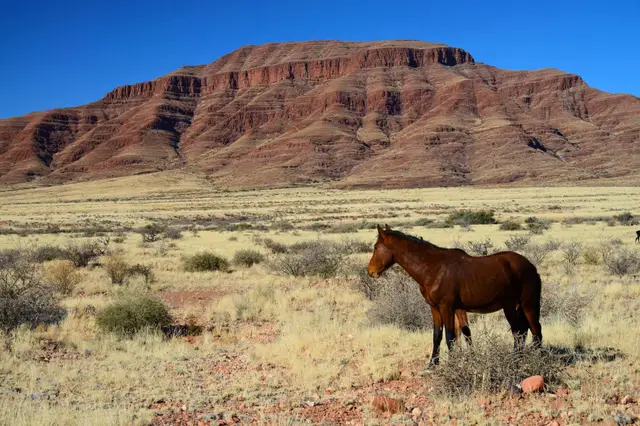
The challenges for Namibia's wild horses
The fascinating wild horses of the Namib face existential threats. Extreme periods of drought, predators and human influences put enormous pressure on this already small population.
The wild horses of the Namib fight for survival every day. The biggest challenge is the increasingly frequent droughts. In recent years the population has shrunk dramatically because of extreme dryness – from 286 animals in 2012 to fewer than 80 horses today. These figures are alarming and show how fragile the survival of these special animals is.
Another constant threat comes from the region's predators, especially hyenas. These skilful hunters are particularly interested in the foals. In the dry months, when the horses are weakened by lack of water, they become easy prey. Without sufficient protection the young animals have little chance of survival.
Water shortage and human intervention
Outside the rainy season the wild horses depend on artificial waterholes. This reveals a dilemma: on the one hand the animals need this vital support, on the other hand human intervention makes them dependent. On your Namibia round trip you will be able to see these waterholes for yourself.
The habitat of the wild horses is also constantly changing due to human interference. Mining, infrastructure projects and tourism development are increasingly restricting their natural habitat. This increases the pressure on the population and makes their natural movements more difficult.
Do you want to watch the wild horses yourself? With our app you will find the best spots and learn how to behave respectfully. The offline function helps you find your way to the horses even without a mobile phone signal.
Only if we understand the challenges can we help protect these extraordinary animals. Let's work together to ensure that future generations can also experience the wild horses of the Namib.
Survival skills of the wild horses
Namibia's wild horses are true survival experts of the desert. In one of the most inhospitable regions on earth they have developed astonishing abilities that enable them to cope with extreme conditions. We show you how these fascinating animals of the Namib manage to survive even longer periods of drought and what role both their adaptable social behaviour and the support of conservation organisations play.
Masters of water scarcity
In the barren desert landscape the wild horses have developed a remarkable ability: they can go up to 72 hours without water – an adaptation that is essential for their survival in the Namib. Unlike their domesticated relatives they have learnt to survive on the absolute minimum amount of water. If you watch the horses at one of the few waterholes such as Garub, you’ll notice how efficiently they use this precious resource.
Innovative feeding strategies
- Use of dry grass and roots
- Use of horse dung to gain nutrients
- Adjusting feeding times to the cooler parts of the day
Particularly fascinating is their ability to extract usable energy even from seemingly nutrient-poor plant material. In periods of extreme drought they even recycle nutrients from the dung of their own kind – a vital survival strategy in times of absolute scarcity.
Social behaviour under extreme conditions
The highly developed social behaviour of the wild horses is another key to their survival. In stressful situations they adapt their group structures flexibly to the circumstances. Small herds allow them to search successfully for food even in barren areas.
Would you like to observe these fascinating wild horses for yourself? With our app you’ll find the best spots and routes – also available offline!
Support through waterholes and organisations
Despite their impressive adaptability the wild horses depend on additional support. The Namibia Wild Horses Foundation plays a central role in this:
- Maintenance of waterholes: Regular inspection and upkeep
- Monitoring: Monitoring the health of the herd
- Research: Scientific support for the preservation of the population
- Awareness-raising: Making visitors aware of the need to protect the horses
When you plan your Namibia road trip, you should definitely schedule a stop to see the wild horses. You’ll witness a unique struggle for survival that vividly demonstrates these majestic animals’ ability to adapt.
Protective measures and conservation efforts
The conservation of Namibia’s wild horses has reached a critical point. While the population has declined sharply in recent years, there are now intensive efforts to save these unique animals from extinction. We’ll show you the most important protective measures and how you can personally contribute to the conservation of these fascinating creatures.
Vital water supply
In the extreme desert landscape of the Namib water is the key to survival. The Namibia Wild Horses Foundation operates several artificial waterholes which are vital, especially during the frequent periods of drought. Without this continuous water supply the horses would stand no chance in the dry months. A sophisticated system of solar pumps and troughs ensures the constant availability of fresh water.
Would you like to observe the wild horses for yourself? With our app you’ll find the best viewpoints and learn when your chances of a sighting are highest – also available offline!
Active protection by the foundation
- Regular population surveys and health checks
- Coordination with local farmers to avoid conflicts
- Veterinary care for injured or sick horses
- Awareness-raising among the local population
Public outreach and research
Raising public awareness is another important pillar of the protection strategy. Targeted information campaigns sharpen awareness of the threats facing the wild horses. At the same time scientific research is running at full speed:
- Genetic studies to preserve biodiversity
- Behavioural research to optimise protective measures
- Studies on adaptation to climate change
- Documentation of population trends
The findings gathered flow directly into adapting and improving protection strategies. Only through this holistic approach can we hope to preserve these unique animals for future generations.
Conclusion: the fascinating world of Namibia’s wild horses
We’ve taken you on a journey to the extraordinary wild horses of the Namib. These impressive survival artists show us every day what adaptability and perseverance really mean. Their story is unique, their future uncertain. Plan your visit to the wild horses with our app and become part of their conservation. Share your own experiences with the Namib horses in the comments – we’re looking forward to your story!
Plan your trip in the app.
Save activities and places to stay, put your route together and take everything with you offline.