Translated from German. We write our content in German.Show original
The last rhinoceroses

By Laura & Tobi ·
Rhinoceroses have lived on Earth for millions of years. Today rhinoceroses are severely threatened by poaching and must be protected.
Rhinoceroses always look like real prehistoric animals. Have you ever thought that when you saw these animals? In fact, rhinoceroses have been living on our planet for an impressive 20 million years. Up until the last ice age there were forest, woolly and steppe rhinoceroses even in Europe.
The valuable horn and the threat it faces
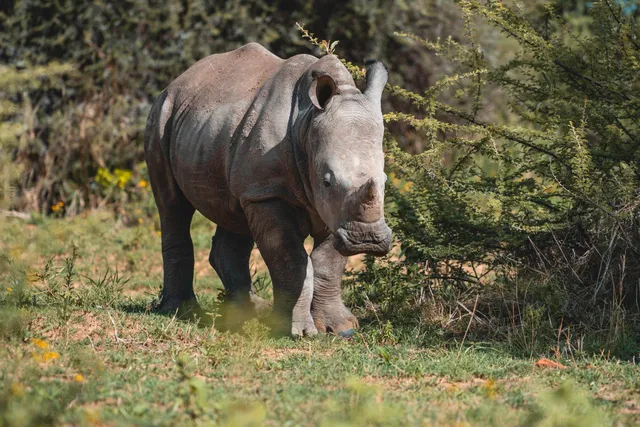
Today two species of rhinoceros live in Namibia: the white rhinoceros and the black rhinoceros. Although at first glance the two species look very similar, you can tell them apart by the shape of their mouths.
Rhinoceroses are best known for their striking horn, which consists of fused keratin fibres. Keratin is a substance that makes up most of our fingernails and hair. The distinctive horn is very important for rhinoceroses. It not only grows throughout their lives but is also used in dominance battles with one another and as a weapon against predators. It also plays a role in communication with other rhinoceroses.
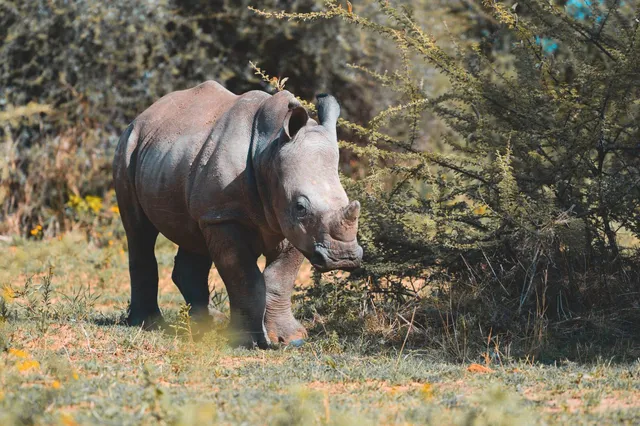
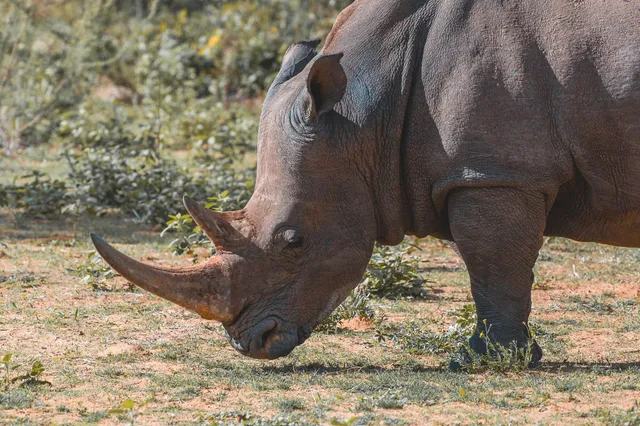
Many rhinoceroses in Namibia are protected by game rangers.
Poaching and how it has developed
And it is precisely this horn that makes the rhinoceros an endangered species. You probably already know that rhinoceroses are severely threatened by poaching.
In southern Africa the number of poached animals has risen steadily and reached its tragic peak in 2015, with 1,350 rhinoceroses killed.
One reason for the rise in poaching is the increasing income of buyers. Another reason is the partly poor population of Namibia, for whom poaching appears to be a way to earn money quickly. But the trading structures have also become much more complex, opaque and heavily armed overall.
Modern measures against poaching and technology in use
However, in the fight against poaching many people are also standing up for rhinoceroses and protective measures have been professionalised.
In some parks, for example, the rhinoceroses have been fitted with transmitters so that game rangers can locate them more easily. Better training and arming of the rangers as well as the use of drones are also helping to monitor the animals.
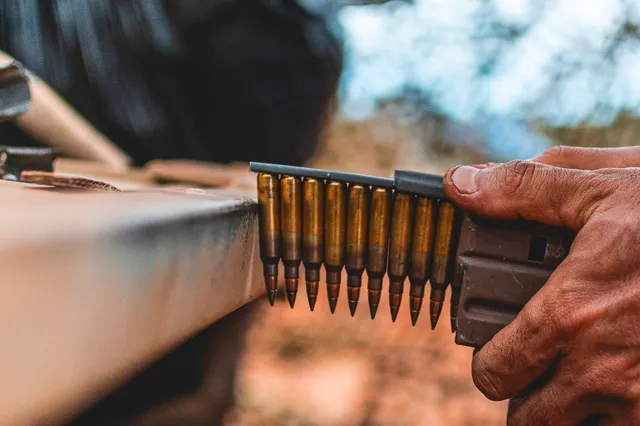
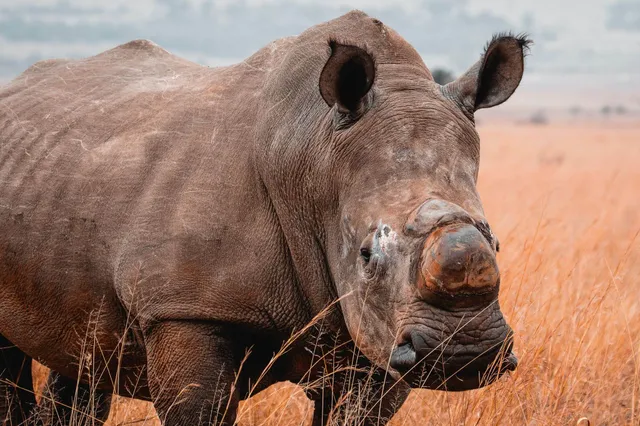
In some parks rhinoceroses have their horns sawn off to make them safer from poaching.
Local communities: a key to protection
Do you remember that in the KAZA region the local population is meant to benefit from tourism? For the protection of rhinoceroses, involving the local population is just as important. They can make a major contribution by reporting suspicious people.
You will surely agree straight away that it is all rather crazy. But the measures are having a lasting impact. From 2015 to 2018 the number of poached rhinoceroses fell by one third and has continued to decrease to this day.
That gives hope that the numbers will keep going down. In March 2020, in any case, the south-western black rhinoceros was upgraded by the International Union for Conservation of Nature from "endangered" to "near threatened". A small success, don’t you think? Of course the fight against poaching remains important because overall the rhinoceros remains "critically endangered".
Insights into rhinoceros protection at the Waterberg
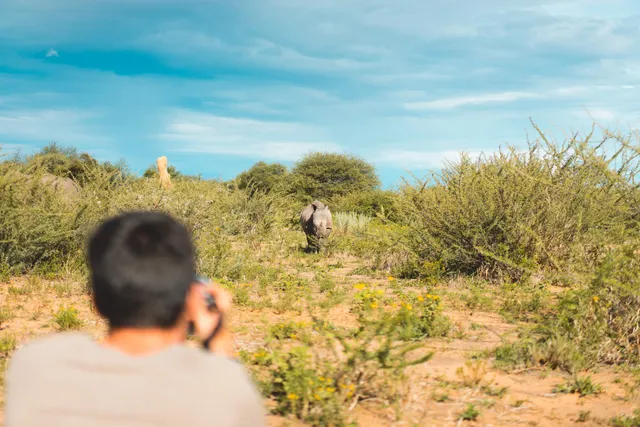
But what does rhinoceros protection actually look like in practice? At the foot of the Waterberg several white rhinoceroses live in the private Waterberg Wilderness reserve.
Here they are protected by a fence 2.20 metres high and 20 kilometres long. The gates and the animals themselves are also constantly guarded by game rangers.
If you would like to spend plenty of time watching rhinoceroses, this is a fantastic place to do it. You can either track the rhinoceroses on foot or go on a game drive. However you decide to observe these prehistoric animals, it is a unique experience that will stay with you for a long time.
You can find all activities at the Waterberg here. We wish you lots of fun at the Waterberg Plateau!
Plan your trip in the app.
Save activities and places to stay, put your route together and take everything with you offline.