Translated from German. We write our content in German.Show original
Search for a water source

By Laura & Tobi ·
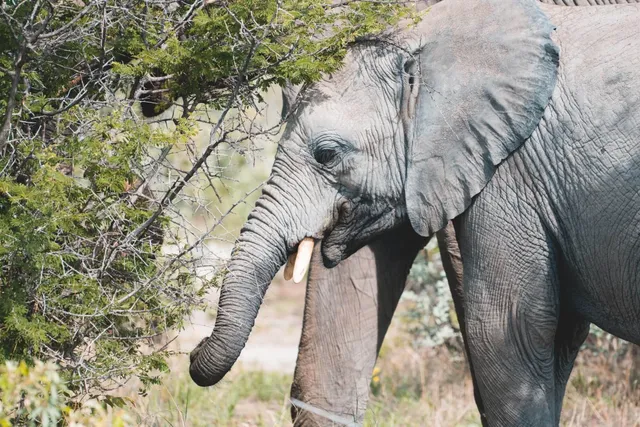
Elephants not only have an incredibly good memory, they also have the ability to move around as reliably as if they had a navigation system.
You’ve probably heard that elephants have an exceptionally good memory. People even say that elephants never forget anything they have experienced once and can remember it in detail years later. And it is precisely this ability that helps them survive here, even in the driest time of the year.
Restriction of migration routes
Until 1973 the animals were still able to migrate as far as the Kunene River in the north, which carries water all year round, but today the fence of Etosha National Park blocks their way. The original migration routes have been interrupted and there are no perennial rivers in Etosha National Park. This is a particular challenge in the dry season, as there are now only a few water sources left in the entire park that have not dried up.
Searching for water in a vast landscape
More than 30 waterholes in Etosha National Park are of natural origin. They are fed by shallow groundwater or are so-called artesian springs supplied with water from deeper layers. These natural water sources are supplemented by artificial waterholes spread across the whole park. This sounds like a lot at first, but it isn’t. Etosha National Park is larger than the German state of Hesse and just imagine having to find 30 places there purely from memory – without satnav.
However, elephants are particularly dependent on finding enough water – and they need a great deal of it. To be precise, it’s about 160 litres per animal per day. With a total of 2,500 elephants in Etosha, this results in a daily water requirement of around 400,000 litres. When you look at the barren landscape, that’s almost unbelievable, isn’t it?
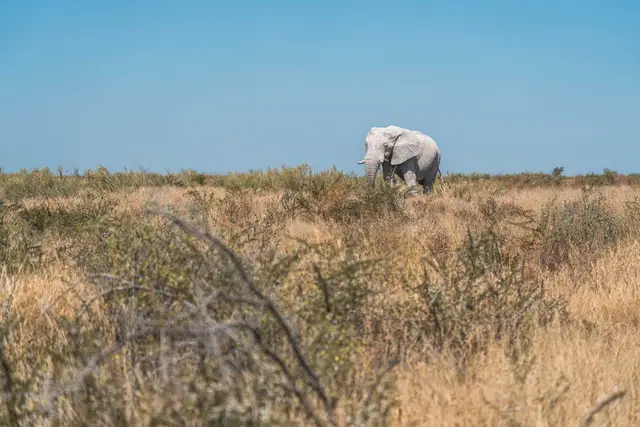
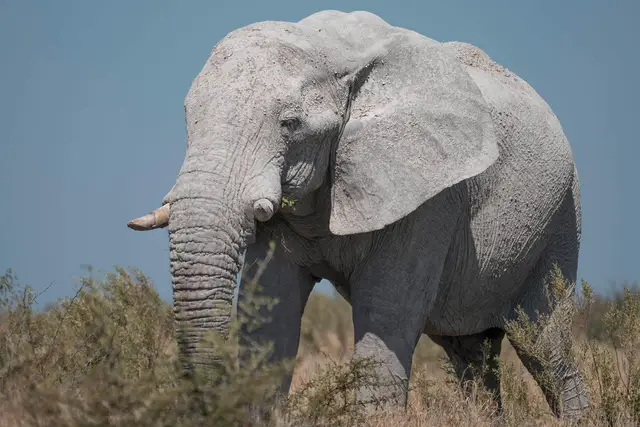
For a long time it was not clear how elephants are able to remember so many waterholes.
A mental map in their head
This is exactly why it is especially important that elephants can head for alternative waterholes directly and without detours when one dries up. For this they have a special ability: a very good memory.
In a long-term study in Etosha National Park, researchers discovered that the famous elephant memory really does exist. They found that elephants walk directly to waterholes without detours. The researchers found this very interesting and asked themselves: how can this be explained?
First they considered whether elephants might be able to communicate with their conspecifics over many kilometres using infrasound. When this was not confirmed, they found another possible explanation. Elephants may be able to smell water with their sensitive trunks and track it down in this way.
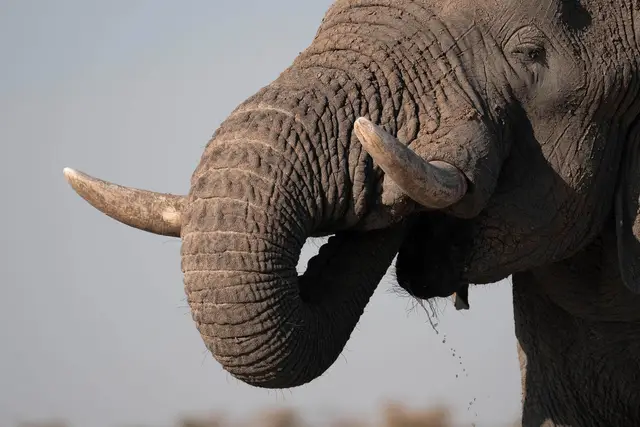
The famous elephant memory is not a myth. Elephants can memorise waterholes and create a virtual map of the national park in their memory.
However, in a study published in 2015 they were able to show that elephants run quickly and purposefully to a waterhole, even when it is up to 50 kilometres away. The result of the study was therefore clear: elephants can memorise waterholes on a mental map and even pass this knowledge on to the next generation.
In addition, elephants can determine their own position. This is necessary in order to find the next waterhole. Because only if you know your own position and your destination can you know which way to go.
The importance of the elephant memory
Isn’t that incredible? So elephants not only have a map of the entire park in their head, they can also orientate themselves within it. The saying "Elephants never forget" and the famous elephant memory are therefore not a myth, but show just how exceptionally intelligent the largest land mammals on earth must be.
More articles

Destinations in this article
Plan your trip in the app.
Save activities and places to stay, put your route together and take everything with you offline.