Translated from German. We write our content in German.Show original
Gigantic coastal rainforests

By Laura & Tobi ·
Some trees in the coastal rainforests are over 100 metres tall – and that’s thanks to bear and salmon.
If you let your gaze wander along the coast, you’ll notice the incredibly tall trees of the coastal rainforests. But why are they so big in the first place, and what does salmon have to do with it? That’s what we’d like to tell you about now.
Trees grow especially tall on the coast
When you think of Canada, the sheer incredible scale of things probably comes to mind. The roads are wider, the shopping centres are huge and the coffee cups often hold half a litre. But those aren’t the only things in Canada that are pretty big. On the Pacific coast you’ll also notice the breathtakingly tall trees that shape the coastal landscape.
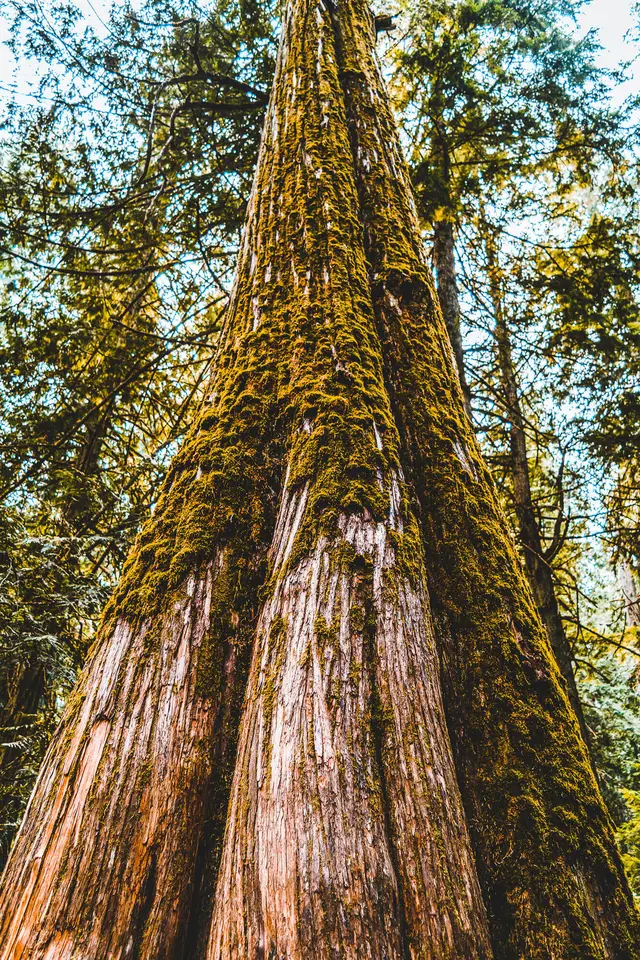
Can you imagine that the trees here are around 100 metres tall and in some cases have been standing here for over 1,000 years? But these dimensions are only reached by trees that grow no more than 80 kilometres from the Pacific. For comparison: our native spruces are only about half as tall. So why are there such tall trees specifically on the Pacific coast of Canada?
The maritime secret of the trees
The answer to this question is found, surprisingly, in the Pacific. You already know that the salmon run is important for the animal ecosystem. But did you also know that salmon has another function? It is an important fertiliser for the coastal rainforests.
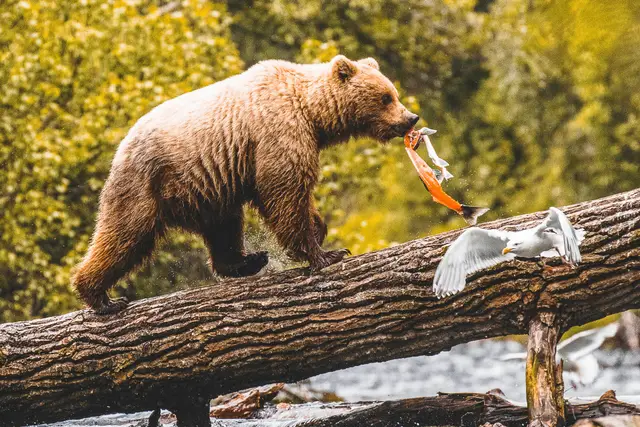
During the salmon run, food is available in abundance. That’s why predators eat only the particularly fat- and protein-rich parts of the fish. This allows them to put on a lot of weight for the winter in a short time. They leave the remains on the forest floor.
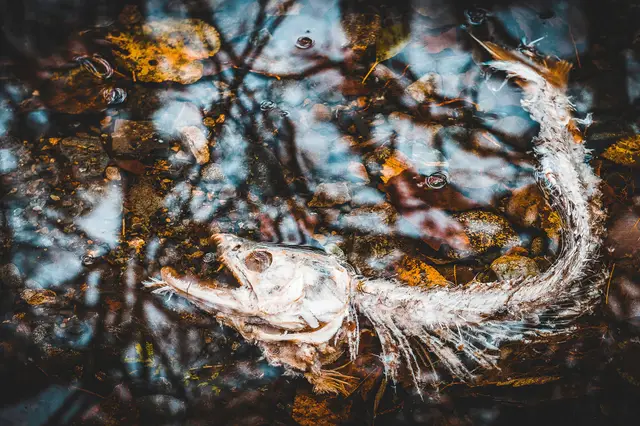
The fish remains rot and break down into their chemical components. These are gradually washed into the forest soil by the rain and, thanks to their high nitrogen content, provide exceptionally strong fertilisation for the trees. The fish effectively become a natural slow-release fertiliser.
And what about the trees away from the rivers?
Good news then for the trees that grow near rivers, right? But didn’t we say at the beginning that there is a broad band of giant trees along the Pacific coast? That’s true – but without outside help the fish carcasses would hardly make it deep into the forest.
Instead, other animals help distribute the nitrogen in the forest away from the rivers as well. Once they have eaten their fill at the rivers, they move on. In doing so, they distribute the nitrogen quite incidentally through urine and excrement even far from the rivers. Bears alone supply the trees with up to 40 kg of nitrogen per year in this way. And that is so much fertiliser that scientists have even been able to detect traces of nitrogen of maritime origin in the crowns of the coastal rainforest trees. Mad, isn’t it?
Keep your eyes open
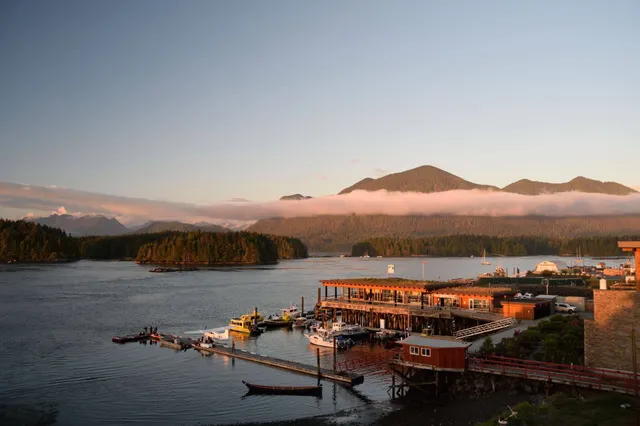
If your travel route also takes you to Vancouver Island, you can get another impression of the gigantic coastal rainforest on the crossing back to the mainland. From the ferry you have a wonderful view of the seemingly endless rainforest.
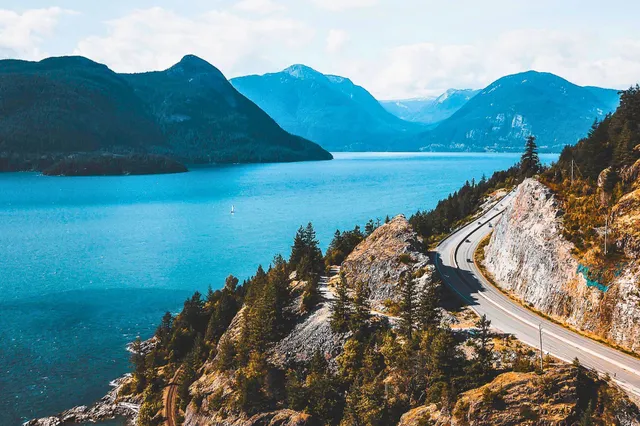
Once you arrive on the mainland, you continue towards Whistler. The drive takes you along the Sea to Sky Highway. And this road lives up to its name, because you have a fantastic view of the coastal strip off western Canada and with it the gigantic rainforests in this region.
Photo credits: Shutterstock/Chris Howey, Shutterstock/Alexander Chlum, Shutterstock/Gagat55, Shutterstock/Kimberly Shavender, Titel: Alice Donovan Rouse
Plan your trip in the app.
Save activities and places to stay, put your route together and take everything with you offline.