Translated from German. We write our content in German.Show original
Camping torch: What you should look out for when buying

By Laura & Tobi ·
There’s quite a bit to bear in mind with a camping torch so you don’t end up left in the dark. We share recommendations based on our own experience.
Do you also find that you never have the right camping torch with you? The torches are always too dim, the battery doesn’t last long or they are simply bulky. In this article we’ll show you:
- Which types of camping torch we use
- Which buying criteria you really need to look out for
- Which models are worth a recommendation
We’ve thoroughly tested all the lights on our trips through Canada, Namibia and Botswana!
Camping torch – the most important things at a glance
- Torch: We recommend the Ledlenser P7R*. You can adjust the beam, charge it via USB and at 1,400 lumens it’s really bright. Its range is 300 m and it can shine for up to 90 hours.
- Head torch: Your best bet is to go for the Nitecore NU35*. It is really well made. It also has 700 lumens, runs for 38 hours (at 60 lumens), can be charged via USB and is waterproof. It also has red light so that moths don’t fly into your face in the evening.
- Camping light: To light up your pitch, we recommend the magnetic LED floodlight*. You can adjust the brightness and at 1,000 lumens it’s pretty bright. It also offers red light, is rainproof and can be attached magnetically, for example to the car. On the brightest setting it lasts 3 hours, otherwise up to 8 hours. It can be charged via USB.
What types of camping lights are there?
Of course there are all kinds of different types of lighting – some practical, some more decorative. In this article we mainly want to introduce the practical lights that we have thoroughly tested while camping in Canada, Namibia and Botswana and found helpful. But yes, you’re absolutely right, the fairy lights definitely have to come too.
Torch
Traditionally there is, of course, the classic camping torch. You could almost say it’s the original form of outdoor lighting, as people have been using it to light things up for ages.
Whereas in the past it was made up of a big battery and a bulb, these days you can get it as a mini torch for your trouser pocket. But the opposite also exists: torches that are so big and bright that they can turn night into day even at a great distance.
We mainly use torches for lighting things up at a distance.
- Spotting animals: When we’re travelling in Africa or North America, you can use a good torch to clearly see animals in the distance from the campfire.
- Late arrival at the campsite: If we arrive late at a campsite we can turn night into day with the torch and find our way around.
- At home too: The torch is a real all-rounder. At home we like to take it with us on a late walk so we can fit in one more lap through the woods.
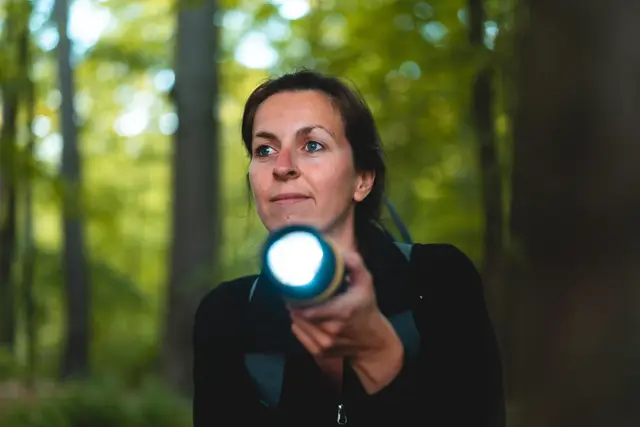
When choosing a camping torch, we would pay attention to the following:
- Light output: We’ve had quite a few torches that cast a wide beam without reaching very far. Make sure it shines a few hundred metres. In the wild, 250–300 m is recommended.
- Rechargeable battery: We would always buy a torch with a rechargeable battery, as it runs flat quite quickly at full power. We find it annoying having to carry so many spare batteries – and it’s not great for the environment either.
- Water protection: When you’re travelling, a camping torch should be safe to use in the rain. Especially in countries like Canada you’ll probably always have to plan for a few rainy days.
That’s why we chose the Ledlenser P7R and haven’t regretted it. The torch has a great range of 300 m and lasts a long time even at high power. It is also water resistant, very well made and can be magnetically charged via USB.
Head torch
When camping we’re quite likely to leave the torch in the car. A head torch is a great alternative and very practical for several reasons:
- When cooking: Your hands are free when cooking over the campfire and you still have enough light to prepare everything.
- Trip to the toilets: On the way to the toilets and in the toilets you have enough light and still have your hands free. A blessing, especially in countries with lots of creepy-crawlies.
- Packing up in the evening: When you pack everything up and stow it away in the evening, your hands are free. Really very practical!
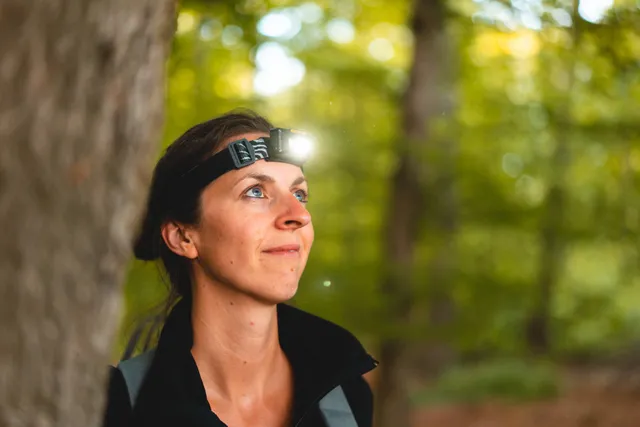
We’d recommend you look out for the following when buying a head torch:
- Height adjustment: The head torch should be adjustable in height. On the way to the toilets you want to light up the path ahead of you; when cooking you want to illuminate the work surface right in front of you.
- Red light: If you want a bit of light in the evening, red light makes sense. Insects can’t see it and don’t fly into your face. Our eyes are good enough to see everything with the red light.
- Adjustable brightness: We would also make sure there are several brightness levels. The path to the toilets should be well lit, whereas in the evening by the fire you don’t want to ruin the romance when you pop off to fetch something.
We’ve had good experiences with the Nitecore NU35 and would buy it again. At 360 lumens it is nice and bright, lasts for days and can be conveniently charged via USB.
Lantern
There’s another type of camping torch that we always have with us: the camping lantern. It’s very practical when you simply want to light up your pitch. We use it in all sorts of places:
- On the table: Then we always have enough light when preparing food and later when eating.
- Lighting the surroundings: Some lanterns have a magnet in the base. This is very handy for attaching them to the car and lighting up the surroundings.
- Cosy atmosphere: If you sleep in a camper or tent, some light can instantly ruin the mood. A lantern with dimmed, warm light is very cosy!
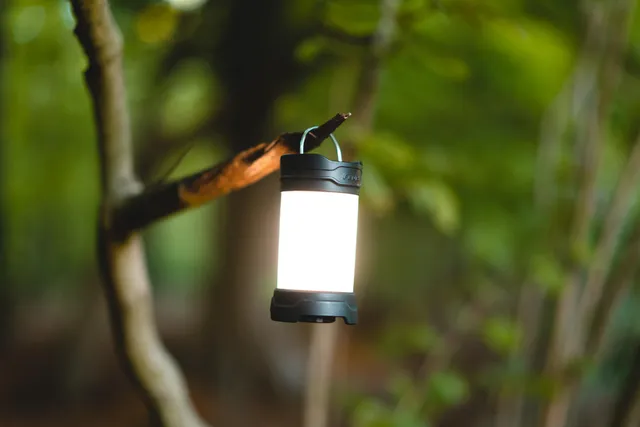
With a lantern we’d recommend you pay attention to the following:
- Magnetic mount: If the lantern has a magnet in the base, you can attach it nicely to the car. That way it’s out of the way and makes your pitch pleasantly bright.
- Adjustable brightness: Sometimes you need lots of light, sometimes you just want a bit more light in the evening by the campfire. If you can adjust a lantern it is much more enjoyable when camping.
- Red light: As with the head torch, red light also makes sense for the lantern. The red light is enough to be able to see things and at the same time insects aren’t buzzing around your ears. A blessing!
We opted for the fenix CL26R because it has a warm light colour, the brightness can be adjusted (including red light) and it has a magnet in the base. It can also be charged via USB.
What you should look out for in a camping light
We’ve already used quite a few camping torches, head torches and lanterns and would like to share our top 5 criteria for choosing. That way you can hopefully choose sensible gear right from the start.
Brightness
First of all you should know that camping torches tend to be more on the dim side than too bright. Brightness is a major factor you should keep in mind when buying. Most of the time it is given in lumens, which corresponds to brightness.
It is also important to know that the beam determines how far into the distance or how wide you have bright light. Often torches are focused on distance, but some shine more broadly. We would look for a torch that shines more into the distance or is adjustable, like our Ledlenser P7R.
For lanterns and head torches you should instead make sure that the brightness is adjustable.
Lighting duration
The burn time is something you really must not ignore when camping. Especially in countries like Africa or on road trips through North America you have to make sure your lights are ready to use again in the evening even without a power supply.
Of course you can take lots of spare batteries with you, but we find that too much hassle and for environmental reasons we don’t really recommend it either. With our lights we make sure that you can charge them via USB while driving (so they are ready to use again in the evening) or at least use rechargeable batteries.
The good news is that modern lights almost exclusively use LEDs, which means power consumption is much lower than it used to be with older lights.
Attachment and adjustability
We also always pay attention to how the lights can be attached.
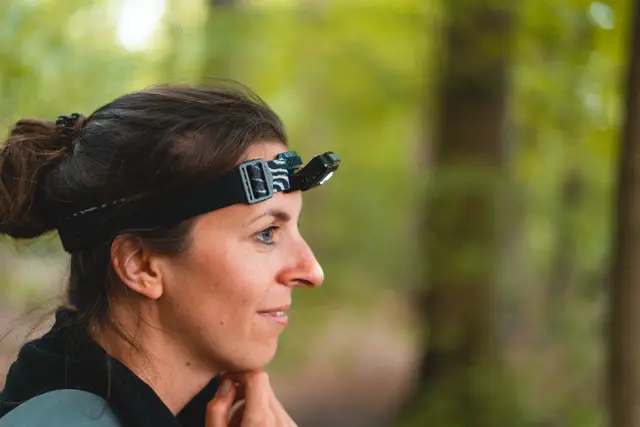
With head torches, for example, it’s important to us that they both sit well on your head and don’t press, and that you can also tilt them downwards. Nothing is more annoying than head torches that shine dead straight ahead so you always have to tilt your head to see where you’re stepping. It’s really a pain.
With lanterns we look for a magnet so we can attach them to the car. That’s really practical, because you can attach them nicely to the bonnet or the rear bodywork and light up the area optimally. It’s also good if they have a handle so you can hang them up above the tent or in the camper in the evening. We use lanterns in so many ways and definitely wouldn’t want to be without them.
Red light
Besides brightness, burn time and attachment, we’ve grown to love a few other functions. Did you know that animals can’t see red light very well? That’s really useful, because lanterns or head torches with red light don’t attract insects.
We often switch on the red light on the head torch in the evening and avoid having moths fly into our faces. If you haven’t paid attention to this, then here’s our tip: keep your mouth shut!
With the lantern we also really like using the red light. When we crawl into the tent we switch to red light before opening the mosquito net and that way stop every insect from joining us in enjoying the cosiness of the tent – that whining of mosquitoes in the tent is so annoying!
Adjustable brightness
On top of that, being able to adjust the brightness is important to us, because in the evening we want to light up the whole area, but when we’re reading in the tent we only want dimmed light. It’s similar with the head torch: sometimes you want to see a lot, but when you nip out for a wee you don’t want moths in your face.
Waterproof
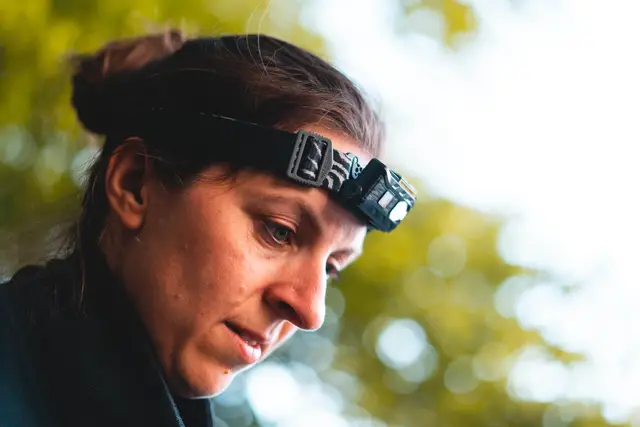
You probably know this too: rain always comes just when you really don’t need it. We’ve therefore decided that above all our head torches should be waterproof, because you simply need them in the rain as well. Once we were travelling in Namibia in the rainy season and a waterproof head torch was definitely useful.
Waterproof lanterns and torches would be advisable, but in our opinion they’re not absolutely essential. Most outdoor lights these days are waterproof anyway.
Our recommendation for a camping torch
Whether they’re the best lights or not, we can’t say. But we can say that we’ve been using them on our trips for years and that they did a good job out in the wild in Botswana. We would buy our kit again exactly as it is today. We think you can’t really go wrong with it either.
Here is our kit again:
- Torch: With the Ledlenser P7R* you can adjust the beam, charge it via USB and at 1,400 lumens it’s really bright. It reaches 300 m and can shine for up to 90 hours.
- Head torch: The Nitecore NU35* is really well made, bright at 700 lumens, runs for 38 hours (at 60 lumens), can be charged via USB and is waterproof. It also has red light so that moths don’t fly into your face in the evening.
- Camping lantern: The magnetic LED floodlight* has adjustable brightness and at 1,000 lumens it’s pretty bright. It also offers red light, is waterproof and can be attached magnetically to, for example, the car.


Plan your trip in the app.
Save activities and places to stay, put your route together and take everything with you offline.