Cette page n’existe pas encore en français : nous te montrons la version disponible.
Restoring habitats

Par Laura & Tobi ·
In the Rocky Mountains, wildlife habitats were cut off from one another by the construction of roads. Now they are gradually being reconnected.
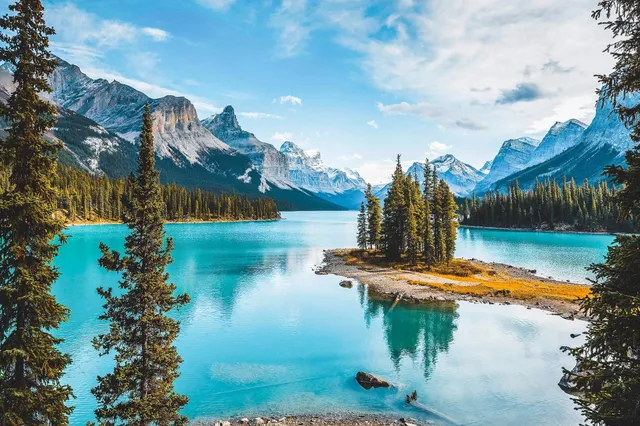
The Rocky Mountains attract millions of people year after year. No wonder, as the landscape is incredible and the lakes are an almost unreal shade of turquoise. But how does the park administration manage that there are hardly any conflicts with bears, wolves or pumas?
The frightened American black bear on the highway
Before we answer this question, we’d like to tell you a story. In 2014 a heartbreaking incident took place in Banff.
One day a cinnamon-brown American black bear managed to get across the barrier onto the highway. What happened next was certainly not what he expected. In no time at all he was trapped between the moving cars on the highway. Cars were racing past him from all sides. Rangers were quickly on the scene but without success.
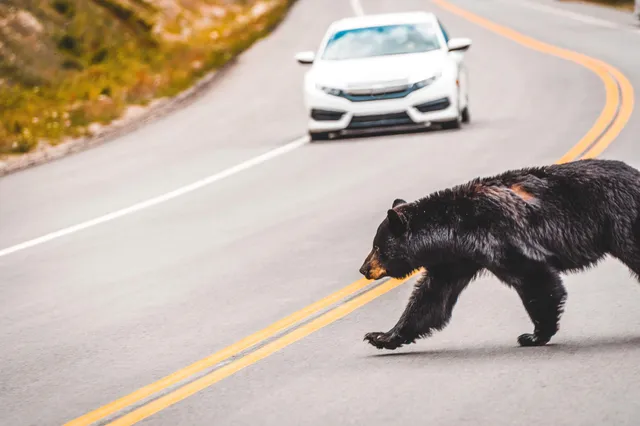
The completely terrified bear fled up the nearest tree – a typical reaction when American black bears become frightened. The little bear stayed up in the branches for a full 36 hours and didn’t dare to come back down.
One night, when there was little traffic, he seized his chance. He dared to climb down and was able to escape from the highway without any problems. Since this experience the bear will probably give the highway a very wide berth.
Reasons for conflicts between humans and wildlife
But why do conflicts between humans and wildlife arise at all? After all, the Rocky Mountains cover an area of almost one million square kilometres (USA and Canada), which should be large enough for humans and animals to keep out of one another’s way, shouldn’t it? In theory that’s true, but in practice life is concentrated mainly in the valleys. The vegetation is lusher, water collects in the valleys and travel on level ground is easier. It’s the same for the animals as it is for us humans. We like to build our villages and towns in the valleys, as road construction is simpler and we can get around more easily.
It’s no surprise then that conflicts occur mainly in the valley – on the one hand with local people and on the other hand with the millions of tourists. And this often happens without anyone realising.
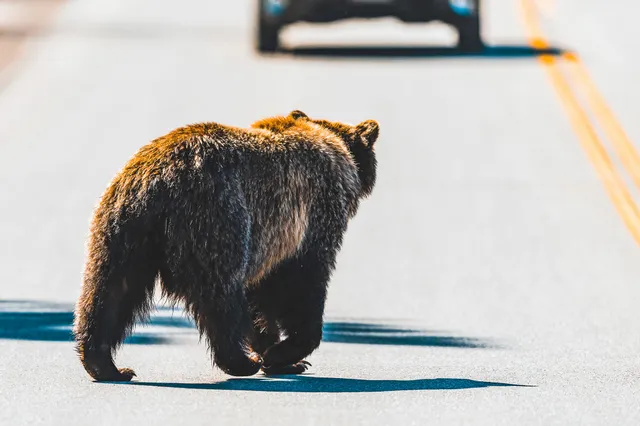
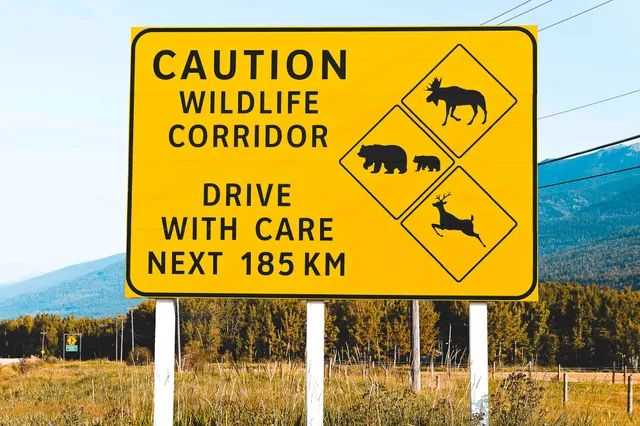
People build roads and fence them off to avoid accidents with animals. But in doing so they also cut through natural migration routes and make it harder for animals to find food.
As an alternative, the animals then move into villages and towns, where they find uncleaned barbecues, bird feeders, unsecured rubbish bins or compost heaps. A real land of milk and honey for them. This means that humans and animals increasingly get in each other’s way, albeit unintentionally – even though the bear actually wants to avoid humans.
On top of this, more and more tourists are flocking to the Canadian Rocky Mountains. In the well-known town of Banff there are around four million tourists every year, some of whom leave their rubbish unattended, don’t wash up their camping dishes straight away or fail to dispose of their waste in a bear-proof way.
This attracts the animals and gradually causes them to lose their fear of humans. In this way a bear becomes a so-called “problem bear”, which associates humans with food. The sad consequence is that the “problem bear” is shot as a precaution before it can become a danger to people. But it doesn’t have to come to that – and we can set an example!
Making peaceful coexistence possible again
A lot is already being done to avoid luring bears into towns and cities unnecessarily. This is achieved in two ways:
Firstly, settlements are made unattractive to the animals. Rubbish is disposed of in bear-proof containers, for example, and barbecues are cleaned immediately after use. That way there is not much for the animals to find.
Secondly, it is made easier for animals to reach natural food sources. Habitats that were separated in the past by roads or fences are reconnected along their original migration routes. These connections are known as wildlife corridors.
What makes a good wildlife corridor?
The park administration started years ago to reconnect more and more habitats step by step.
To achieve this, tunnels or bridges are built which enable animals to cross, for example, highways easily and safely. When the berries ripen on the other side of the road, the animals can simply move to the other habitat.
The requirements for such wildlife corridors vary widely. As a rule of thumb: the shyer an animal is, the wider the corridor has to be. Only then does the animal have enough distance and dare to use the corridor to cross over or under the road. But there are also animals such as the elk, which have become so used to living alongside humans that a narrow corridor is enough for them.
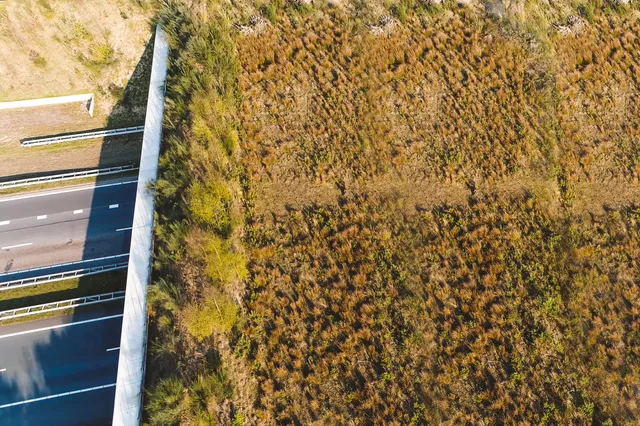
The use of a wildlife corridor is monitored with the help of camera traps. In addition, animals are fitted with collars with transmitters so that movement data can be used to determine whether further corridors are needed. This way, more and more natural migration routes are restored year after year and conflicts with humans are avoided.
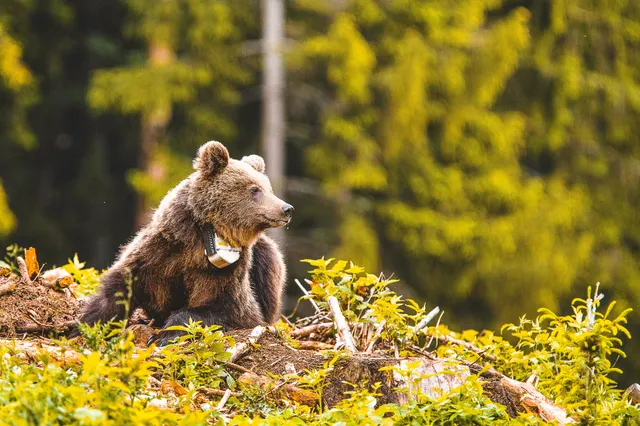
Keep your eyes open!
As you travel through the Rocky Mountains, you can keep your eyes open yourself. On the Trans-Canada Highway, you’ll notice the continuous fences to the left and right of the road, as well as the bridges and tunnels that serve as overpasses or underpasses for animals.
Once you arrive in Jasper or Banff, you can also plan a long walk through the small towns. If you pay attention as you wander around, you’ll notice a few things that you don’t know from back home. For example, you’ll find that opening public rubbish bins is quite a challenge. You also won’t see bird feeders or dirty barbecues in front gardens.
And do you know what’s good? You now know how important tourist behaviour is in ensuring that peaceful coexistence between humans and wildlife in the Rocky Mountains is possible today and in the future. This means you can effortlessly be a good role model. We wish you lots of fun and wonderful moments in the Rocky Mountains!
Crédits photo : Shutterstock/Robert Crum, Shutterstock/Adam Cegledi, Shutterstock/BGSmith, Shutterstock/Ryan, Shutterstock/GLF Media, Shutterstock/godi photo
Pour aller plus loin
Planifie ton voyage dans l’app.
Enregistre activités et hébergements, compose ton itinéraire et emporte tout hors ligne.