Cette page n’existe pas encore en français : nous te montrons la version disponible.
Rocky Mountains animals: These wild animals you can see here

Par Laura & Tobi ·
Many wild animals live in Canada, including bears, wolves and moose. This makes Canada one of the few regions where you can still watch these wild animals today.
If it’s your dream to watch animals in the Canadian Rocky Mountains, then this article is just right for you. We’ll tell you the best places to watch animals in the Rocky Mountains. These include, for example, Jasper and Banff National Park, where you can watch bears very well.
Before we get started, there’s one important thing. To ensure the survival of wild animals, we must always treat nature and the animals with respect. Please always follow the rules of the Canadian national parks, true to the motto: Keep the Wild in Wildlife. And now we hope you enjoy reading.
Pro tip: Download our free app and find the most beautiful wildlife spots for your Canada trip.
Rocky Mountains in Canada: A perfect place for animals
In the Canadian Rocky Mountains there are several beautiful and wild national parks (Banff, Jasper, Yoho, Kootenay and Waterton Lakes) which all help to protect nature. And that’s very important, because the mountains, alpine meadows, gorges, lakes and forests are an ideal habitat for many animals.
Over time some animals have adapted perfectly to a particular habitat. Others, however, need different habitats, as they migrate back and forth between landscapes with the changing seasons. Some animals, for example, are in the valleys in winter and in the mountains in summer.
The special thing about the Rocky Mountains is that all the roads and trails lead directly through the animals’ habitat. That’s why it’s so important that we all behave considerately towards nature in the national parks. That really goes without saying, doesn’t it?
Which animals live in the Rocky Mountains?
Many mammal species and birds are native to the Canadian Rocky Mountains. Altogether there are, strictly speaking, 52 mammal species and 311 bird species in the national parks of Banff, Jasper, Yoho, Kootenay and Waterton Lakes. Not bad, right?
On a visit to the national parks you are most likely to encounter elk, mule deer and bighorn sheep. It is already a bit more difficult to see a bear, mountain goats, coyotes, foxes, wolves or moose. And then there are a few other wild animals in Canada that prefer to live in secret. Most people never get to see them, but they also live in the Rocky Mountains: lynx, puma and wolverines. In Jasper National Park there is also a small population of woodland reindeer. Reindeer used to be much more common in the Rocky Mountains.
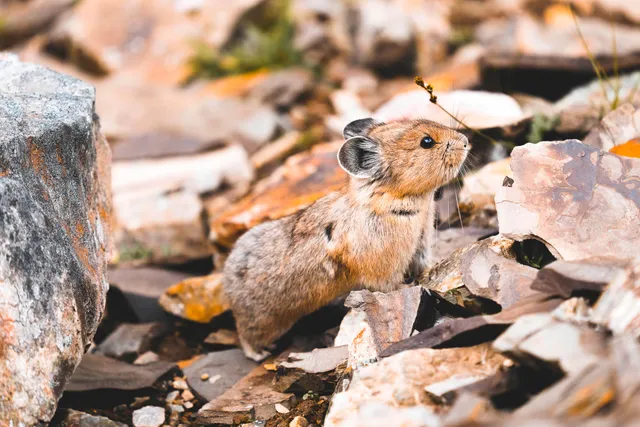
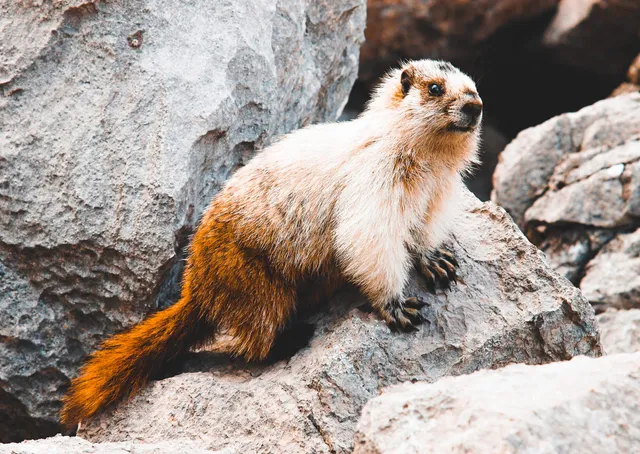
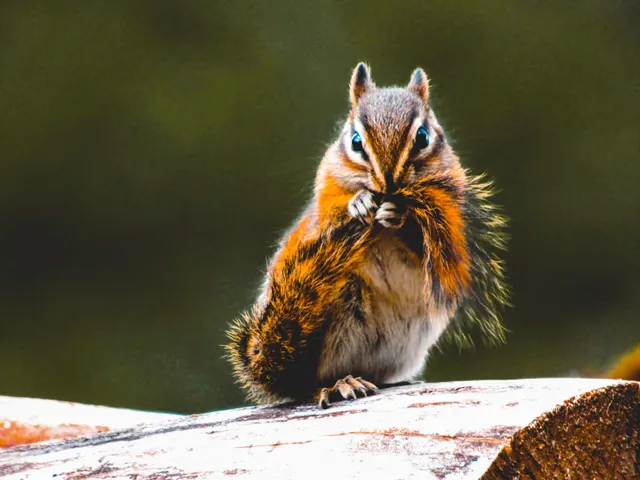
The smaller animals you can discover include the New World porcupine (it resembles the porcupine), hoary marmots, Columbian ground squirrels, American pikas, North American beavers, squirrels, golden-mantled ground squirrels and of course chipmunks. You will probably spot the latter at least once.
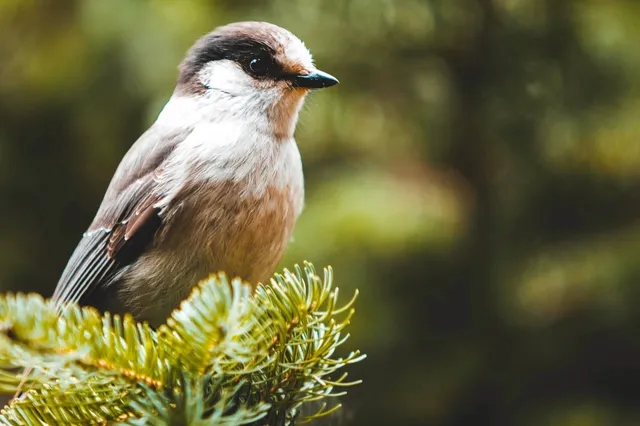
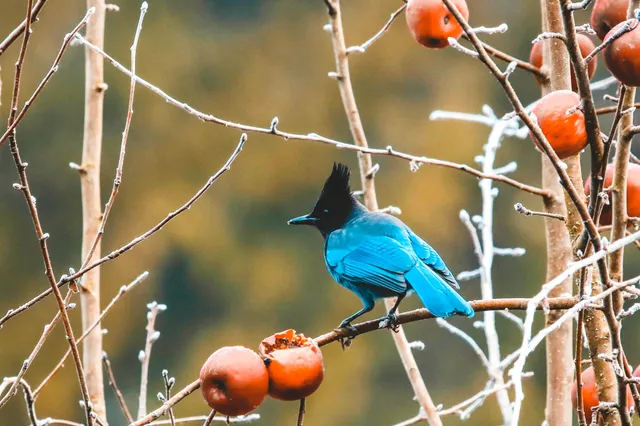
And the birds should not be forgotten either. If you keep your eyes open you can see the blue-feathered Steller's jay, Clark's nutcracker, ravens, ospreys or the white-tailed ptarmigan.
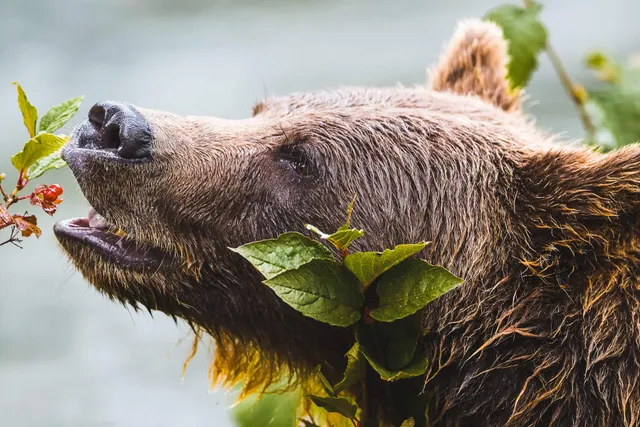
Grizzly bears in the Rocky Mountains
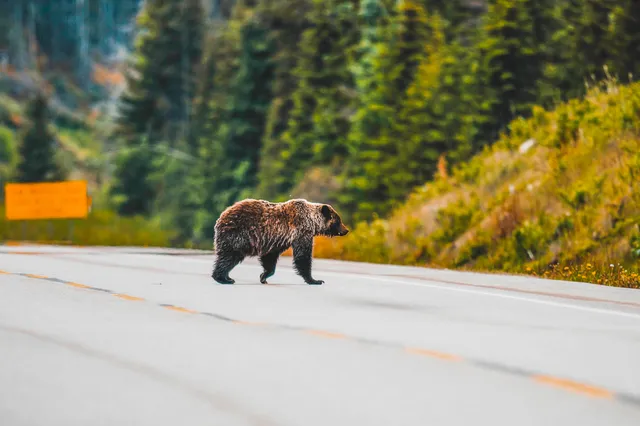
In large parts of Canada grizzly bears have already been wiped out. In the Canadian Rocky Mountains, however, grizzlies fortunately still live there today. Watching them, for example along the spectacular Icefields Parkway, is an absolute highlight of any Canada trip.
The number of grizzly bears in the individual national parks:
- Banff National Park: 65
- Jasper National Park: 109
- Yoho National Park: 11-15
- Kootenay National Park: 9-16
- Waterton Lakes National Park: 67
Wouldn’t you also have thought that there are many more grizzly bears in the Rocky Mountains? That’s what we thought!
On our first trip to Canada we imagined there would be a bear behind every tree. Unfortunately that’s not the case. But because grizzly bears are active by day and by night, you can in principle encounter a bear at any time. They are particularly active at dawn and dusk. Bears spend most of their time eating. Depending on the time of year they find food in different places. In summer they move into alpine regions to forage there. In spring and autumn grizzly bears are found at lower elevations, as there’s more food for them there. Grizzly bears are true omnivores and although they belong to the predators, they are largely vegetarian. However, this can vary slightly depending on their habitat. Bears on the coast can, for example, also eat mussels and crabs. You can experience this if you want to watch bears on Vancouver Island.
American black bears in the Rockies
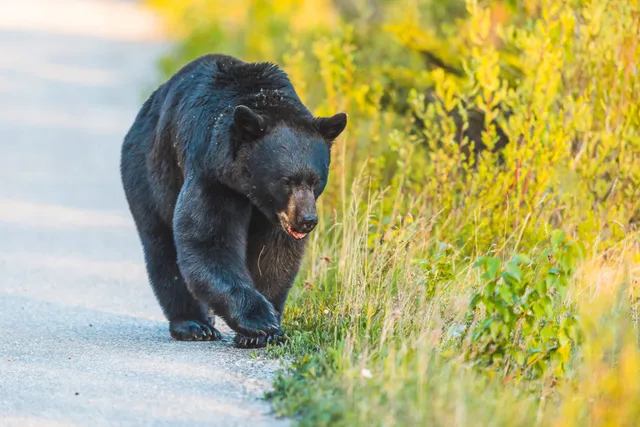
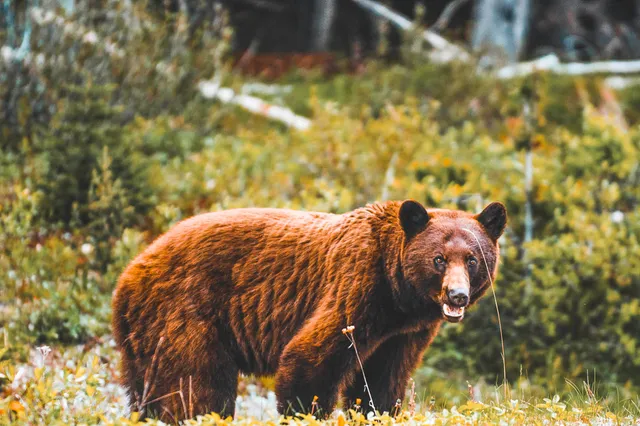
In Canada American black bears are still far more common than grizzly bears. They live in all the national parks of the Rocky Mountains, although there they are in some cases outnumbered by grizzlies.
The number of American black bears in the Canadian Rocky Mountains:
- Banff National Park: 20-40
- Jasper National Park: 90
- Yoho National Park: 20-50
- Kootenay National Park: 30-50
- Waterton Lakes National Park: 50
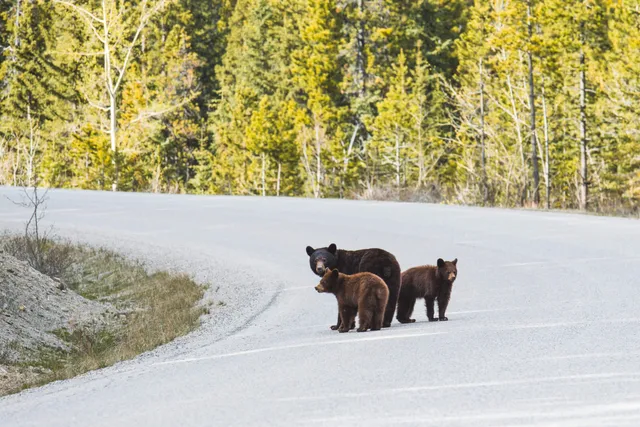
American black bears mainly live in forests, as the dense undergrowth there offers cover and shelter. They can also climb very well, which is why in case of danger they send their cubs up a tree. The young black bears climb so high into the thin branches that they are safe there from fully grown bears.
American black bears are often smaller than the imposing grizzly bears and avoid encounters with them. Wolves can also be dangerous for black bears. But, as so often, humans pose the greatest threat.
Compared to grizzlies, American black bears are often underestimated and considered less dangerous. However, they can be just as dangerous. They are omnivores and tend to lose their natural shyness quickly when there is the prospect of an easy meal.
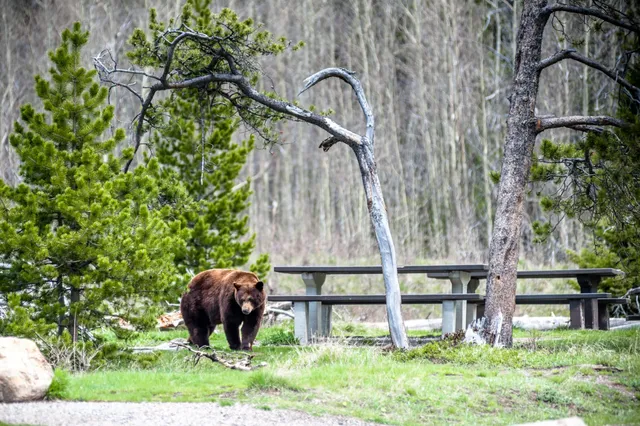
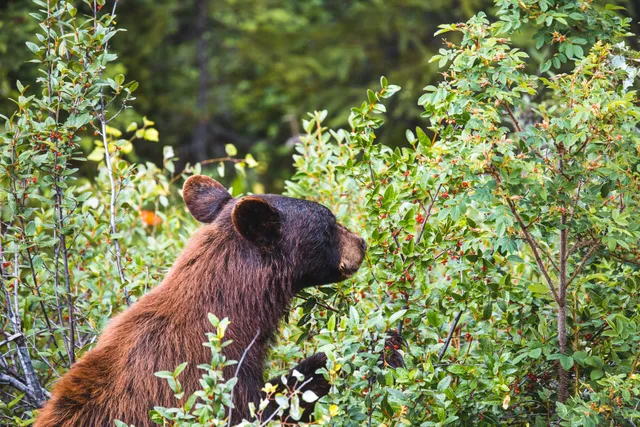
American black bears don’t always have black fur. Their fur colour ranges from cinnamon brown to black. So a brown bear isn’t always a grizzly bear. Incidentally, most American black bears in Canada live on Vancouver Island.
Moose in the Rocky Mountains
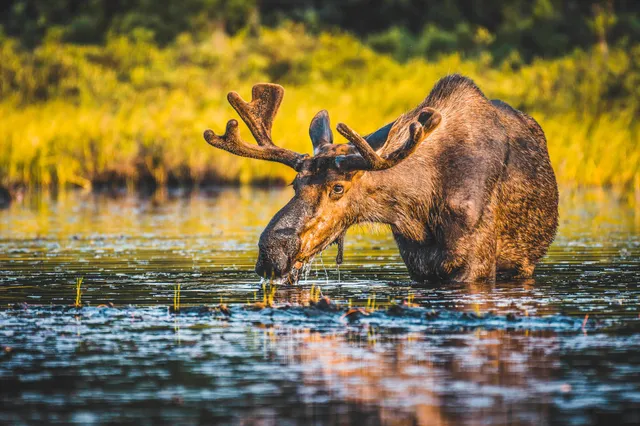
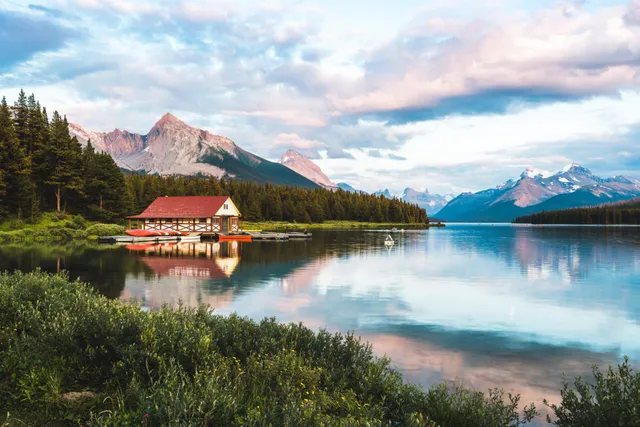
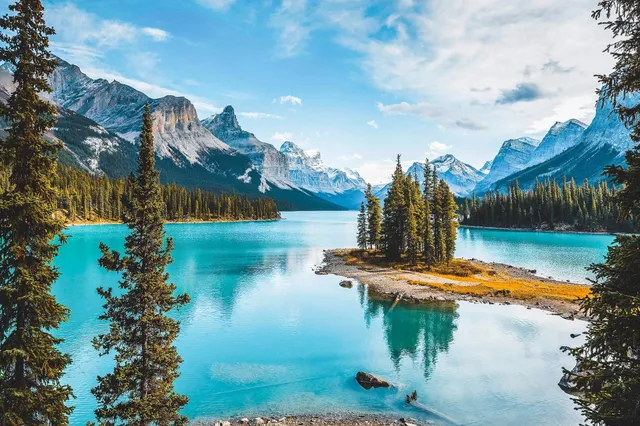
The largest members of the deer family are moose. They occur in all the national parks of the Canadian Rocky Mountains, although in some parks their presence is limited to certain areas. Maligne Lake in Jasper National Park is, for example, an area where you might be lucky enough to spot one.
The males carry antlers with palmate tines, which can have a span of 1.35 m and weigh up to 20 kg. Watching a moose is always impressive, but a bull moose is the absolute crowning glory.
Moose prefer difficult terrain, as their long legs allow them to step over obstacles with no trouble and at the same time protect themselves better from predators such as wolves. In summer you often find moose along rivers and lakes, as they not only eat leaves and twigs from bushes and trees but also aquatic plants. From September to November moose are in the rut. At this time they can be very aggressive.
Mountain goats in Rocky Mountains National Park
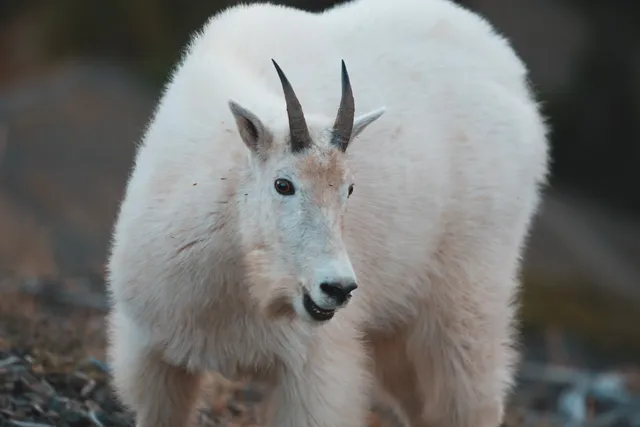
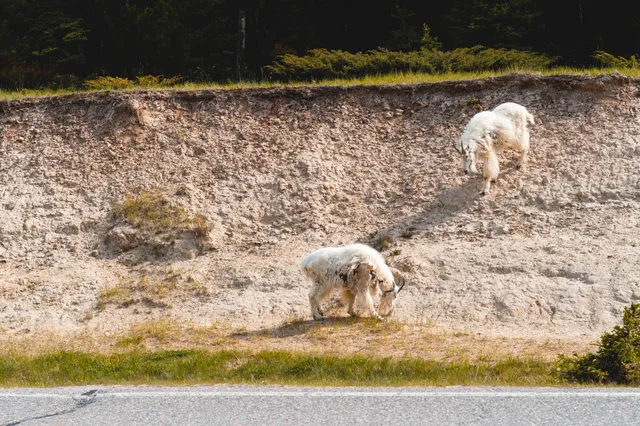
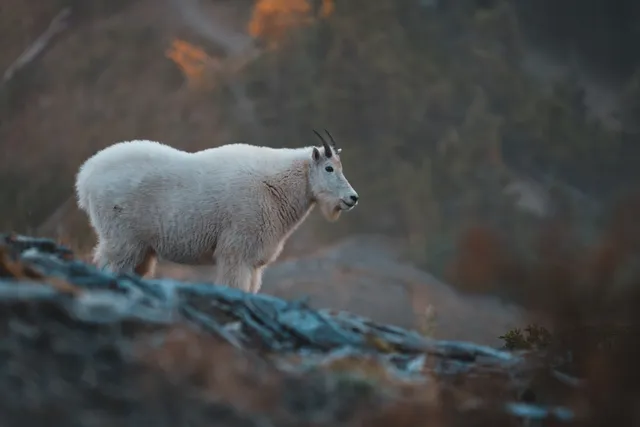
The habitat of mountain goats is steep and rocky mountain regions. There are plenty of these in the Rocky Mountains, which is why they occur in all the national parks there. In summer mountain goats migrate up into the mountains to as high as 5,000 m. In winter most animals return to lower elevations. During the summer months you therefore have the best chances of seeing mountain goats above the tree line.
Mountain goats feed on grasses, mosses, lichen and leaves. In spring the animals like to lick at salty spots. You can find such a spot for example at Athabasca Falls on the Icefields Parkway.
Watching bighorn sheep
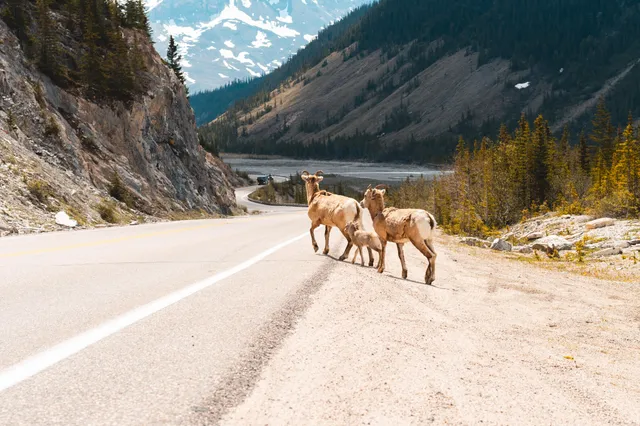
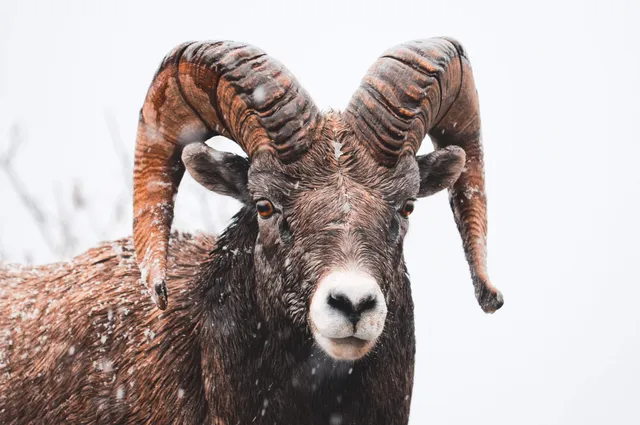
Bighorn sheep are well adapted to the cliffs and mountainous regions of the Rocky Mountains. A large population of around 2,000 animals lives in Banff National Park. With a bit of luck you can watch them in all the national parks of the Rockies.
Bighorn sheep usually live in groups of around 10 animals and in summer they are often seen on grassy mountain slopes. When the snow falls in winter the animals migrate to grasslands at lower elevations.
When the mating season begins in autumn, the males start fighting over the females. To do this they run towards each other with their heads lowered and crash their massive, backward-curving horns together. You can spot bighorn sheep particularly well in Kootenay National Park on the grassy areas near Redstreak Campground.
En chargeant la vidéo, des données sont envoyées à YouTube.
Elk in the Rocky Mountains
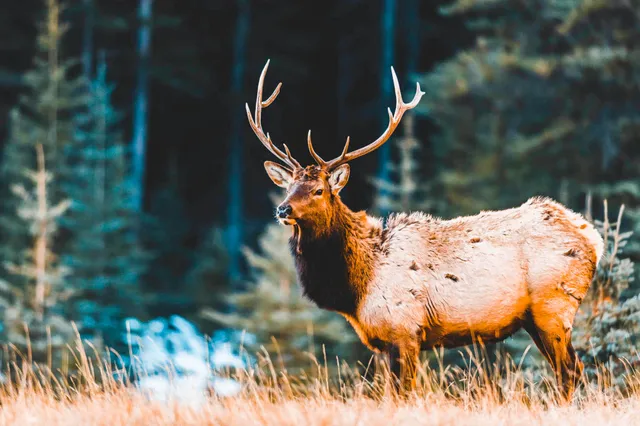
Elk are also widespread in the Rocky Mountains. These hoofed animals are deer that in Canada are called “elk”. They live in open woodland and near forested areas. In summer elk even move up into higher mountain regions before returning to sheltered, lower elevations in winter.
Elk live in herds that are often faithful to one area. In Jasper and Banff you have a good chance of seeing elk. Especially during the rut they gather on the grassy areas in and around the two towns. At this time you should keep a large distance of at least 30 m from the animals, as they can become aggressive very quickly. You should also be particularly cautious in spring when the calves are born, as the mothers naturally have a strong protective instinct towards their young.
The best spots to watch wildlife here
With a bit of patience and know-how you can watch wildlife in the Rocky Mountains. Below you’ll find out which animals live in the different national parks Banff, Jasper, Yoho, Kootenay and Waterton Lakes and where you can best see them.
Banff National Park animals
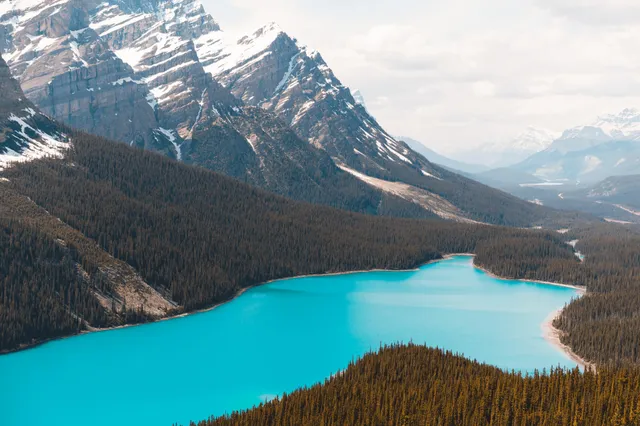
Watching animals in Banff National Park is a fantastic experience. The national park is also one of the best places in Canada if you want to see animals in their natural habitat. However, very many tourists also come to Banff National Park to see wildlife. It is particularly busy in summer, which is why many animals withdraw at this time. You therefore need to know quite precisely where to find animals in Banff National Park.
If you pay attention, you’ll encounter many of the smaller mammals. These include Columbian ground squirrels, chipmunks and squirrels. New World porcupines and North American beavers also have their habitat in the park.
Mountain goats and bighorn sheep are usually found in the rocky regions of Banff. When hiking you can keep an eye on the rock faces to see if you can spot the animals there.
The most common deer species in Banff National Park is the elk, whose population is estimated at around 2,000 animals. There are also mule deer, white-tailed deer and of course moose. Their numbers in Banff National Park are estimated at roughly 100 animals.
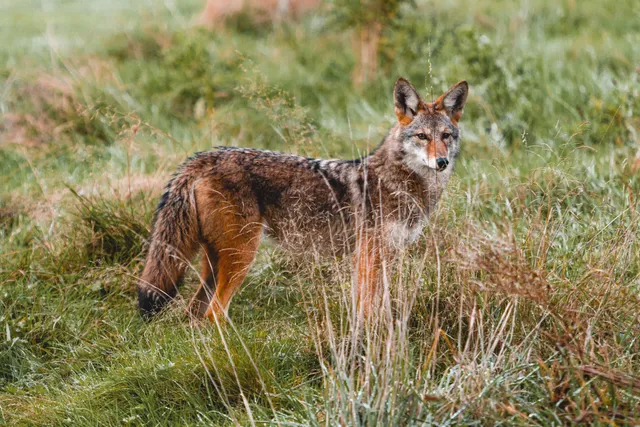
Coyotes are widespread in Banff National Park. They are particularly common along the Bow River, where they hunt smaller mammals. There are also 1–2 packs of wolves roaming the park. In winter the chances of seeing wolves are higher than in the summer months.
Lynx and pumas also live in the park. Encounters with them are very rare though, as they are very shy and prefer to avoid human contact.
Banff National Park is also home to American black bears and grizzly bears. Like almost no other animal, they stand for a wild and unspoilt nature in Canada.
Jasper National Park animals
Jasper National Park is truly excellent for watching wildlife in the Rocky Mountains. There are many wild animals and the park is less busy than, for example, neighbouring Banff National Park.
In early summer the snow in the lower elevations has already melted and there are not yet as many tourists as in the peak summer months. These are great conditions for watching animals in the valleys. When most tourists leave again in autumn, the deer rut begins and the bears go into hibernation at the end of October.
There are many bears in Jasper National Park and your chances of seeing one are best in early summer and again from late summer to autumn. American black bears are widespread in Jasper and you can also see grizzly bears grazing along the roadside, especially in early summer. Compared to the other parks, Jasper National Park has the largest number of grizzly bears.
The national park is home to many elk, which live mainly around the small town of Jasper. There are also mule deer, white-tailed deer and even a small herd of woodland caribou. The majestic moose of course also live in the park. In summer you can best observe them near bodies of water.
Mountain goats graze on the mountain meadows in summer. Along the Icefields Parkway it’s worth keeping an eye out for them. With a bit of luck you can spot bighorn sheep in the eastern part of the national park, for example on the way to Miette Hotsprings.
Yoho National Park animals
Yoho is a national park in the high mountains of the Rocky Mountains. The landscape is stunning and characterised by its many peaks and glacier-topped mountains. Seeing wildlife in Yoho is not that easy though, as the terrain is very mountainous.
Nevertheless, Yoho National Park is home to many wild animals, just like the other parks. These include a healthy population of grizzly bears. The grizzlies mostly stay well away from the highway and are therefore rarely seen.
Along the Trans-Canada Highway, however, you can see mule deer or elk. With a bit of luck you might even spot moose or American black bears.
When you are driving the Yoho Valley Road you should look out for New World porcupines at the roadside. As porcupines can climb, you will also see them in trees. It’s better to let your passenger watch out for animals though, as the road winds up the mountain in a series of bends.
It is estimated that 400 mountain goats live in Yoho. With a bit of luck you can spot them at Lake O’Hara.
Kootenay National Park animals
In Kootenay National Park you’ll find a range of landscapes with green mountain forests, mountain ranges, wetlands and extensive grasslands. Thanks to these different ecosystems you can also see numerous mammals and bird species in this part of the Rocky Mountains.
Highway 93 winds right through the park and along this route is where most people see wildlife. Even though Kootenay National Park generally receives fewer visitors than Banff, many animals avoid the busy highway in summer. You can still hope to see white-tailed deer at the roadside. They usually run off when you get closer and raise their tails as they flee. You’ll then see the white underside, which gives this deer species its name.
In Kootenay Park you can also encounter mule deer, elk, moose and American black bears as well as white-tailed deer. Mountain goats also live in the park and you can usually spot them in the mountains.
There are grizzly bears in the national park too, although most of them stay further out in the backcountry to keep out of our way. It’s the same with the wolverines, lynx and pumas in the park.
There are wolves in the national park as well, even if most visitors never see them. From time to time individual wolves are spotted along the highway. The wolves in the Kootenays mostly have pale coats made up of three different colours.
Waterton Lakes National Park wildlife
Waterton Lakes National Park combines the mountains of the Rockies with the wide prairie landscape of Alberta. Waterton Lakes is the smallest national park in the Canadian Rocky Mountains and lies a little off the usual tourist routes.
If you want to watch wildlife in this park you’ll need a bit of patience, but as in the other parts of the Rocky Mountains you can encounter a fantastic variety of animals here.
Many predators such as wolves, pumas, wolverines, grizzly and American black bears live in this national park close to the US border. Around 67 grizzly bears live in the park. There can sometimes be more or fewer bears, as many roam through the national park area. Black bears in particular can be found in Blakiston Valley in August and September when they are searching for berries.
The grasslands in the park are especially important for hoofed animals. You can see elk, mule deer and white-tailed deer there. In the wetlands along lakes and rivers you may be lucky enough to spot moose.
Mountain goats are also among the animals in this part of the Rocky Mountains that live in the alpine regions during the summer months. Bighorn sheep are seen a little more often. With a bit of luck you might spot them on the slopes behind the visitor centre or while hiking on one of the mountain trails.
En chargeant la vidéo, des données sont envoyées à YouTube.
The best time to see wildlife in the Rocky Mountains
Depending on the season your chances of seeing wildlife in the Rocky Mountains will vary. Bears, for example, spend the winter in torpor and in summer many animals keep away from the tourists. The best seasons for watching wildlife in the Rocky Mountains are therefore:
Spring and early summer
In spring many animals are found at lower elevations where they search for food. This is because the vegetation in the valleys is usually more advanced than in the higher mountains. Bears also wake from their winter torpor in spring. In summer, when the number of tourists increases and there is food to be found in the mountains as well, some animal species move up to higher elevations. Spring is therefore an ideal time to watch wildlife in the Rocky Mountains.
Late summer and autumn
In late summer bears start to build up vital fat reserves for the long winter. To do that they move down from the higher mountains into the valleys. In September the deer rut begins. Elk in particular move to lower elevations and fight for the females out on the meadows. Loud bugling can be heard. Late summer and autumn are also perfect seasons for watching wildlife in the Rocky Mountains.
Tips for wildlife watching in the Rocky Mountains
The more you know about the habitat of a particular animal, the better your chances of finding and watching it. Here are three more tips to help you see wildlife in the Rocky Mountains.
Watch in the morning and evening
It’s best to try to watch animals in the early morning or from late afternoon into the evening. These are the times when you’ll have the best chances of seeing wildlife in the Rocky Mountains. Many wild animals become active in the late afternoon or at dusk and are still active in the early morning.
Please be very cautious when you are in bear country. You shouldn’t go hiking there at dusk or in the dark.
Use binoculars
We definitely recommend using binoculars, as we’re always amazed ourselves at how much more you can spot in nature with them. Binoculars not only increase your chances of seeing an animal at all, they also allow you to observe its behaviour much better. They also increase your safety, as you can easily keep a greater distance from the animal.
Let nature rest
Most wild animals in the Rockies are shy, quickly become aware of your presence and disappear before you even see them. If you stay still and remain in one spot for a while many animals will return after some time and you’ll be able to watch them. Just find yourself a beautiful spot in the Rocky Mountains where there aren’t too many people around and wait to see what happens.
We hope you have some fantastic wildlife sightings and a wonderful time in Canada. Do you have any questions? Then feel free to ask us in the comments.
Crédits photo : Shutterstock/Robert Crum, Shutterstock/Adam Cegledi, Shutterstock/BGSmith, Shutterstock/Ryan, Shutterstock/GLF Media, Shutterstock/godi photo
Pour aller plus loin

Planifie ton voyage dans l’app.
Enregistre activités et hébergements, compose ton itinéraire et emporte tout hors ligne.