Cette page n’existe pas encore en français : nous te montrons la version disponible.
Learn to read animal tracks

Par Laura & Tobi ·
With a bit of patience you can find tracks anywhere in nature that tell you who might have crossed the path before you. Are you ready for a bit of detective work?
When you are in Wells Gray you should definitely do one of the many fantastic hikes.
The landscape and the many waterfalls are breathtakingly beautiful. With the basics of tracking, your hike becomes your very own wildlife story that no one but you will experience.
Animal tracks tell us so much
Compared to the animal world, our eyesight and hearing are not so well developed. Animals often notice us long before we are aware of them. Experienced trackers read in nature as if it were a good book. This way they often discover the whole story, even if the animal is already long gone. They can determine the approximate age and sex, the direction in which the animal is moving and even get an idea of how it is feeling.
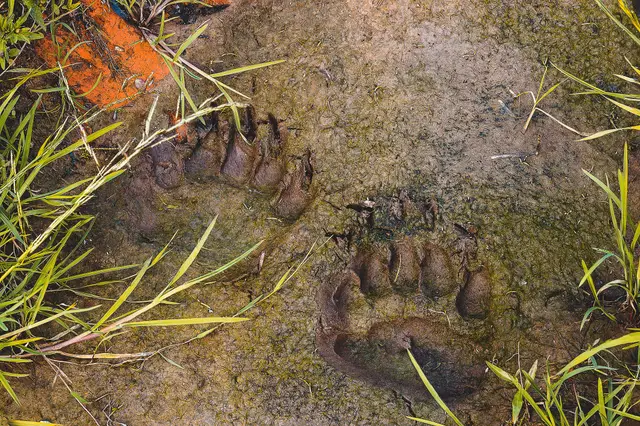
To turn your hike into a very special wildlife experience, there are a few basics of tracking you should know. First we will look at where you should pay particular attention and then look for features that tell you which animal has passed by. Isn’t that exciting? Then let’s take a look at how best to do it.
Find the ideal area for tracking
On the next pages you will find beautiful hikes through Wells Gray Provincial Park. During the hike you should stop in places where animals feel particularly comfortable. That is where animal density is highest and therefore your chance of finding tracks is greatest.
These places are relatively easy to find because animals need different habitats and move between them every day. Meadows and forests are one example. While one place is ideal for feeding, the other offers protection and cover from predators. Frequent changes between habitats create clearly visible wildlife paths. You can recognise them by flattened grass or gaps in otherwise dense bushes. So keep an eye out for such places and take a break there.
Look on the ground for what animals have left behind
Once you have found such a place, it is worth first searching it for droppings and other traces. This may take a bit of getting used to at first. But it often allows you to narrow down which animal has already used this path.
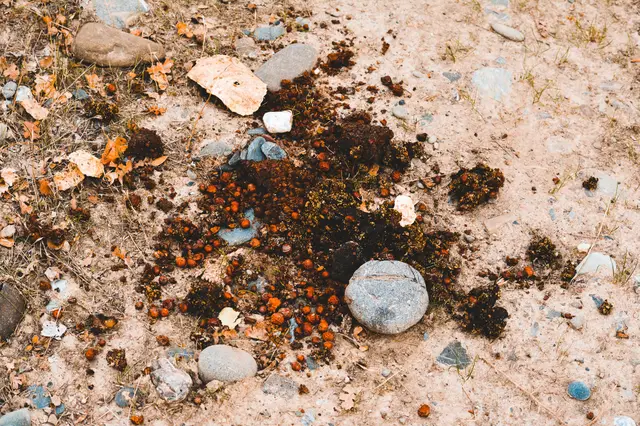
Here are a few tips:
- If, for example, the droppings are more tube-shaped, they often belong to dogs, raccoons, skunks, wolverines or bears.
- If both ends taper, this points to a fox or a weasel.
- If you find excrement that has a spherical appearance, this is typical of puma droppings. You will often find bone fragments and fur in it. The droppings are also quite firm and cannot be crushed with a stick.
Look for rub marks on trees and in the grass
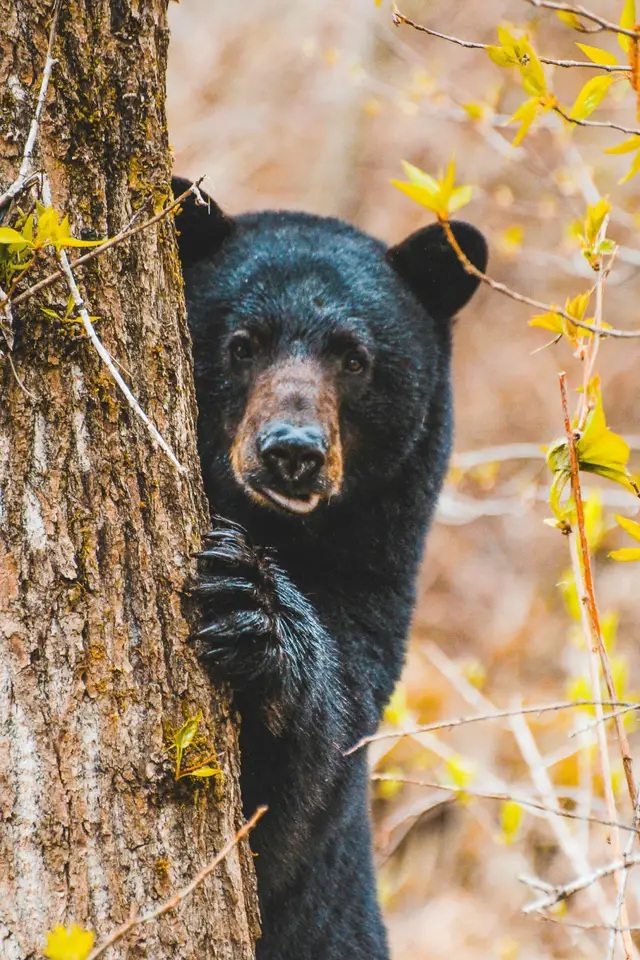
Next you should take a look at the trees and bushes around you and examine them for signs of rubbing. Sometimes you can see scratch marks that a bear has left on the trunk.
Then see whether a branch has been gnawed. This gives you clues to the animal species. If a branch or twig has been chewed off at a 45 degree angle, the animal has incisors. You can therefore assume that it is a rodent.
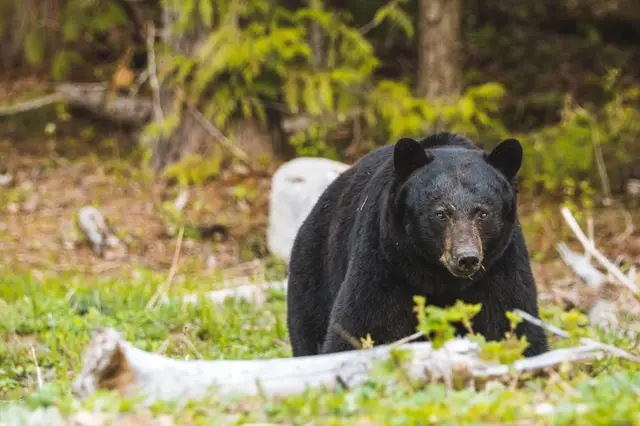
It is also relatively easy to recognise whether a deer has been at work. At the end of a partially eaten branch, the tip is usually frayed. This happens when the deer nibbles the twigs at one end and then tears them off.
If the whole plant has been chewed, this can be a sign of a predator. Predators often chew plants to take in minerals.
In Wells Gray you can recognise the presence of moose by a large flattened patch of grass. Moose like to roll in the grass to rid themselves of mites.
Look for footprints in the sand
If you are in an area with damp sand or soil, you can often find well-preserved footprints. You can read them in two ways: by looking at the footprint itself and at the animal’s gait. Together, these two clues help you to identify the animal more precisely.
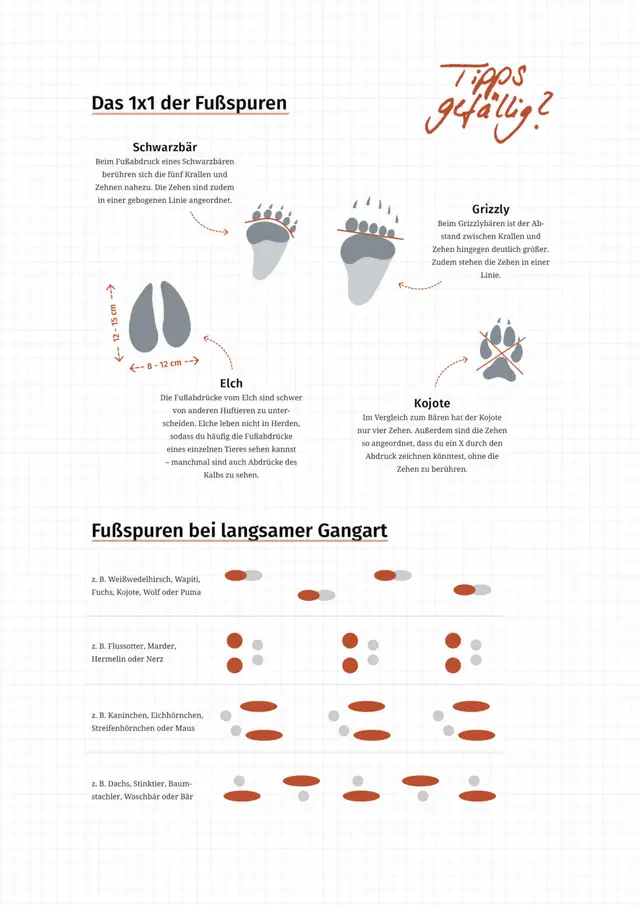
If the toes are visible, count them…
- If you see two toes, you can assume that it is a deer or a moose.
- If you see three toes, it is often a bird.
- If there are four toes above the pad, then depending on the print it could be a wolf, a fox, a lynx or a coyote.
- If there are even five toes next to the pad, it is for example a weasel, a skunk, a North American beaver or a bear.
Besides the track pattern itself, the gait can also provide information about the animal. However, it is important to remember that an animal’s gait can change, for example when it is hunting, walking normally or just pottering about. Even so, the gait is another clue that helps you identify an animal.
- Deer, dogs and cats, for example, move diagonally. The front and hind legs are placed on opposite sides of the body at the same time.
- Animals from the weasel family, on the other hand, move first with both front feet and then with both hind feet, as if they were tied together.
- Rabbits and rodents jump and always land first on their front paws before the hind paws touch down slightly offset to the outside of the front paws.
- Badgers, skunks, New World porcupines, raccoons and bears move front and hind legs on both sides of the body at the same time.
Off you go into your wildlife story
Now you know how to find a good observation spot. You also now have everything you need to look for animal tracks. Droppings, rubbing marks on trees, gnawed twigs and footprints on the ground all give you different clues to the animal species.
The more clues point to a particular animal, the more certain you can be that your suspicion is correct. This way, on your hike you will experience wildlife watching in a completely new, but no less exciting way! We wish you an adventurous and eventful hike through Wells Gray Provincial Park – with plenty of "Hidden Wildlife"!
Crédits photo : Shutterstock/Lyubov_Nazarova, Shutterstock/onairp, Shutterstock/LifeLoveLiberty, Shutterstock/Tara Lynn111, Shutterstock/schame, Titel: Alice Donovan Rouse
Pour aller plus loin


Planifie ton voyage dans l’app.
Enregistre activités et hébergements, compose ton itinéraire et emporte tout hors ligne.