Cette page n’existe pas encore en français : nous te montrons la version disponible.
Best time to visit Botswana: When is your safari most worthwhile?

Par Laura & Tobi · ·
Discover the best time to visit Botswana. Find out when you can best experience the wildlife, when the weather is ideal and which highlights you can expect in each season.
You dream of a safari through untouched wilderness, endless savannahs and spectacular wildlife encounters? Then the question quickly arises: When is the best time to visit Botswana? This diverse country in southern Africa is impressive all year round, but the natural experience changes significantly with the seasons. Whether you choose the dry season with its optimal safari conditions or the rainy season with fresh greenery and newborn animals – here you can find out when a trip to Botswana is especially worthwhile.
Rainy season or dry season: what is the best time to visit Botswana?
Botswana is a year-round destination – but each season offers different highlights. The choice of the best time to travel in Botswana depends on the experiences you are looking for:
- Dry season (May to October): Ideal for classic safaris. Animals gather at waterholes, visibility is clear and the tracks are usually easy to drive.
- Rainy season (November to April): The landscape turns green, many animals give birth to their young and birdwatchers are in their element.
Our tip: think about what you want to experience in Botswana – wildlife watching, birdlife or spectacular landscapes – and then choose the best time to travel for your trip to Botswana.
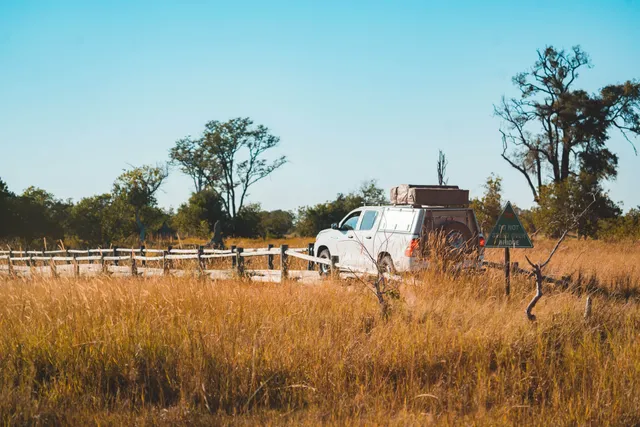
Botswana in the rainy season (November to April)
If you visit Botswana in the rainy season, you will experience a completely different side of the country. From mid November the first showers transform the dry savannah into a green paradise. But what does that mean for your trip?
Highlights of the rainy season in Botswana:
- Plenty of newborn animals: Zebras, antelopes, giraffes – many animals give birth to their young at this time of year. You have particularly good chances of exciting sightings in the Central Kalahari Game Reserve or in the Kgalagadi Transfrontier Park.
- A paradise for birdwatchers: Migratory birds such as the carmine bee-eater and birds of prey are now present in great numbers – perfect conditions for nature photographers.
- Take care on self-drive trips: After heavy thunderstorms the sandy tracks can turn into muddy roads. As a self-driver you should check the road conditions in advance.
Travel tip: The Okavango Delta often has lower water levels during the rainy season. If boat trips are on your wish list, you should check in advance whether they are possible.
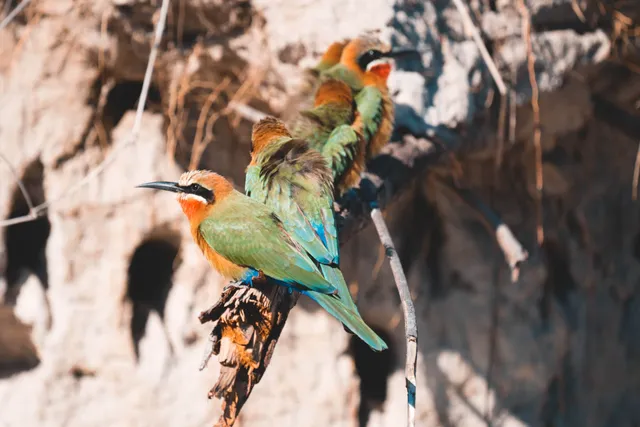
Botswana in the dry season (May to October)
When you think about the best time to travel for a safari in Botswana, the dry season is often the first choice. In these months wildlife concentrates around the remaining waterholes – perfect conditions for unforgettable animal encounters.
This is what awaits you in the dry season:
- Top sightings in the Okavango Delta, Chobe and Moremi: Especially in the Moremi Game Reserve and in Chobe National Park elephant herds, lion prides and antelopes move to the rivers or waterholes.
- Pleasant temperatures: Around 25–30 °C during the day, but it can get chilly at night – especially between June and August.
- Experience boat trips: From May the water level in the Okavango Delta rises – a unique opportunity to discover the wilderness from the water.
October marks the end of the dry season – it gets hot (up to 40 °C), but your chances of spectacular wildlife sightings are especially high then.
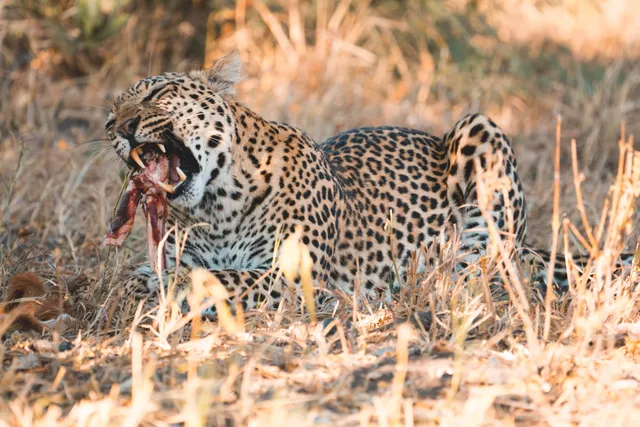
Best time to visit Botswana by region
Botswana offers a wealth of breathtaking national parks and game reserves which provide completely different nature experiences depending on the season. The best time to visit Botswana varies by region – here is an overview of the highlights in the dry and rainy seasons.
Moremi Game Reserve with Okavango Delta and Chobe National Park
- Dry season (May–October): Perfect conditions for safaris on land and water. The delta fills and animals crowd around the rivers.
- Rainy season (November–April): Tracks can be difficult to drive, but birdwatching is a highlight.
➤ More information: Moremi Game Reserve & Chobe National Park
Good to know: The Moremi Game Reserve is the only part of the Okavango Delta that self-drivers can visit.
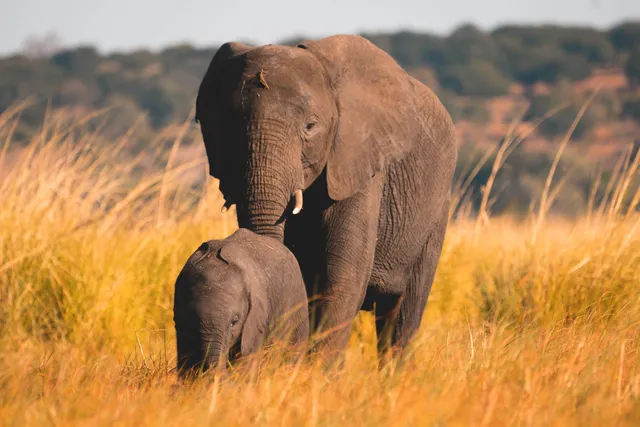
Makgadikgadi and Nxai Pan national parks
The salt pans in the north-east of Botswana reveal two completely different but equally fascinating faces depending on the season.
- Rainy season (December to April): The salt pans turn into lush grasslands. The famous zebra and wildebeest migration attracts thousands of animals to the region, closely followed by predators. Particularly impressive: flamingos gathering in the flooded pans.
- Dry season (May to October): The salt pans dry out and become quiet, surreal landscapes. At the Boteti River you can watch large herds of animals at this time of year.
➤ More information: Makgadikgadi Pans National Park & Nxai Pan National Park
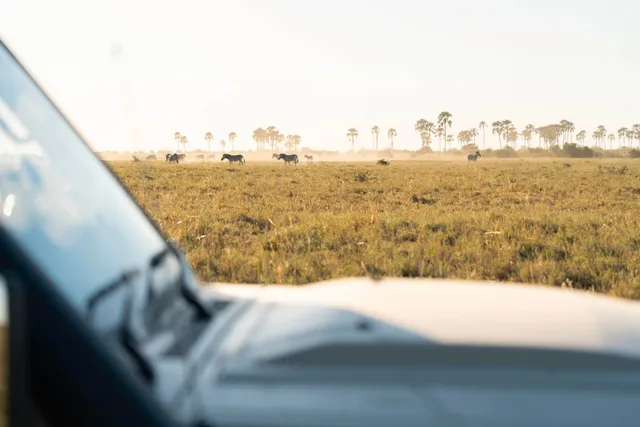
Central Kalahari Game Reserve (CKGR)
The rugged beauty of the Central Kalahari Game Reserve is impressive all year round. However, you will experience the Kalahari Desert very differently depending on the season:
- Rainy season (December to April): The desert comes to life and attracts huge herds of animals, including springbok, gemsbok and wildebeest. The predators of the Kalahari, such as the majestic lion with its black mane, are also active. Photographers will love the dramatic cloud formations and soft light at this time of year.
- Dry season (May to October): In the dry season life retreats and the vast landscapes appear even more barren. The Kalahari remains impressive nonetheless – not least because of the starry nights and endless silence.
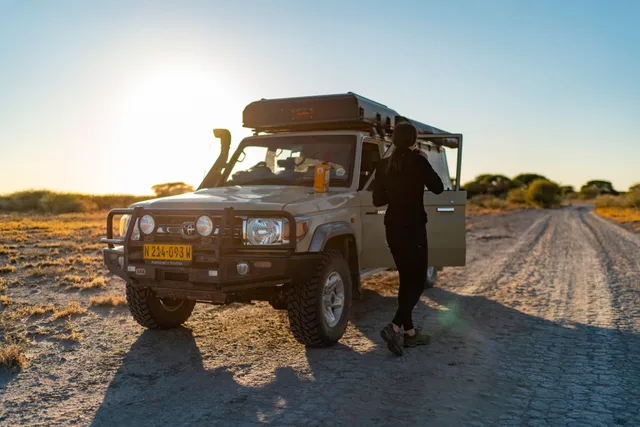
Kgalagadi Transfrontier Park (KTP)
This transfrontier park between Botswana and South Africa is a paradise for adventurers and fascinates with its incredible diversity of wildlife and wild beauty.
- Rainy season (December to April): With the first rains the KTP comes to life. Large herds of animals, including springbok and wildebeest, move across the sandy plains. Lions, cheetahs and leopards are particularly easy to observe here.
- Dry season (May to October): Animals concentrate at the artificial waterholes, which increases your chances of sightings. The hot months from September onwards are only for heat lovers – temperatures above 40 degrees are not uncommon.
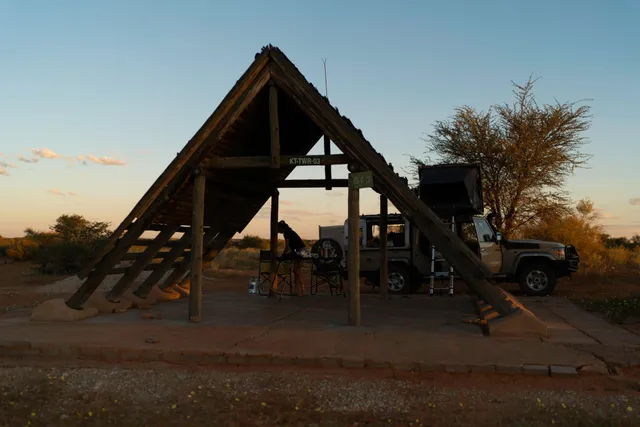
Recommended time to travel by activity
- Wildlife watching: May to September – the dry season offers optimal conditions for classic safaris in the north.
- Birdwatching: November to April – the rainy season attracts migratory birds and brings life to the wetlands.
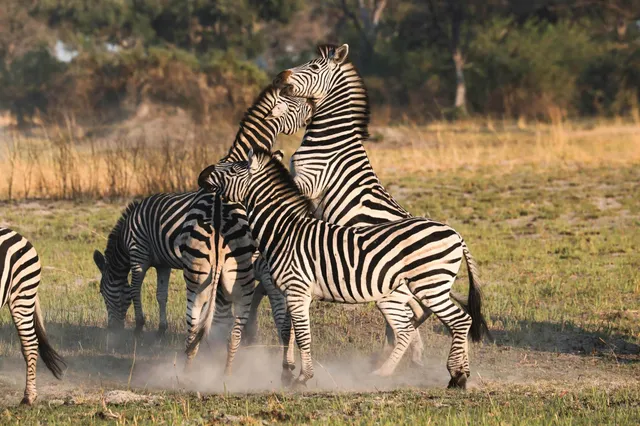
- Zebra migration: December to March – in the rainy season thousands of zebras move through the Makgadikgadi Pans and provide a unique natural spectacle.
- Boat trips: May to October – when the water level in the Okavango Delta reaches its peak.
Our tip: With the app you’ll not only find the best time to travel to Botswana but also targeted wildlife-watching tips for your favourite animals. Our interactive timeline shows you exactly when and where you can best see elephants, lions, wild dogs or zebras – matched to region, season and activity. This way you can plan your safari even more precisely and won’t miss any highlights.
Watch zebras and antelopes on a large loop at the Black Pools
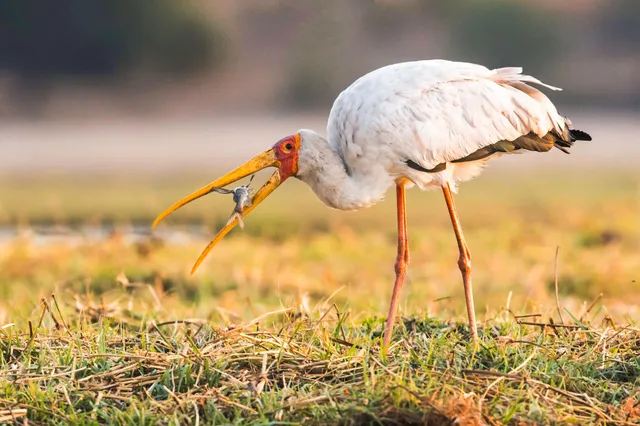
Watch the fascinating hunting strategies of birds at the Maya Pools
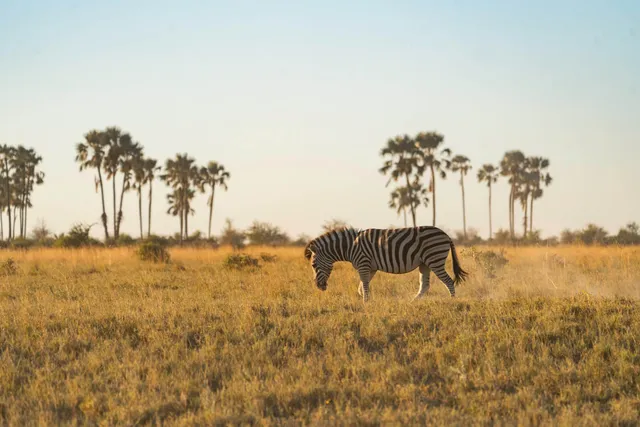
Photograph the zebra migration amid a dreamlike palm landscape
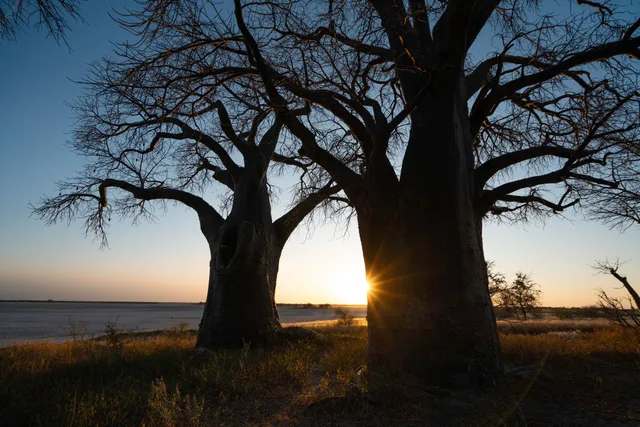
Experience the magic of the Baines’ Baobabs in the setting sun
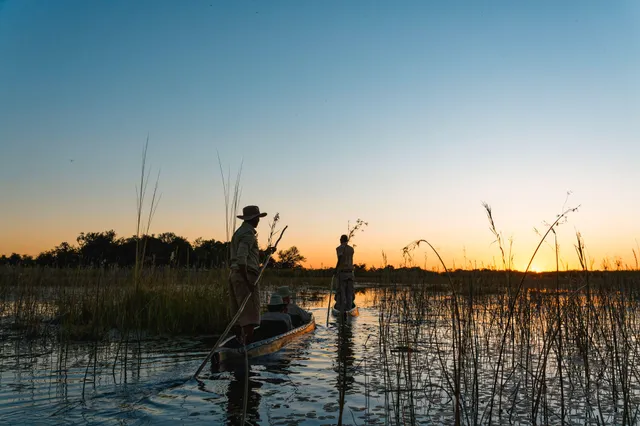
Glide gently through the Okavango Delta and listen to the sounds of the wild
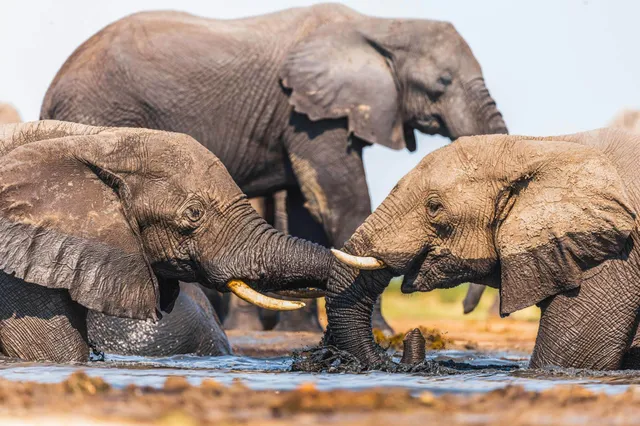
Watch bull elephants and listen to the sounds of the wilderness
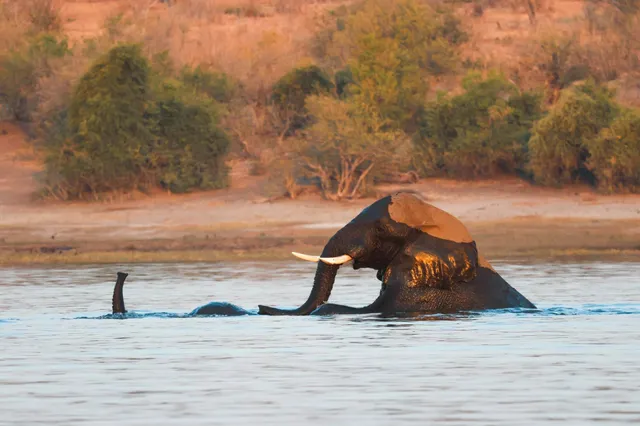
Watch swimming elephants at sunset on a boat trip
Self-drivers in Botswana: What you should bear in mind
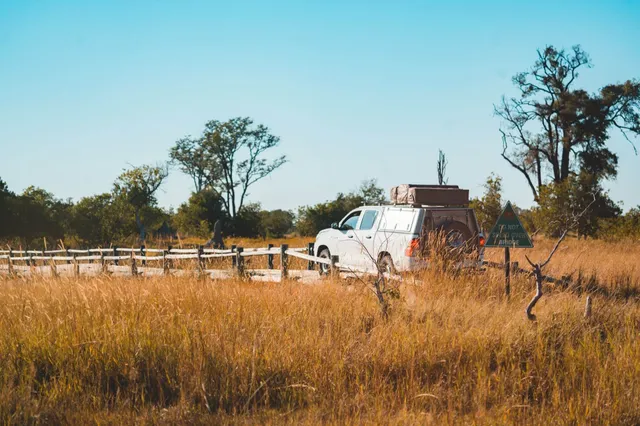
Botswana is considered a paradise for self-drivers, but conditions vary greatly depending on when you travel:
- Dry season: Ideal for self-drivers. The roads are dry and you can easily explore remote areas with a 4x4. In the north, however, the floodplains can also make some routes impassable.
- Rainy season: Travelling becomes more demanding. Muddy roads and unpredictable conditions make some regions unreachable.
Our tip: If you travel in winter (June to August), make sure you put warm clothing for the cold nights on your packing list. Thick sleeping bags, a hat and warm clothing are essential, especially when camping.
Conclusion: So when is the best time to travel to Botswana?
The best time to travel to Botswana depends on your personal preferences:
- May to October is ideal for classic safaris, wildlife watching and pleasant weather.
- November to April captivates with dramatic landscapes, zebra migration, bird diversity and newborn animals – a dream especially for photographers.
We travelled in the northern regions in May and June and had a fantastic time. During the day it was hot but bearable. The nights were cool but not freezing. The wildlife sightings were spectacular and the roads were accessible without restrictions. In April we travelled in the southern regions and it was still very hot in parts. For us personally, the rainy season is simply too hot. If you want to watch animals for more than five minutes, the car heats up unbearably. For us, May/June is the best time to travel to Botswana.
Your adventure is waiting: Start planning your trip now!
No matter when you set off – Botswana will enchant you with its wilderness, wildlife and vast open spaces. Use our free app to discover activities, campsites and lodges and to plan your trip to perfection.
Crédits photo : Shutterstock/John Hill Photos, Mboma Island Expeditions, Shutterstock/Thomas Retterath, Shutterstock/CassandraSm
Pour aller plus loin

Planifie ton voyage dans l’app.
Enregistre activités et hébergements, compose ton itinéraire et emporte tout hors ligne.